
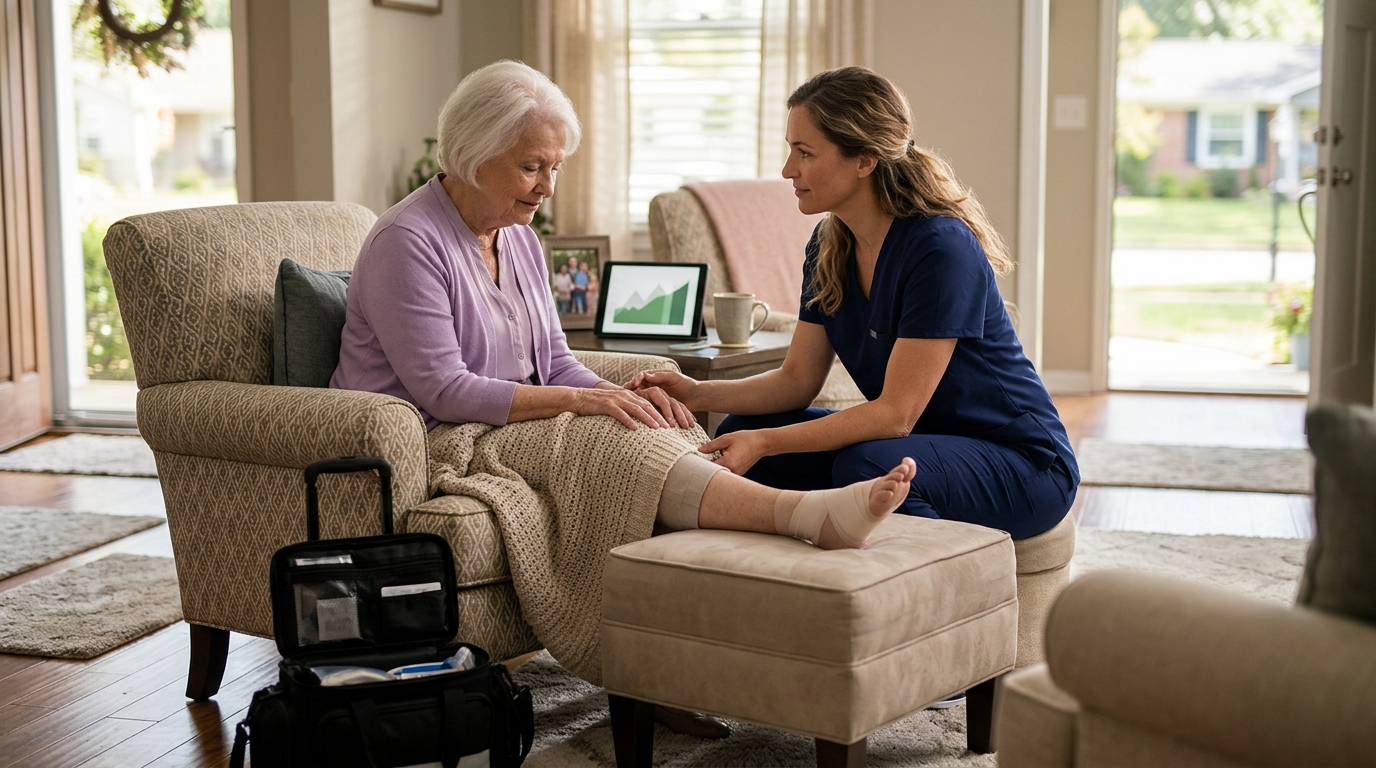
Chronic wound management has undergone a significant paradigm shift in recent years, moving away from rigid clinic schedules toward flexible, patient-centric care models. According to recent healthcare industry reports, over 6.5 million Americans suffer from chronic wounds annually, with a substantial portion of this population facing significant barriers to accessing traditional in-person care. This growing demographic includes elderly patients, those with limited mobility, and individuals residing in rural or underserved areas. The emergence of advanced mobile wound care services has provided a critical alternative, offering hospital-grade treatment directly in the patient's home, assisted living facility, or skilled nursing center. Understanding the distinct advantages and limitations of each approach is essential for patients, families, and care coordinators making critical health decisions. (About Healix360 Mobile Wound)
Why Mobile Wound Care Matters Now
The landscape of healthcare delivery is evolving rapidly. Mobile wound care is not merely a convenience; it is a clinical necessity for many complex cases. Mobile wound care is a coordinated service that delivers physician-led advanced wound treatment directly to the patient's location. This model eliminates the logistical nightmares associated with transportation, particularly for patients with non-healing ulcers or post-surgical wounds that cannot bear weight.
For patients in Southern California and Nevada, the availability of licensed physicians and nurse practitioners who can perform sharp debridement, apply bioengineered skin, and manage complex infections in situ has revolutionized recovery timelines. The ability to begin care within three to five business days ensures that acute issues do not escalate into chronic, life-threatening complications. This immediacy is a critical factor in preventing hospital readmissions and reducing overall healthcare costs.
The Limitations of Traditional Clinic Visits
While traditional wound care clinics have served as the backbone of outpatient treatment for decades, they face significant operational challenges in the modern healthcare environment. The primary drawback is accessibility. Patients with diabetic foot ulcers, venous leg ulcers, or pressure injuries often struggle with the physical act of traveling to a clinic. The process of scheduling, waiting, and enduring transportation can be physically exhausting and sometimes impossible for those with severe mobility issues.
Furthermore, traditional clinics often operate on rigid schedules that may not align with the fluctuating needs of chronic wound patients. Infection risks are also a concern; traveling to a crowded medical facility can expose immunocompromised patients to additional pathogens. For patients in skilled nursing facilities or assisted living communities, coordinating external clinic visits requires significant administrative overhead for facility staff. This friction often leads to delayed treatments, which can exacerbate wound conditions and increase the risk of amputation.
The Core Benefits of Mobile Wound Care
Mobile wound care addresses the systemic failures of traditional models by bringing the clinic to the patient. This approach offers several distinct clinical and logistical advantages that directly impact healing outcomes.
Physician-Led Assessment and Treatment
Every patient in the mobile wound care ecosystem is assessed in person by a licensed physician or nurse practitioner. This ensures that the treatment plan is not delegated solely to lower-level providers but is overseen by a clinician with advanced diagnostic capabilities. The clinician designs a comprehensive plan that may include surgical debridement, advanced biologics, regenerative therapies, compression, and offloading. This level of personalized care is often difficult to replicate in a high-volume clinic setting.
Specialized Wound Management
Mobile providers are equipped to handle a wide spectrum of wound types, including amputation-site wounds, arterial ulcers, and burn wounds. For example, amputation-site wound management is a specialized residual limb care protocol that focuses on preventing infection and promoting tissue regeneration. Similarly, arterial ulcer treatment is a coordinated vascular care strategy that prioritizes wound bed preparation and antimicrobial defense. The ability to deploy negative pressure wound therapy and bioengineered skin in the home environment ensures continuity of care without the disruption of facility transfers.
Reduced Hospital Readmissions
By addressing wound complications early and effectively in the home environment, mobile wound care significantly reduces the need for emergency room visits and hospital admissions. This proactive approach not only improves patient quality of life but also alleviates the burden on acute care facilities. Data shows that patients who receive consistent, in-home wound care are less likely to experience severe infections that require intravenous antibiotics or surgical intervention.
Cost, Insurance, and Accessibility
One of the most common concerns regarding mobile wound care is cost and insurance coverage. Fortunately, many mobile wound care services, including those provided through Healix360, accept Medicare Part B and most major insurance plans. This acceptance ensures that patients do not face prohibitive out-of-pocket expenses for physician-led home visits.
When comparing costs, it is essential to look beyond the immediate visit fee. Traditional clinic visits often incur hidden costs, such as transportation fees, caregiver time off work, and the potential for increased medical bills due to delayed treatment. Mobile wound care consolidates these costs by providing comprehensive care in a single, efficient visit. For patients in Los Angeles, Orange, Riverside, San Bernardino, Ventura, San Diego counties, and Las Vegas, this model offers a sustainable and financially viable path to healing.
Detailed Comparison Breakdown
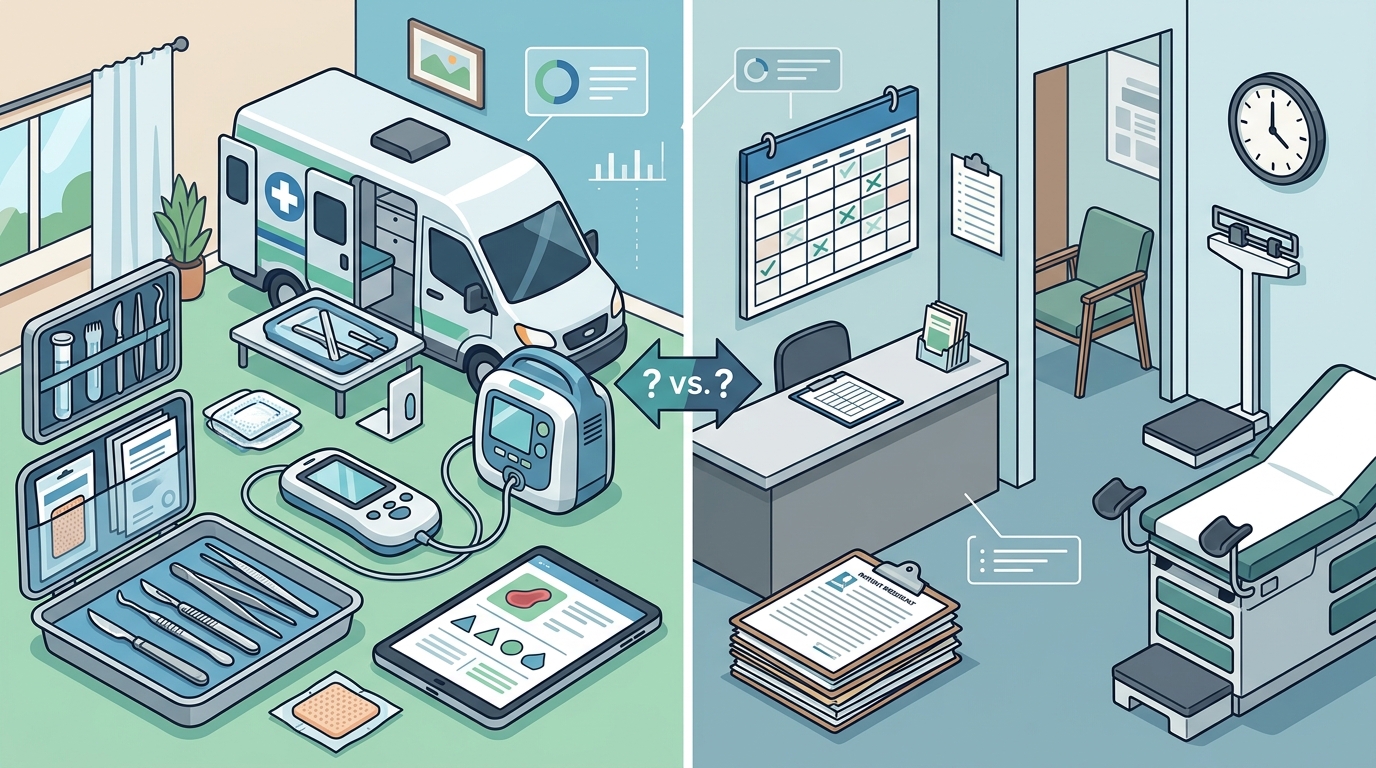
The following table summarizes the key differences between mobile wound care and traditional clinic visits, helping you make an informed decision based on your specific needs.
| Feature | Mobile Wound Care | Traditional Clinic Visit |
|---|---|---|
| Location | Patient's home, assisted living, or skilled nursing facility | Medical office or outpatient clinic |
| Provider | Licensed physician or nurse practitioner | Physician, PA, or wound care specialist |
| Accessibility | High; no travel required | Low; requires transportation and mobility |
| Insurance | Medicare Part B and major plans accepted | Varies by provider and plan |
| Specialized Treatments | NPWT, bioengineered skin, sharp debridement | Standard dressings and basic debridement |
| Wait Time | Typically 3-5 business days | Often weeks for new patient appointments |
Key Takeaways
- Physician Oversight: Mobile wound care ensures every patient is assessed by a licensed physician or nurse practitioner, guaranteeing high-quality clinical judgment.
- Rapid Access: Care typically begins within 3 to 5 business days, significantly faster than many traditional clinic wait times.
- Comprehensive Coverage: Services include advanced treatments like negative pressure wound therapy, bioengineered skin, and sharp debridement.
- Insurance Acceptance: Most major insurance plans, including Medicare Part B, are accepted, reducing financial barriers to care.
- Geographic Reach: Services are available across Southern California and Nevada, covering major counties and Las Vegas.
- Specialized Care: Specific protocols exist for amputation-site wounds, arterial ulcers, and burn wounds, ensuring tailored treatment plans.
- Reduced Burden: Eliminates the physical and logistical strain of traveling to a clinic for patients with limited mobility.
Frequently Asked Questions
What types of wounds can be treated with mobile wound care?
Mobile wound care specialists treat a wide range of chronic and complex wounds, including diabetic foot ulcers, venous leg ulcers, pressure injuries, post-surgical wounds, arterial ulcers, and burn wounds. Each condition requires a specific, physician-led treatment plan.
Is mobile wound care covered by insurance?
Yes, many mobile wound care services accept Medicare Part B and most major insurance plans. It is recommended to verify coverage details with your provider and insurance company before beginning treatment.
How quickly can I start receiving mobile wound care?
Care typically begins within 3 to 5 business days after a provider request is submitted. This rapid response time is crucial for preventing wound deterioration and infection.
Do you serve assisted living facilities and skilled nursing centers?
Yes, Healix360 coordinates access to physician-led advanced wound care for patients in their homes, assisted living communities, and skilled nursing facilities across Southern California and Nevada.
What is the difference between mobile wound care and home health aides?
Home health aides provide basic personal care and assistance with daily activities. Mobile wound care involves licensed physicians and nurse practitioners who deliver hospital-grade medical treatments, such as debridement and advanced dressing applications, for complex wound healing.
Can I request a provider for a specific wound type?
Yes, you can request a provider to begin care for specific conditions such as amputation-site wounds, arterial ulcers, or burn wounds. The coordinating service will match you with a qualified clinician equipped to handle your specific needs.
What areas do you serve?
Healix360 serves Southern California, including Los Angeles, Orange, Riverside, San Bernardino, Ventura, and San Diego counties, as well as Las Vegas, Nevada.
Start Your Mobile Care Journey
Choosing the right wound care provider is a critical decision that impacts your health, comfort, and quality of life. Mobile wound care offers a superior alternative to traditional clinic visits for patients with complex needs, limited mobility, or those seeking rapid, physician-led treatment. By eliminating the barriers of transportation and rigid scheduling, this model ensures that you receive the advanced care you deserve in the comfort of your own environment.
If you or a loved one is struggling with a chronic wound, do not wait for it to worsen. Contact Healix360 today to coordinate access to advanced mobile wound care. Call 877-545-1300 or request a provider to begin your journey toward healing. Our team is ready to support you with compassionate, expert care tailored to your unique needs.