

Common Mistakes When Scheduling Mobile Wound Care in Southern California and How to Avoid Them
Delaying professional wound care often results in preventable complications, including infection and prolonged healing times. According to the Centers for Disease Control and Prevention, approximately 6.5 million people in the United States suffer from chronic wounds annually, with a significant portion residing in aging populations across states like California. Mobile wound care offers a critical solution by bringing hospital-grade treatment directly to patients in their homes, assisted living communities, and skilled nursing facilities. However, navigating the logistics of scheduling these specialized visits requires careful attention to detail. This guide outlines the most frequent errors patients and families make when arranging mobile wound care in Southern California and provides actionable strategies to ensure seamless, effective treatment.
Mistake 1: Failing to Verify Insurance Coverage Early
One of the most significant hurdles in accessing mobile wound care is misunderstanding the financial aspects of the service. Many patients assume that all mobile health services are covered similarly to standard office visits, but wound care often involves specialized procedures and advanced dressings that require specific coverage verification.
Healix360 accepts Medicare Part B and most major insurance plans, but this is not universal across all mobile providers. Patients often wait until after the initial visit to discover coverage gaps, leading to unexpected out-of-pocket costs or delayed treatment. To avoid this, always confirm the provider's acceptance of your specific insurance plan before scheduling. Ask detailed questions about coverage for advanced therapies such as negative pressure wound therapy or bioengineered skin substitutes.
Understanding your benefits early allows for smoother coordination between the patient, the family, and the care team. It also ensures that the physician can focus on clinical outcomes rather than administrative delays during the home visit. For more information on coverage options, you can review the Wound Care Answers Hub for direct, evidence-based guidance on Medicare and insurance questions.
Mistake 2: Overlooking Physician-Led Care Models
Not all mobile wound care services are created equal. A common mistake is selecting a provider based solely on availability or cost, without verifying the clinical qualifications of the practitioners. Wound healing is a complex physiological process that often requires surgical intervention, advanced biologics, or regenerative therapies.
Physician-led wound care ensures that every patient is assessed in person by a licensed physician or nurse practitioner who designs and oversees the treatment plan. This model allows for immediate clinical decision-making, such as performing sharp debridement or adjusting compression therapy during the same visit. In contrast, non-physician-led services may require referrals to specialists for complex cases, causing significant delays in healing.
When evaluating providers, ask about their approach to wound assessment. Does the provider offer hospital-grade treatment for chronic and complex wounds? Do they have experience with conditions like diabetic foot ulcers, venous leg ulcers, and pressure injuries? The Physician-Led Approach emphasizes comprehensive, in-person evaluations that are critical for effective wound management.
Mistake 3: Delaying the Initial Assessment
Time is a critical factor in wound healing. Many patients and families delay scheduling mobile wound care until the wound has become severely infected or the patient has been hospitalized. This reactive approach often leads to more invasive treatments, longer recovery times, and higher overall healthcare costs.
Early intervention is key to preventing complications. Care typically begins within 3–5 business days when scheduled promptly. By initiating care early, physicians can implement strategies such as offloading, compression, and advanced dressings before the wound bed deteriorates. This proactive approach is particularly important for patients with diabetes or peripheral artery disease, where delayed treatment can lead to amputation.
Do not wait for the wound to worsen. If you notice signs of infection, increased pain, or lack of healing, contact a mobile wound care provider immediately. Early assessment allows for the timely application of specialized treatments, such as amputation-site wound management or burn wound care, which require specialized expertise.
Mistake 4: Neglecting Wound Bed Preparation
Wound bed preparation is a fundamental concept in wound care, yet it is often misunderstood by patients and even some caregivers. A common mistake is focusing solely on covering the wound with a dressing without addressing the underlying conditions that prevent healing.
Wound bed preparation involves removing dead tissue (debridement), managing infection, and maintaining a moist wound environment. Without proper preparation, advanced dressings and therapies cannot function effectively. Physicians may use techniques such as sharp debridement, enzymatic debridement, or autolytic debridement to clean the wound bed.
Patients should understand that wound healing is a multi-step process. It requires regular monitoring and adjustment of the treatment plan by a qualified clinician. Neglecting this step can lead to chronic wounds that persist for months or years. For detailed information on wound care techniques, refer to the Wound Care Answers Hub.
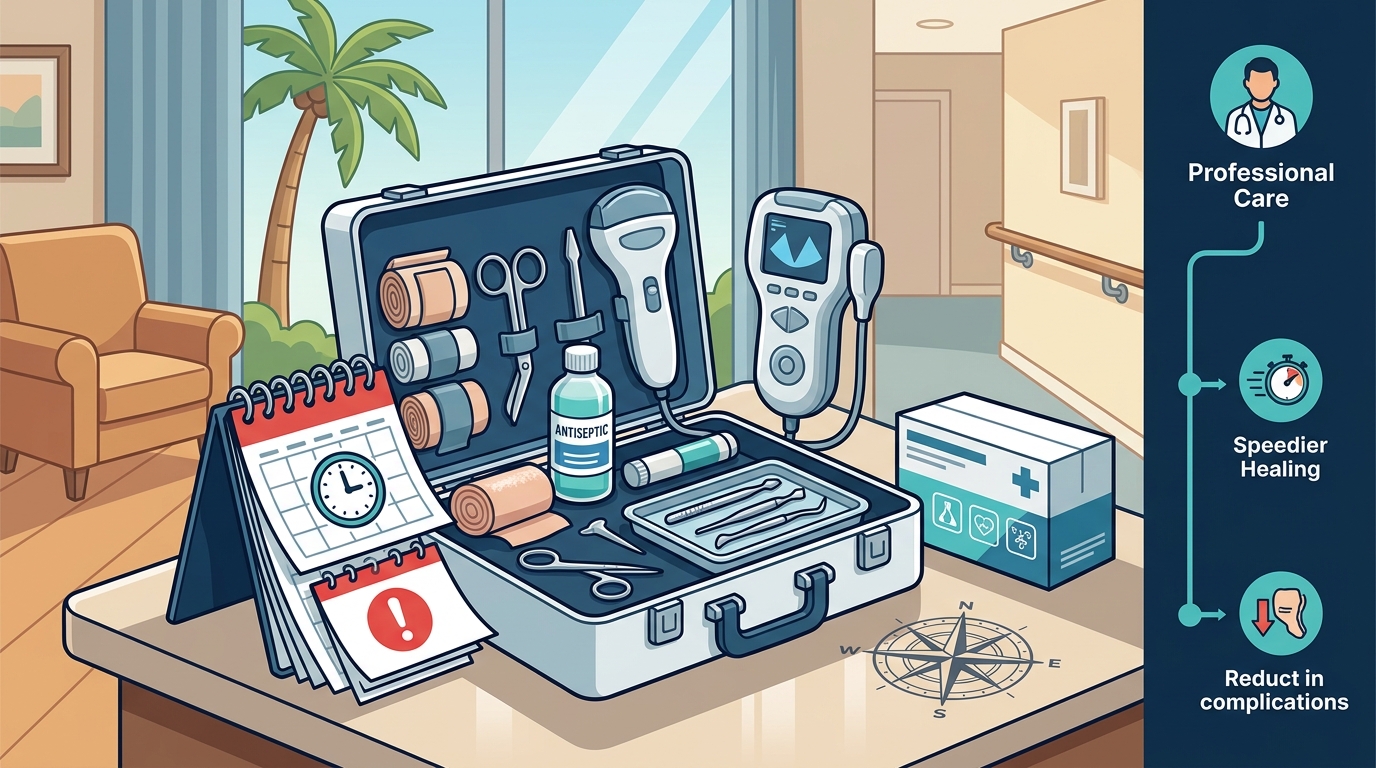
Mistake 5: Ignoring Specialized Wound Types
Not all wounds are treated the same way. A critical mistake is assuming that a standard dressing or home care routine is sufficient for all wound types. Different wounds require specialized approaches based on their etiology, location, and severity.
For example, arterial ulcers require coordinated vascular and specialized wound-care plans, including wound bed preparation and the use of antimicrobial silver dressings. Diabetic foot ulcers often need offloading strategies and infection management to prevent progression to severe complications. Pressure injuries require pressure relief and specialized dressings to promote granulation tissue formation.
Healix360 serves Southern California and Nevada, providing access to advanced mobile wound care for a variety of wound types. Their services include treatment for arterial wounds, amputation-site wounds, and burn wounds. By recognizing the specific needs of the wound, patients can ensure they receive the most appropriate and effective care.
Key Takeaways
- Insurance Verification: Confirm Medicare Part B and major insurance acceptance before scheduling to avoid coverage surprises.
- Physician-Led Care: Prioritize providers who offer in-person assessments by licensed physicians or nurse practitioners for complex wounds.
- Timely Intervention: Seek care within 3–5 business days of noticing wound issues to prevent complications and hospitalization.
- Wound Bed Preparation: Understand that debridement and infection management are critical steps before applying advanced dressings.
- Specialized Treatment: Recognize that different wound types (arterial, diabetic, pressure) require specific, tailored treatment plans.
- Regional Availability: Healix360 serves Los Angeles, Orange, Riverside, San Bernardino, Ventura, San Diego counties, and Las Vegas.
- Proactive Coordination: Work with a coordination service that supports patients, hospitals, and skilled nursing facilities for seamless care.
Frequently Asked Questions
What is mobile wound care?
Mobile wound care is a service where licensed physicians and nurse practitioners deliver hospital-grade treatment for chronic and complex wounds directly to the patient's home, assisted living community, or skilled nursing facility.
Does Healix360 accept Medicare?
Yes, Healix360 accepts Medicare Part B and most major insurance plans, making advanced wound care accessible to a wide range of patients in Southern California and Nevada.
How quickly can I get a mobile wound care appointment?
Care typically begins within 3–5 business days after requesting a provider. Prompt scheduling is essential for effective wound management and preventing complications.
What types of wounds are treated by mobile wound care providers?
Mobile wound care providers treat a variety of wounds, including diabetic foot ulcers, venous leg ulcers, pressure injuries, post-surgical wounds, arterial ulcers, amputation-site wounds, and burn wounds.
Why is physician-led wound care important?
Physician-led wound care ensures that every patient is assessed in person by a licensed physician who designs and oversees a comprehensive treatment plan, including surgical debridement, advanced biologics, and regenerative therapies.
What areas does Healix360 serve?
Healix360 serves Southern California, including Los Angeles, Orange, Riverside, San Bernardino, Ventura, and San Diego counties, as well as Las Vegas, Nevada.
How do I request a provider?
You can request a provider by calling 877-545-1300 or by visiting the Wound Care Answers Hub for more information on how to begin care.
Schedule Your Mobile Wound Care Assessment
Do not let common scheduling mistakes delay your path to healing. Early intervention with physician-led mobile wound care can prevent complications, reduce hospitalizations, and improve quality of life. Healix360 coordinates access to advanced wound care for patients in their homes, assisted living communities, and skilled nursing facilities across Southern California and Nevada.
Contact Healix360 today to begin your care journey. Call 877-545-1300 or visit the Healix360 homepage to request a provider and experience the convenience and expertise of mobile wound care.