
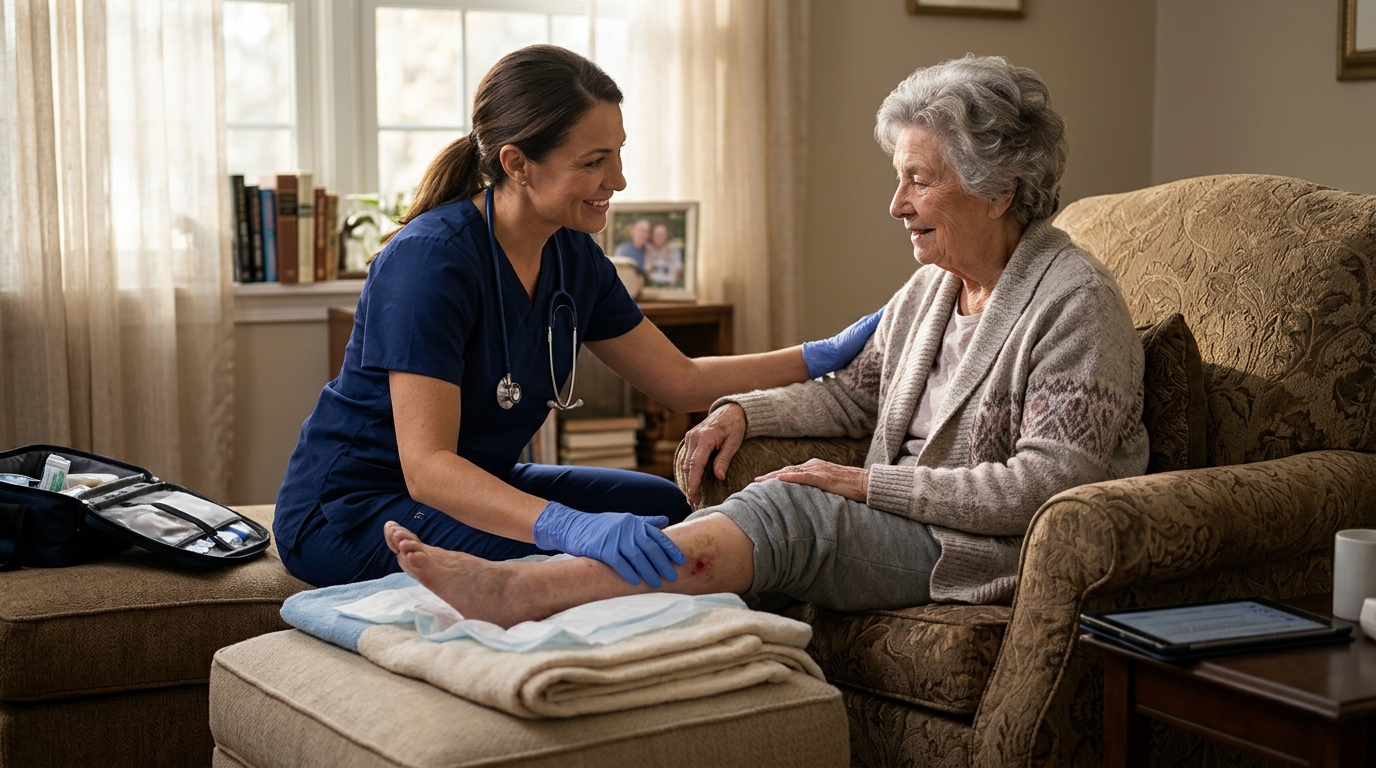
Yes, Medicare Part B covers medically necessary wound care for severe pressure ulcers and bed sores when delivered in the patient's home. This coverage includes evaluation, debridement, and advanced therapies provided by licensed physicians or nurse practitioners. The mobile delivery setting does not change the fundamental coverage rules for these services.
Understanding Medicare Part B Benefits
Medicare Part B is the medical insurance component that covers outpatient services, including physician visits and preventive care. For chronic wound management, Part B is the primary vehicle for coverage. A pressure ulcer is a localized injury to the skin and underlying soft tissue, usually over a bony prominence, resulting from prolonged pressure and shear forces. When these injuries become severe, such as Stage 3 or Stage 4, they require specialized clinical intervention that falls under Part B benefits.
The coverage is not limited to hospital settings. Medicare recognizes that home health and outpatient services can be equally effective and often more convenient for patients with mobility limitations. This means that if a physician determines that a patient requires debridement or advanced dressing changes, these services are billable under Part B whether they occur in a clinic or in the patient's residence. The key factor is medical necessity, not the location of the visit.
Qualifying Services and Procedures
Not every interaction with a wound is covered by the same benefit category. Medicare distinguishes between routine nursing care and physician-level interventions. For severe pressure ulcers, the following services are typically covered under Part B when medically necessary:
- Physician Evaluation: Initial and ongoing assessments by a licensed physician or nurse practitioner to determine the stage of the ulcer and the appropriate treatment plan.
- Debridement: The surgical or mechanical removal of dead tissue (necrosis) from the wound bed. This is a critical step in healing severe ulcers and is a distinct billable service.
- Advanced Therapies: This includes the application of skin substitutes, negative pressure wound therapy (NPWT), and other regenerative treatments. These may be billed under the Durable Medical Equipment (DME) benefit or as professional services, depending on the specific product and protocol.
- Dressings and Supplies: Medicare may cover surgical dressings used for wounds caused by or treated with a qualifying surgical procedure. However, it does not cover every type of gauze or over-the-counter dressing. Quantity, replacement frequency, and supplier documentation play a significant role in coverage.
It is important to note that authorization is case-specific. Approval for a device or therapy does not guarantee payment for the entire course of treatment. Each claim is reviewed against specific criteria regarding the wound's condition, prior treatments, and documentation.
The Home Setting and Coverage Rules
Patients often worry that receiving care at home might complicate their insurance claims. In reality, the site of service is a neutral factor in most Part B wound care scenarios. The mobile delivery model removes logistical barriers for patients who cannot travel to a hospital outpatient wound center. For individuals with limited mobility, traveling weekly for treatment is often physically impossible. By bringing the clinician to the bedside, the care remains within the scope of outpatient medical services.
Healix360 coordinates this process by ensuring that all visits are documented as medically necessary outpatient services. Our team verifies benefits before the first visit, confirming that the specific procedures planned are covered under the patient's Medicare Part B plan. This pre-verification step helps prevent unexpected denials and ensures that the patient understands their cost-sharing responsibilities, such as the 20% coinsurance after meeting the annual deductible.
Medicare Advantage and Prior Authorization
Many beneficiaries enroll in Medicare Advantage (Part C) plans instead of traditional Medicare. These plans must provide at least the same benefits as Part A and Part B, but they often apply additional rules. A Medicare Advantage plan may require prior authorization for certain wound products, procedures, or out-of-network care. It may also apply network restrictions, meaning the patient must use a provider within the plan's approved network.
Prior authorization is a plan's advance review of whether a proposed service meets its coverage criteria. While traditional Medicare may not always require prior authorization for standard wound care, Medicare Advantage plans frequently do. Healix360's coordination team handles these authorizations on behalf of the patient. We work directly with the plan to secure approval for advanced therapies like skin substitutes or NPWT pumps. This administrative burden is removed from the patient and family, allowing them to focus on healing rather than navigating insurance bureaucracy.

Costs and Financial Responsibilities
Understanding the out-of-pocket costs is essential for financial planning. Under traditional Medicare Part B, patients are responsible for the annual deductible and 20% coinsurance for covered services. Without insurance, a single in-home wound visit can range from $250 to $600, with advanced therapies billed separately. However, for Medicare beneficiaries, these costs are significantly reduced by the insurance coverage.
Healix360 provides a written cost estimate before the first visit. This estimate details the expected coverage and the patient's potential out-of-pocket expenses. Transparency in billing is a core value of our service. We ensure that patients are not surprised by bills and that all services rendered are properly documented for reimbursement. For those with Medi-Cal, coverage may also apply to medically necessary wound-related professional services, home health, and equipment, subject to specific benefit and authorization requirements.
Key Takeaways
- Medicare Part B covers medically necessary wound care, including evaluation, debridement, and advanced therapies, when delivered in the home.
- The mobile delivery setting does not change the fundamental coverage rules for physician-led wound care.
- Medicare Advantage plans may require prior authorization and network adherence, which must be verified before treatment begins.
- Advanced therapies like skin substitutes and NPWT may be covered under the DME benefit or as professional services, depending on specific criteria.
- Healix360 verifies coverage and provides a written cost estimate before the first visit to ensure financial transparency.
- Patients are responsible for the annual deductible and 20% coinsurance under traditional Medicare Part B.
- Medi-Cal may cover wound-related services, but eligibility for one service does not automatically establish coverage for every visit or device.
Frequently Asked Questions
Does Medicare cover in-home wound care for bed sores?
Yes. Medicare Part B covers medically necessary wound care, including evaluation, debridement, and advanced therapies, when delivered by a licensed physician or nurse practitioner in the patient's home, assisted living community, or skilled nursing facility. The mobile delivery does not change coverage.
Does Medicare cover wound VAC therapy at home?
Medicare Part B may cover a negative pressure wound therapy pump and supplies under the durable medical equipment benefit when the wound, prior treatment, ordering, supplier, and documentation criteria are met. Coverage is case-specific; approval, delivery, or a clinician's order does not guarantee payment.
What is the difference between Medicare Part B and Medicare Advantage for wound care?
Medicare Part B is the standard federal insurance for outpatient services. Medicare Advantage (Part C) is a private plan alternative that must cover at least the same benefits but may apply network, referral, and prior authorization rules. Whether a particular mobile clinician or product is covered must be verified with the specific Advantage plan.
How much does mobile wound care cost with Medicare?
With Medicare Part B, patients typically pay the annual deductible and 20% coinsurance for covered services. Without insurance, a single in-home wound visit typically runs $250 to $600. Healix360 verifies coverage and provides a written cost estimate before the first visit.
Do I need a referral to see a mobile wound care provider?
A referral from a primary care physician is often helpful for coordination but is not always strictly required for Medicare Part B coverage of physician services. However, some Medicare Advantage plans may require a referral. Our team can help determine the specific requirements for your plan.
Does Medicare cover wound dressings and supplies?
Medicare Part B may cover surgical dressings used for a wound caused by, or treated with, a qualifying surgical procedure when the applicable requirements are met. It does not cover every gauze pad or over-the-counter dressing, and quantity, replacement frequency, supplier, and documentation rules apply.
Next Steps for Patients and Caregivers
Navigating insurance coverage for severe pressure ulcers can be complex, but it is a manageable process with the right support. The first step is to confirm that your specific plan covers the services you need. Healix360 specializes in this coordination, ensuring that licensed physicians and nurse practitioners can deliver high-quality care without administrative delays. To plan your visit and verify your benefits, today. We are here to bridge the gap between complex wounds and the specialized clinical care they need.