
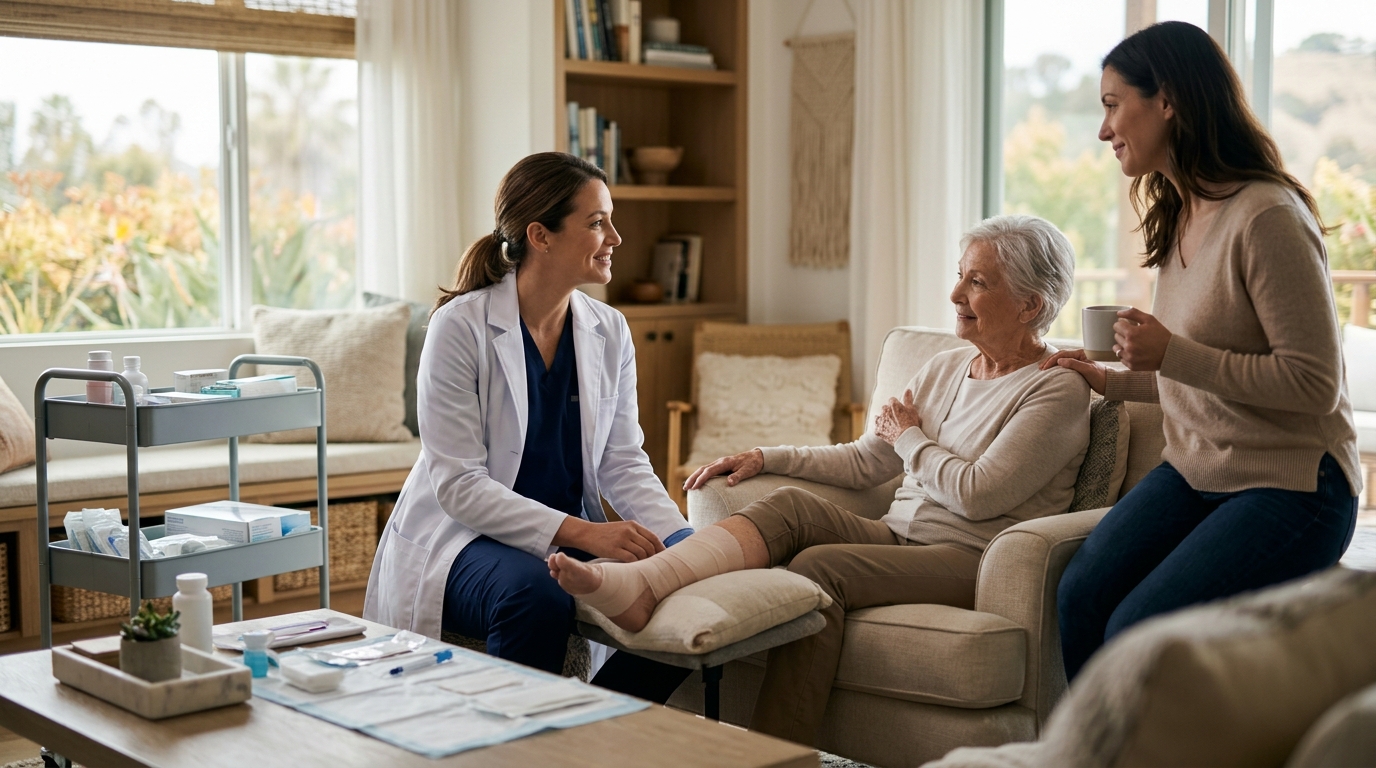
Chronic wounds affect millions of individuals annually, yet traditional clinic visits often create barriers to timely healing. According to the CDC, diabetic foot ulcers alone impact a significant portion of the diabetic population, requiring immediate and specialized intervention. Healix360 bridges this gap by coordinating access to physician-led advanced wound care directly in the patient's home, assisted living community, or skilled nursing facility. This model eliminates the physical strain of travel while ensuring hospital-grade treatment is delivered by licensed professionals.
What Is Mobile Wound Care?
Mobile wound care represents a paradigm shift in chronic disease management. It is not merely a convenience service but a clinical necessity for patients with limited mobility or complex comorbidities. Research published in PMC indicates that home-based care can significantly reduce hospital readmissions for wound-related complications. By bringing the clinic to the patient, clinicians can assess the home environment for risk factors and deliver consistent, uninterrupted therapy.
Healix360 operates as a coordination service that connects patients with independent licensed physicians and nurse practitioners. This network ensures that care is not only accessible but also specialized. The service area covers Southern California and Nevada, including Los Angeles, Orange, Riverside, San Bernardino, Ventura, and San Diego counties, as well as Las Vegas. This geographic focus allows for rapid deployment of care teams, typically beginning within three to five business days of the initial request.
The Healix360 Physician-Led Approach
Every patient is assessed in person by a licensed physician or nurse practitioner. This direct assessment is critical because wound etiology varies widely. A wound caused by poor circulation requires a different strategy than one caused by pressure or infection. The clinician designs and oversees a treatment plan that may include surgical debridement, advanced biologics, regenerative therapies, compression, and offloading.
This approach ensures that the treatment is dynamic. As the wound bed changes, the therapy adapts. For example, a wound that is initially necrotic may require sharp debridement before it can accept a skin graft. According to the Wound, Ostomy and Continence Nurses Society, standardized protocols in wound care improve healing rates by up to 30 percent. Healix360 clinicians adhere to these evidence-based standards to maximize patient outcomes.
Diagnostic Precision
Accurate diagnosis is the foundation of effective treatment. Clinicians evaluate the wound bed, surrounding tissue, and systemic health factors. They look for signs of infection, such as erythema, warmth, or purulent drainage. They also assess the patient's nutritional status and blood glucose levels, which are crucial for healing. This comprehensive evaluation ensures that the treatment plan addresses the root cause, not just the symptom.
Advanced Treatment Modalities
Advanced wound care utilizes a variety of technologies and therapies to accelerate healing. These modalities are selected based on the specific characteristics of the wound and the patient's overall health. The goal is to create an optimal environment for tissue regeneration and to prevent complications such as amputation or sepsis.

Negative Pressure Wound Therapy
Negative Pressure Wound Therapy (NPWT) is a cornerstone of advanced care. It involves applying a vacuum dressing to the wound bed. This process removes excess fluid, reduces edema, and promotes blood flow. Studies in wound care journals show that NPWT can reduce healing time for complex wounds by several weeks. It is particularly effective for large, deep, or infected wounds.
Bioengineered Skin and Regenerative Therapies
For wounds that have failed to heal with conventional methods, bioengineered skin offers a powerful alternative. These products mimic the structure and function of natural skin, providing a scaffold for new tissue growth. Regenerative therapies, such as platelet-rich plasma (PRP), can also stimulate the body's natural healing mechanisms. These options are especially valuable for diabetic foot ulcers and venous leg ulcers.
Sharp Debridement
Sharp debridement is the mechanical removal of dead, damaged, or infected tissue. This process is essential for promoting healthy granulation tissue. It is performed by a licensed clinician using sterile instruments. According to Wound Care Advisor, regular debridement is one of the most effective ways to accelerate wound healing. It also allows the clinician to assess the true depth and extent of the wound.
Types of Wounds Treated
Healix360 coordinates care for a wide range of chronic and complex wounds. Each type requires a specialized approach. Understanding the specific characteristics of each wound type is crucial for selecting the right treatment.
| Wound Type | Primary Cause | Key Treatment Focus |
|---|---|---|
| Diabetic Foot Ulcers | Neuropathy and poor circulation | Offloading, infection control, debridement |
| Venous Leg Ulcers | Venous insufficiency | Compression therapy, edema management |
| Pressure Injuries | Prolonged pressure on skin | Pressure redistribution, wound bed prep |
| Arterial Ulcers | Arterial insufficiency | Wound bed preparation, antimicrobial dressings |
| Amputation-Site Wounds | Post-surgical complications | Residual limb management, bioengineered skin |
| Burn Wounds | Thermal or chemical injury | Amniotic tissue, infection management |
Diabetic Foot Ulcers
Diabetic foot ulcers are a serious complication of diabetes. They often result from neuropathy, which reduces sensation in the feet, and poor circulation, which impairs healing. According to the American Diabetes Association, foot ulcers are a leading cause of hospitalization for people with diabetes. Early intervention is critical to prevent amputation. Healix360 clinicians provide specialized offloading and debridement to promote healing.
Pressure Injuries
Pressure injuries, also known as bedsores, occur when skin and underlying tissue are damaged by prolonged pressure. They are common in elderly patients and those with limited mobility. Prevention and treatment focus on pressure redistribution and wound bed preparation. The National Pressure Injury Advisory Panel recommends regular repositioning and specialized support surfaces to prevent these injuries.
Insurance and Medicare Coverage
Healix360 accepts Medicare Part B and most major insurance plans. This coverage ensures that patients can access advanced care without prohibitive out-of-pocket costs. Medicare Part B covers medically necessary wound care services, including physician visits and durable medical equipment. Understanding your coverage is essential for seamless care coordination.
Patients should verify their specific benefits with their insurance provider. However, Healix360's coordination team assists with prior authorizations and documentation to facilitate coverage. This support reduces administrative burden for patients and caregivers, allowing them to focus on recovery.
Key Takeaways
- Rapid Access: Care typically begins within 3–5 business days of the initial request.
- Physician-Led: Every patient is assessed in person by a licensed physician or nurse practitioner.
- Comprehensive Coverage: Healix360 serves Southern California and Nevada, including major counties and Las Vegas.
- Insurance Friendly: Medicare Part B and most major insurance plans are accepted.
- Advanced Therapies: Treatments include NPWT, bioengineered skin, and sharp debridement.
- Specialized Care: Specific protocols for diabetic foot ulcers, venous leg ulcers, and pressure injuries.
- Home-Based: Hospital-grade treatment delivered in the patient's home or facility.
Frequently Asked Questions
How quickly can I get a mobile wound care provider?
Healix360 coordinates care to begin within 3–5 business days. The speed of deployment depends on the urgency of the wound and the availability of providers in your specific area.
Does Healix360 accept Medicare?
Yes, Healix360 accepts Medicare Part B and most major insurance plans. Our coordination team can assist with verifying your specific benefits and handling prior authorizations.
What types of wounds do you treat?
We treat a wide range of chronic and complex wounds, including diabetic foot ulcers, venous leg ulcers, pressure injuries, post-surgical wounds, arterial ulcers, and burn wounds.
Is the care provided in the home hospital-grade?
Yes. Licensed physicians and nurse practitioners deliver hospital-grade treatment using advanced technologies such as negative pressure wound therapy and bioengineered skin.
What is the difference between mobile wound care and a clinic visit?
Mobile wound care eliminates the need for travel, which can be difficult for patients with mobility issues. It also allows clinicians to assess the home environment for risk factors that might not be visible in a clinic.
How is the treatment plan determined?
Every patient is assessed in person by a licensed clinician. The treatment plan is customized based on the wound type, depth, and the patient's overall health status.
Do you serve assisted living facilities?
Yes, Healix360 provides access to advanced mobile wound care for patients in their homes, assisted living communities, and skilled nursing facilities.
Request Your Provider
Do not let chronic wounds delay your recovery. Healix360 provides immediate access to physician-led advanced wound care. Contact us today to begin your journey toward healing. Call 877-545-1300 or request a provider online to schedule your in-home assessment.