
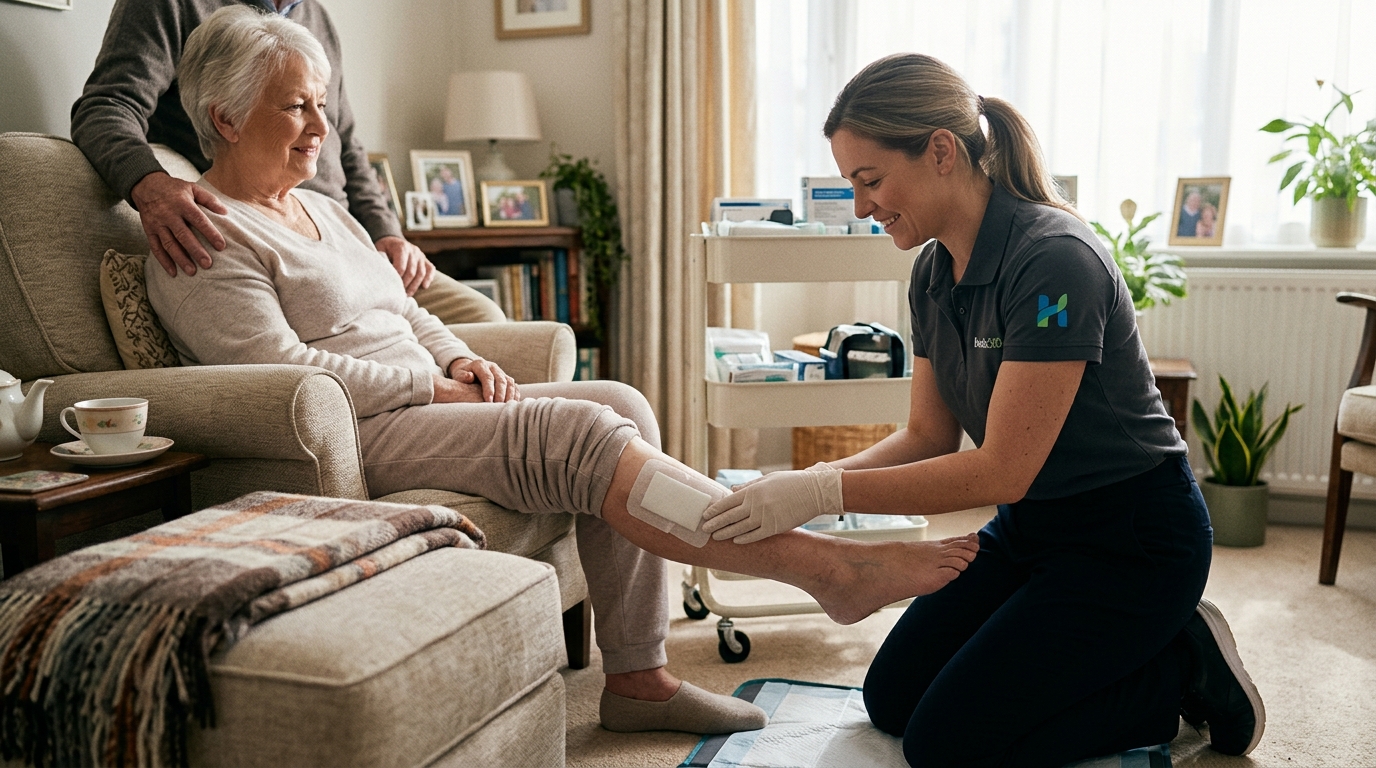
Chronic wounds affect millions of individuals across the United States, yet traditional clinic visits often create significant barriers to timely treatment. According to the Centers for Disease Control and Prevention, approximately 8.2 million people in the U.S. have chronic wounds that require specialized medical attention. This statistic highlights the critical need for accessible, high-quality care that does not rely on patient mobility. Mobile wound care services bridge this gap by bringing hospital-grade treatment directly to the patient's living space. This guide explores how in-home wound care works, who qualifies for these services, and the clinical benefits of receiving treatment in a familiar environment. (About Healix360 Mobile Wound)
What Is Mobile Wound Care?
Mobile wound care is a specialized medical service where licensed physicians and nurse practitioners travel to a patient's home, assisted living facility, or skilled nursing center to provide advanced treatment. Unlike standard home health aides who may perform basic dressing changes, mobile wound care clinicians are trained to manage complex, non-healing wounds using advanced modalities. This model of care eliminates the stress of transportation and allows patients to heal in a comfortable, low-stress environment. (Wound Care Answers Hub)
The core definition of mobile wound care is a physician-led service that delivers advanced therapeutic interventions directly to the patient's location. This approach ensures that patients with limited mobility receive the same level of clinical rigor as those who can visit a hospital outpatient department. The service is particularly vital for elderly populations and individuals with chronic conditions that impair their ability to travel. (Our Approach Healix360 Mobile)
Healix360 coordinates access to these physician-led services across Southern California and Nevada. By leveraging a network of independent licensed providers, the service ensures that patients receive timely assessments and customized treatment plans. The goal is to accelerate healing, prevent complications, and reduce the likelihood of hospital readmission.
Who Needs In-Home Treatment?
Not every wound requires mobile intervention, but certain conditions benefit significantly from in-home care. Patients who struggle with mobility due to age, disability, or recent surgery are primary candidates. Additionally, individuals with complex medical histories often find that the convenience of home visits improves their adherence to treatment protocols.
According to recent healthcare data, patients who receive home-based wound care report higher satisfaction rates and faster healing times compared to those who must travel to clinics. This is largely due to the reduced physical strain and the personalized attention provided by the visiting clinician. The following groups are most likely to benefit from this service:
- Seniors with limited mobility or transportation issues.
- Patients recovering from major surgeries who cannot leave home.
- Individuals with chronic conditions like diabetes or vascular disease.
- Residents of assisted living facilities or skilled nursing centers.
Healix360 serves Los Angeles, Orange, Riverside, San Bernardino, Ventura, and San Diego counties, as well as Las Vegas. This geographic focus ensures that providers are nearby, allowing for rapid response times and consistent care continuity. The service accepts Medicare Part B and most major insurance plans, making it accessible to a wide range of patients.
Common Wound Types Treated at Home
Mobile wound care clinicians are equipped to handle a wide variety of wound types. The treatment approach depends entirely on the underlying cause of the wound, the stage of healing, and the patient's overall health. Understanding the specific type of wound is crucial for determining the appropriate therapeutic intervention.
Diabetic foot ulcers are one of the most common conditions treated in the home setting. These wounds occur due to poor circulation and nerve damage, making them prone to infection and slow healing. Venous leg ulcers are another frequent diagnosis, caused by faulty veins in the legs that allow blood to pool. Pressure injuries, often called bedsores, develop in individuals who are bedridden or use wheelchairs for extended periods.
Post-surgical wounds and arterial ulcers also require specialized care. Arterial ulcers result from reduced blood flow to the extremities and can be particularly painful. Burn wounds, including moderate-to-severe thermal injuries, may also be managed in the home environment to minimize infection risk and promote tissue regeneration.
| Wound Type | Primary Cause | Common In-Home Treatments |
|---|---|---|
| Diabetic Foot Ulcers | Poor circulation and neuropathy | Offloading, debridement, advanced dressings |
| Venous Leg Ulcers | Venous insufficiency | Compression therapy, wound cleansing |
| Pressure Injuries | Prolonged pressure on skin | Repositioning, moisture management |
| Arterial Ulcers | Reduced arterial blood flow | Antimicrobial dressings, vascular coordination |
| Post-Surgical Wounds | Surgical incision complications | Infection monitoring, suture care |
The In-Home Healing Process
The journey to healing begins with a comprehensive assessment. Every patient is evaluated in person by a licensed physician or nurse practitioner. This initial visit is critical for establishing a baseline and identifying any immediate risks. The clinician will examine the wound bed, assess the surrounding tissue, and review the patient's medical history.
Based on the assessment, the clinician designs a personalized treatment plan. This plan may include surgical debridement, which is the removal of dead or damaged tissue to promote healthy growth. Advanced biologics and regenerative therapies may also be utilized to accelerate the healing process. Compression therapy is often prescribed for venous ulcers to improve blood flow and reduce swelling.
Follow-up visits are scheduled to monitor progress and adjust the treatment plan as needed. The frequency of these visits depends on the severity of the wound and the patient's response to therapy. Regular monitoring ensures that complications are caught early and that the healing trajectory remains on track. This continuous care model is a cornerstone of effective mobile wound care.
Healix360's approach emphasizes coordination between the mobile clinician and the patient's primary care provider. This collaborative model ensures that all aspects of the patient's health are considered. The service typically begins within three to five business days of the initial request, ensuring timely access to care.

Insurance and Cost Considerations
Understanding the financial aspects of mobile wound care is essential for patients and their families. Many patients worry about the cost of in-home medical services, but coverage options are often more accessible than expected. Medicare Part B is a primary payer for many wound care services, including physician visits and certain treatments.
Most major insurance plans also cover mobile wound care, particularly when the service is deemed medically necessary. It is important to verify coverage details with your insurance provider before beginning treatment. Healix360 accepts Medicare Part B and most major insurance plans, simplifying the billing process for patients. The service aims to reduce out-of-pocket expenses by coordinating directly with insurance companies.
For patients without insurance, the cost of mobile wound care can vary based on the complexity of the treatment and the frequency of visits. However, the long-term cost savings of preventing hospitalizations and complications often outweigh the initial investment. Early intervention is key to avoiding more expensive medical interventions down the line.
Key Takeaways
- Mobile wound care brings hospital-grade treatment directly to the patient's home, assisted living facility, or skilled nursing center.
- Healix360 serves Southern California and Nevada, including Los Angeles, Orange, Riverside, San Bernardino, Ventura, San Diego counties, and Las Vegas.
- The service accepts Medicare Part B and most major insurance plans, ensuring accessibility for a wide range of patients.
- Care typically begins within three to five business days of the initial request, providing rapid access to treatment.
- Licensed physicians and nurse practitioners deliver advanced therapies, including debridement, biologics, and compression.
- Common conditions treated include diabetic foot ulcers, venous leg ulcers, pressure injuries, and post-surgical wounds.
- In-home care reduces the stress of transportation and improves patient comfort and adherence to treatment protocols.
Frequently Asked Questions
What types of wounds can be treated at home?
Mobile wound care clinicians can treat a wide variety of wounds, including diabetic foot ulcers, venous leg ulcers, pressure injuries, post-surgical wounds, arterial ulcers, and burn wounds. The treatment plan is customized to the specific wound type and the patient's medical history.
Is mobile wound care covered by insurance?
Yes, Healix360 accepts Medicare Part B and most major insurance plans. Coverage details may vary, so it is recommended to verify benefits with your insurance provider. The service aims to minimize out-of-pocket costs by coordinating directly with payers.
How quickly can I get an in-home visit?
Care typically begins within three to five business days of the initial request. Healix360 coordinates access to physician-led care rapidly to ensure that patients receive timely treatment for their wounds.
Who provides the mobile wound care services?
Services are provided by independent licensed physicians and nurse practitioners. These clinicians are trained in advanced wound care and deliver hospital-grade treatment in the patient's home or facility.
What areas does Healix360 serve?
Healix360 serves Southern California and Nevada. This includes Los Angeles, Orange, Riverside, San Bernardino, Ventura, and San Diego counties in California, as well as Las Vegas in Nevada.
What is the difference between mobile wound care and home health aides?
Mobile wound care is physician-led and involves advanced medical interventions such as debridement and biologics. Home health aides typically perform basic tasks like dressing changes and hygiene assistance. Mobile wound care addresses the complex medical needs of non-healing wounds.
Can assisted living facilities use this service?
Yes, Healix360 supports patients in their homes, assisted living communities, and skilled nursing facilities. The service is designed to integrate seamlessly with existing care environments to provide comprehensive wound management.
Contact Healix360
If you or a loved one is struggling with a chronic wound, do not wait for it to heal on its own. Early intervention is critical to preventing complications and promoting faster healing. Healix360 is ready to coordinate access to advanced mobile wound care for you. Call 877-545-1300 or request a provider to begin your journey to healing today. Experience the convenience and clinical excellence of physician-led in-home wound care.