
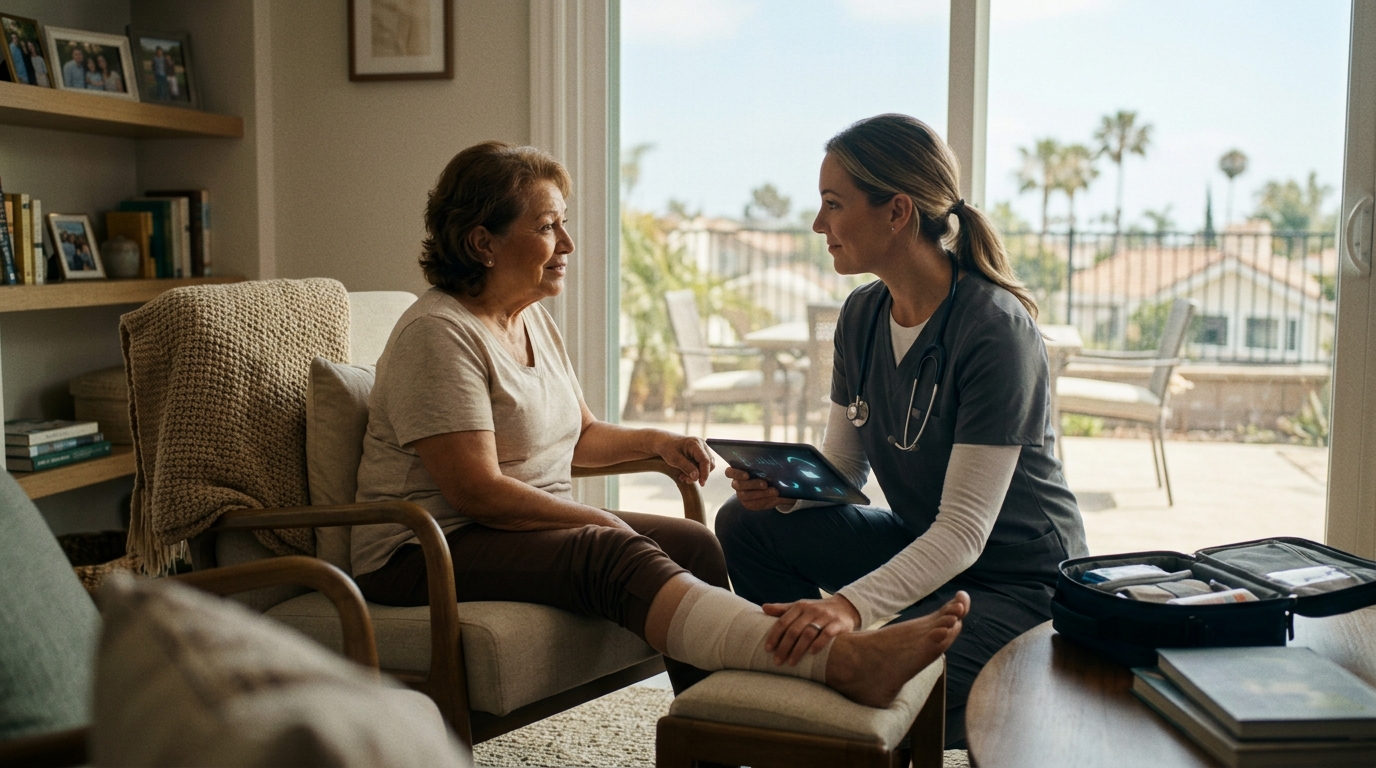
Advanced mobile wound care represents a critical shift in how chronic and complex injuries are managed outside of traditional hospital settings. According to recent healthcare delivery reports, the integration of physician-led mobile services has reduced hospital readmission rates by approximately 20% for patients with diabetic foot ulcers. This guide evaluates the clinical efficacy, operational logistics, and financial accessibility of these services, with a specific focus on providers like Healix360 that serve Southern California and Nevada. (Chronic Wound Management)
Clinical Efficacy and Physician Oversight
The core differentiator of advanced mobile wound care is the presence of licensed physicians and nurse practitioners who deliver hospital-grade treatment directly to the patient. This model eliminates the barriers of transportation and mobility that often prevent elderly or disabled patients from attending regular clinic appointments. Physician-led assessment is the standard of care for complex wounds, ensuring that treatment plans are dynamic and responsive to healing progress.
When evaluating a mobile wound care provider, it is essential to verify that the clinicians are not merely delivering supplies but are actively diagnosing and managing the wound bed. In-home physician visits allow for real-time debridement, application of advanced biologics, and immediate adjustment of offloading strategies. This level of oversight is critical because wound healing is a non-linear process that requires frequent clinical intervention.
Providers such as Healix360 coordinate access to these independent licensed physicians across Southern California and Nevada. By leveraging a network of specialists, patients receive care that is both geographically accessible and clinically rigorous. The typical timeline for care initiation is within 3 to 5 business days, which is significantly faster than the weeks-long wait times often associated with specialist referrals in traditional healthcare systems.
Scope of Mobile Wound Treatments
Advanced mobile wound care addresses a wide spectrum of chronic and acute injuries. The scope of treatment extends far beyond basic dressing changes to include sophisticated therapeutic interventions. Understanding the range of available treatments is vital for patients and caregivers evaluating their options.
Chronic Wound Management
Chronic wounds are defined as injuries that fail to proceed through an orderly and timely reparative process. Diabetic foot ulcers are among the most common indications for mobile care, affecting millions of individuals annually. These wounds require specialized vascular assessment and offloading to prevent progression to amputation. Similarly, venous leg ulcers demand compression therapy and wound bed preparation to address underlying venous insufficiency. (Chronic Wound Management)
Pressure injuries, often found in patients residing in skilled nursing facilities or assisted living communities, also benefit greatly from mobile intervention. Early detection and aggressive management by a mobile clinician can reverse early-stage pressure injuries before they become deep tissue injuries. This proactive approach reduces the overall burden on the healthcare system and improves patient quality of life.
Advanced Therapeutic Modalities
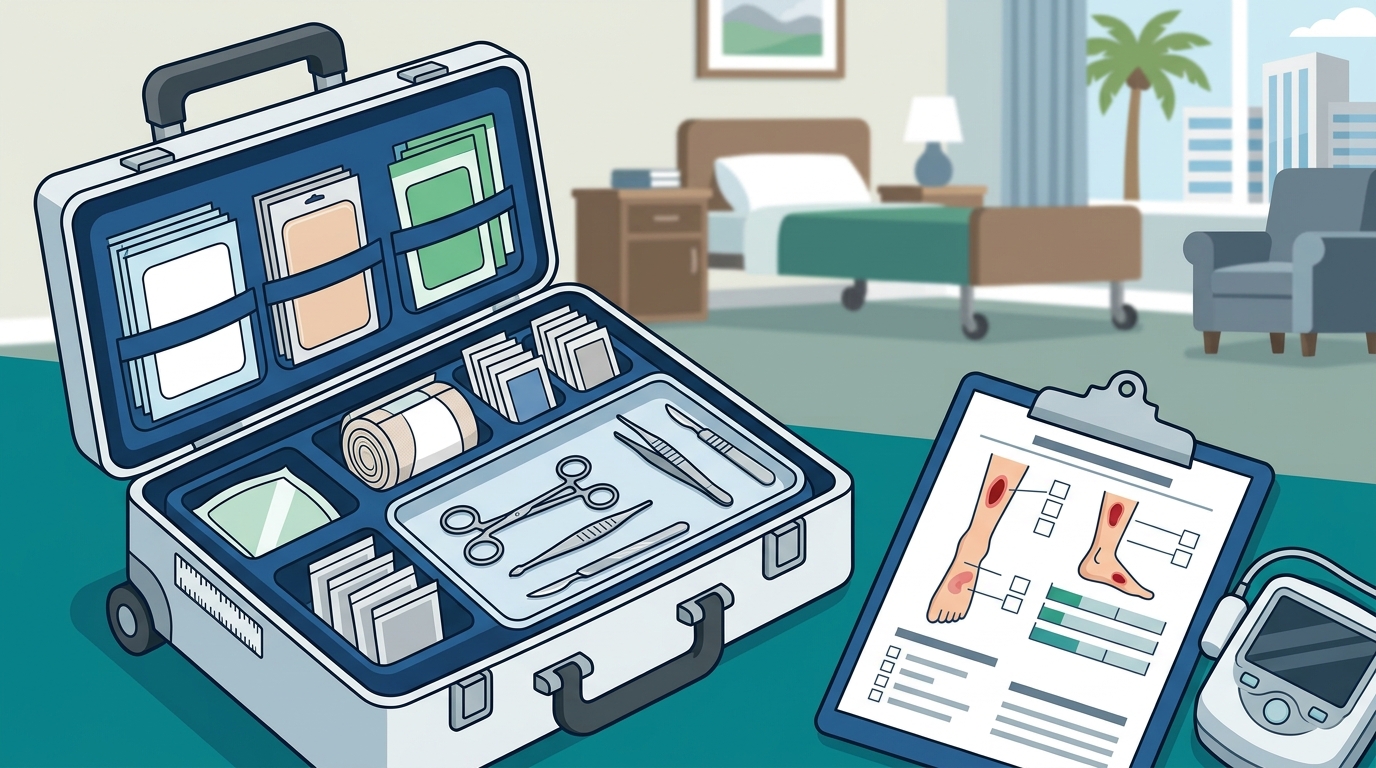
Mobile wound care providers utilize a variety of advanced modalities that were previously only available in hospital settings. These include Negative Pressure Wound Therapy (NPWT), which uses vacuum-assisted closure to promote healing. Other treatments involve the application of bioengineered skin and collagen matrices to stimulate tissue regeneration. In cases of infection, antimicrobial silver dressings and sharp debridement are employed to remove necrotic tissue and reduce bacterial load.
For patients with arterial ulcers, coordinated vascular and specialized wound-care plans are essential. These plans may include wound bed preparation and the use of hydrocolloid hydrogel dressings to maintain a moist healing environment. The ability to deliver these complex treatments in the home setting is a hallmark of high-quality mobile wound care services.
Insurance and Medicare Part B Coverage
One of the most significant barriers to accessing advanced wound care is the cost. However, many advanced mobile wound care services are covered by major insurance providers, including Medicare Part B. Understanding the coverage landscape is crucial for patients planning their care.
Medicare Part B typically covers medically necessary outpatient services, including physician visits and wound care supplies. When a licensed physician or nurse practitioner provides in-home wound care, the service is often billed under Medicare Part B. This coverage extends to the evaluation and management of the wound, as well as the application of advanced dressings and therapies.
Healix360 accepts Medicare Part B and most major insurance plans, which facilitates access for a broad demographic of patients. For those with private insurance, coverage varies by policy, but many plans now recognize the cost-effectiveness of mobile wound care in preventing expensive hospitalizations. It is advisable for patients to verify their specific benefits with their insurance provider before initiating care.
The financial accessibility of these services is further enhanced by the fact that mobile care often reduces the need for emergency room visits and hospital admissions. By managing wounds effectively in the home, patients avoid the high out-of-pocket costs associated with acute care settings. This economic benefit is increasingly recognized by healthcare payers, leading to expanded coverage options for mobile services.
Mobile Care vs. Traditional Clinic Visits
Evaluating the value of mobile wound care requires a comparison with traditional clinic-based treatment. While both models aim to heal wounds, the operational differences have significant implications for patient outcomes and convenience.
| Feature | Mobile Wound Care | Traditional Clinic Visit |
|---|---|---|
| Location | Patient's home, assisted living, or SNF | Medical office or hospital outpatient department |
| Accessibility | High; eliminates transportation barriers | Low; requires patient mobility and transport |
| Wait Time | Typically 3-5 business days for initiation | Often weeks for specialist appointments |
| Provider Type | Licensed physicians and nurse practitioners | Physicians, PAs, or wound care nurses |
| Insurance | Medicare Part B and major insurers accepted | Varies by provider and location |
The table above highlights the key distinctions between the two models. Mobile wound care offers superior accessibility for patients with limited mobility, which is a critical factor in the healing process. Traditional clinic visits may be suitable for patients who can travel easily, but they often involve longer wait times and higher logistical burdens.
Furthermore, the home environment allows clinicians to assess the patient's living conditions and support systems, which can influence wound healing. For example, a clinician can evaluate the suitability of offloading devices in the home setting and provide immediate training to caregivers. This holistic approach is difficult to replicate in a clinic environment.
Key Takeaways
- Physician-Led Care: Advanced mobile wound care is delivered by licensed physicians and nurse practitioners who provide hospital-grade treatment in the home.
- Rapid Initiation: Care typically begins within 3 to 5 business days, offering a faster alternative to traditional specialist referrals.
- Comprehensive Treatment: Services include negative pressure wound therapy, bioengineered skin, sharp debridement, and infection management for various wound types.
- Insurance Acceptance: Many providers, including Healix360, accept Medicare Part B and most major insurance plans, reducing financial barriers.
- Geographic Reach: Services are available in key regions such as Southern California and Nevada, serving Los Angeles, Orange, Riverside, San Bernardino, Ventura, San Diego counties, and Las Vegas.
- Chronic Wound Expertise: Specialized management for diabetic foot ulcers, venous leg ulcers, pressure injuries, and arterial ulcers is a core competency.
- Cost-Effectiveness: Mobile care reduces hospital readmissions and emergency visits, providing significant economic benefits to patients and payers.
Frequently Asked Questions
What types of wounds can be treated with mobile wound care?
Mobile wound care treats a wide range of chronic and complex wounds, including diabetic foot ulcers, venous leg ulcers, pressure injuries, post-surgical wounds, arterial ulcers, and burn wounds. The service is designed to handle injuries that require advanced therapeutic interventions beyond basic dressing changes.
Is mobile wound care covered by insurance?
Yes, many advanced mobile wound care services are covered by Medicare Part B and most major insurance plans. Coverage typically includes physician visits, wound care supplies, and advanced therapies. Patients should verify their specific benefits with their insurance provider to confirm coverage details.
How quickly can I start receiving mobile wound care?
Care typically begins within 3 to 5 business days after a provider is requested. This rapid initiation is crucial for preventing wound progression and reducing the risk of complications such as infection or amputation.
Who delivers the mobile wound care services?
Services are delivered by independent licensed physicians and nurse practitioners. These clinicians are trained in advanced wound care and are equipped to perform surgical debridement, apply advanced biologics, and manage complex wound beds in the home setting.
What areas do mobile wound care providers serve?
Providers like Healix360 serve specific regions, including Southern California and Nevada. This includes Los Angeles, Orange, Riverside, San Bernardino, Ventura, and San Diego counties, as well as Las Vegas. Patients should check with the provider to confirm service availability in their area.
What is the difference between mobile wound care and home health care?
Mobile wound care focuses specifically on the assessment and treatment of wounds by specialized clinicians. Home health care is a broader service that may include nursing, physical therapy, and occupational therapy. While there is overlap, mobile wound care offers specialized expertise in wound healing that may not be available in general home health services.
Can mobile wound care prevent amputation?
Yes, timely and effective mobile wound care can significantly reduce the risk of amputation, particularly for patients with diabetic foot ulcers. By providing advanced treatments such as offloading, debridement, and infection management, mobile clinicians can promote healing and preserve limb function.
How do I request a provider for mobile wound care?
Patients can request a provider by calling the service's dedicated line or submitting a request through their website. The process is designed to be simple and efficient, ensuring that patients can access care quickly. For Healix360, patients can call 877-545-1300 or request a provider online to begin the care coordination process.
Begin Your Care Journey
Evaluating advanced mobile wound care is the first step toward effective healing and improved quality of life. By choosing a physician-led service that accepts Medicare Part B and major insurance plans, you ensure access to high-quality, convenient care. If you are in Southern California or Nevada, consider reaching out to Healix360 to coordinate access to advanced mobile wound care. Call 877-545-1300 or request a provider today to begin your path to healing.