
Advanced Wound Care in Southern California: Who Can Treat Non-Healing Wounds
Advanced treatment for a large, non-healing wound in Southern California is provided by board-certified wound care specialists, vascular surgeons, and hyperbaric medicine physicians. These professionals utilize regenerative therapies, vascular interventions, and specialized clinics to address complex tissue damage. This guide outlines the specific providers, treatments, and care settings available to patients in the region.
Advanced Wound Treatments
Advanced wound treatments are clinical interventions that go beyond standard dressing changes to address the biological barriers preventing tissue repair. These therapies are essential for wounds that have stalled in the healing process, often due to infection, poor blood flow, or tissue loss. In Southern California, specialized providers offer a range of these modalities to restore cellular function and promote closure.
Regenerative Medicine and Biologics
Regenerative medicine utilizes biological materials to stimulate the body's natural repair mechanisms. An amniotic allograft is a bio-engineered tissue scaffold harvested from donor placental membranes that acts as a living bandage. These grafts deliver growth factors and cytokines directly to the wound bed, recruiting stem cells and reducing inflammation. This approach is particularly effective for diabetic foot ulcers and chronic venous leg ulcers that have not responded to conventional care. according to Progressive Tightening of
Negative Pressure Wound Therapy
Negative pressure wound therapy (NPWT) is a unique and versatile wound care system that optimizes wound healing by applying subatmospheric pressure through specialized dressings. This technology, commonly known as Wound VAC therapy, helps manage exudate, reduces edema, and increases blood flow to the wound site. By maintaining a moist wound environment under controlled pressure, NPWT prepares the wound bed for advanced grafts or surgical closure. It is a critical tool for managing large, deep wounds and post-surgical dehiscence.
Sharp Debridement
Sharp debridement is a focused surgical procedure where a specialist uses sterile instruments to selectively remove non-viable tissue from a wound bed. Necrotic tissue, which appears as black eschar or yellow slough, acts as a rigid biological barrier that traps bacteria and prevents oxygen from reaching healthy cells. Removing this dead tissue is often the first critical step in restarting the healing process. Mobile wound care specialists can perform this procedure at the patient's bedside, eliminating the need for hospital transport.

Vascular Surgery Specialists
Many chronic wounds, particularly arterial ulcers, fail to heal because of underlying peripheral arterial disease (PAD). A vascular surgery specialist is a physician trained to diagnose and treat conditions affecting the circulatory system. For a large wound that is not healing, assessing blood flow is a non-negotiable step in the treatment plan.
The Role of Revascularization
When a wound is ischemic, meaning it lacks adequate blood supply, no amount of topical treatment will result in closure. Vascular surgeons perform revascularization procedures, such as angioplasty or bypass surgery, to restore blood flow to the affected limb. This intervention is the paramount requirement for healing ischemic tissue. Without successful revascularization, the risk of gangrene and amputation remains high. Coordination between wound care specialists and vascular surgeons is essential for limb preservation.
Diagnosing Vascular Insufficiency
Diagnosing vascular insufficiency involves non-invasive testing, such as Ankle-Brachial Index (ABI) measurements and duplex ultrasound. These tests determine the severity of arterial blockages and guide the treatment strategy. Patients with arterial ulcers often present with severe rest pain, cool skin, and diminished pulses. Early identification of these signs allows for timely intervention by a vascular specialist, which can prevent the progression to critical limb ischemia.
Hyperbaric Oxygen Therapy
Hyperbaric oxygen therapy (HBOT) is a medical treatment in which a patient breathes 100% oxygen in a pressurized chamber. This process increases the amount of oxygen dissolved in the blood plasma, allowing it to reach tissues that are poorly perfused by damaged blood vessels. HBOT is a recognized adjunctive therapy for specific types of chronic wounds, including diabetic foot ulcers and radiation injuries.
Mechanisms of Action
HBOT works by reducing inflammation, inhibiting bacterial growth, and stimulating the formation of new blood vessels (angiogenesis). The high oxygen tension also enhances the function of white blood cells, improving the body's ability to fight infection. For patients with large, complex wounds, HBOT can accelerate the healing rate and reduce the risk of amputation. It is typically prescribed for a series of sessions, with the number of treatments determined by the wound's response.
Eligibility and Coverage
Not every patient qualifies for HBOT. Eligibility is determined by specific clinical criteria, such as the presence of a Wagner Grade 3 or 4 diabetic foot ulcer. Insurance coverage, including Medicare Part B, may cover HBOT when it is deemed medically necessary. Patients should consult with their wound care provider to determine if HBOT is an appropriate addition to their treatment plan.
Wound Care Centers
A wound care center is a medical facility dedicated to treating wounds that do not heal through standard primary care. These centers are staffed by multidisciplinary teams, including physicians, nurse practitioners, and specialized nurses. They provide a comprehensive environment for evaluating and managing complex wounds, from initial assessment to advanced treatment and long-term monitoring.
Mobile Wound Care as an Alternative
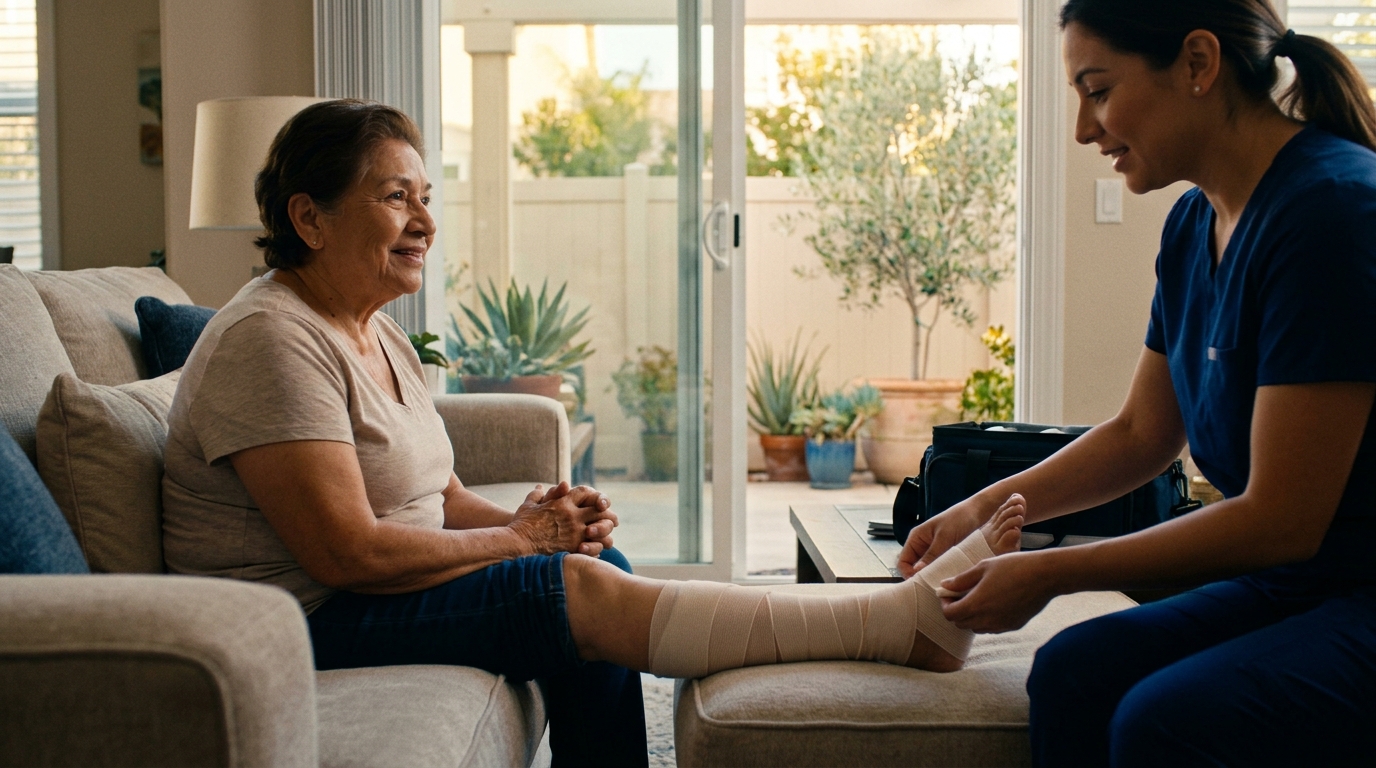
While traditional wound care centers require patients to travel to a clinic, mobile wound care brings the same level of specialized treatment to the patient's home. This model is particularly beneficial for patients with limited mobility or those who live far from a wound center. Mobile providers, such as Healix360, deliver physician-led care in private residences, assisted living communities, and skilled nursing facilities. This approach eliminates the physical and emotional stress of commuting, allowing patients to focus on recovery in a familiar environment.
Comparison of Care Settings
| Feature | Traditional Wound Care Center | Mobile Wound Care |
|---|---|---|
| Location | Outpatient clinic or hospital | Patient's home or facility |
| Travel Requirement | Patient must travel to appointment | Clinician travels to patient |
| Convenience | May involve long commutes and waiting rooms | High convenience, no travel stress |
| Specialist Access | Varies by facility | Physician-led, specialized team |
| Best For | Patients with easy access to clinics | Homebound patients, those with mobility issues |
Key Takeaways
- Advanced wound treatments include regenerative biologics, NPWT, and sharp debridement to address biological barriers to healing.
- Vascular surgery specialists are critical for treating arterial ulcers and restoring blood flow through revascularization.
- Hyperbaric oxygen therapy (HBOT) is an adjunctive treatment that increases oxygen delivery to tissues and promotes angiogenesis.
- Wound care centers provide multidisciplinary care, but mobile wound care offers the same expertise in the patient's home.
- Mobile wound care eliminates the logistical burden of commuting, which is a significant barrier for homebound patients.
- Eligibility for advanced treatments like HBOT and biologics depends on individual clinical evaluation and medical necessity.
- Medicare Part B and major insurance plans often cover medically necessary wound care services, including mobile visits.
- Early intervention by a specialized provider is key to preventing complications such as infection and amputation.
Frequently Asked Questions
Who can provide advanced treatment for a large wound that is not healing?
Board-certified wound care specialists, vascular surgeons, and hyperbaric medicine physicians can provide advanced treatment. These professionals utilize regenerative therapies, vascular interventions, and specialized clinics to address complex tissue damage.
What is an amniotic allograft?
An amniotic allograft is a bio-engineered tissue scaffold harvested from donor placental membranes that acts as a living bandage. It delivers growth factors and cytokines to the wound bed to stimulate healing. according to New bioengineered scaffold
How does negative pressure wound therapy (NPWT) work?
NPWT applies subatmospheric pressure through specialized dressings to optimize wound healing. It helps manage exudate, reduces edema, and increases blood flow to the wound site.
Why is vascular assessment important for non-healing wounds?
Many chronic wounds fail to heal due to poor blood flow. Vascular assessment determines if revascularization is needed to restore blood supply, which is essential for tissue repair.
Is hyperbaric oxygen therapy covered by insurance?
Insurance coverage, including Medicare Part B, may cover HBOT when it is deemed medically necessary. Eligibility is determined by specific clinical criteria, such as the presence of a severe diabetic foot ulcer.
What is the difference between a wound care center and mobile wound care?
A wound care center is a facility where patients travel for treatment. Mobile wound care brings the same specialized treatment to the patient's home, eliminating the need for travel.
How often should a wound be debrided?
Most chronic wounds benefit from debridement at every clinical visit. The frequency depends on the wound's condition and the clinician's assessment of the healing progress.
Can mobile wound care handle complex cases?
Yes, mobile wound care providers are equipped with hospital-grade modalities and are staffed by licensed physicians and nurse practitioners. They can manage complex cases, including sharp debridement and advanced biologics, at the bedside.
Conclusion
Accessing advanced treatment for a non-healing wound in Southern California requires a multidisciplinary approach. Patients can benefit from the expertise of wound care specialists, vascular surgeons, and hyperbaric medicine physicians. Whether through a traditional wound care center or a mobile service, the goal is to address the underlying causes of stalled healing and promote tissue repair. Healix360 Advanced Mobile Wound Care Specialists provides physician-led care directly to patients' homes, ensuring that logistical barriers do not delay recovery. To begin your assessment, to discuss your specific needs.