
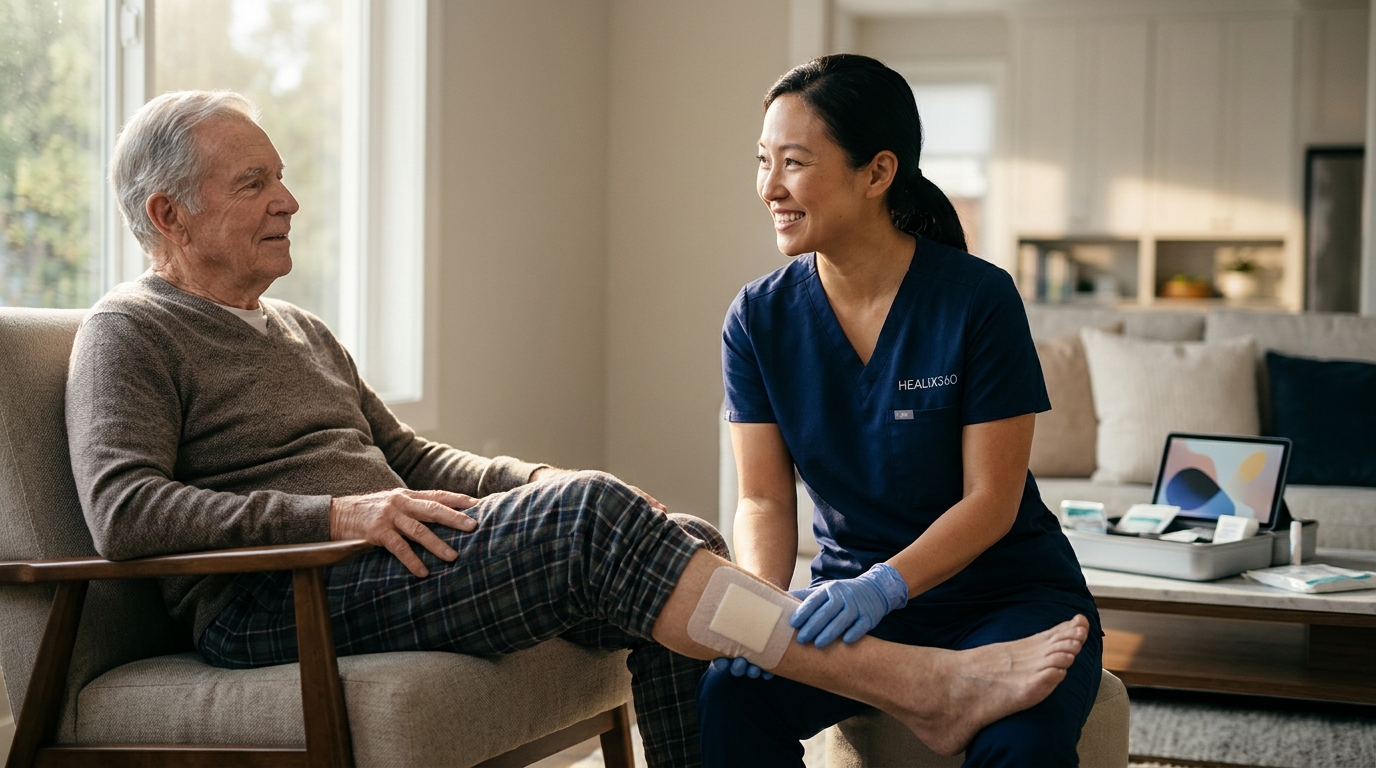
Advanced wound care treatments are specialized medical interventions designed to accelerate the healing of chronic, complex, or non-healing wounds that have stalled despite standard care. These therapies target the underlying biological barriers to healing, such as poor blood flow, infection, or tissue loss. Healix360 connects patients with licensed clinicians who utilize these evidence-based modalities in the home setting.
Biologic and Cellular Therapies
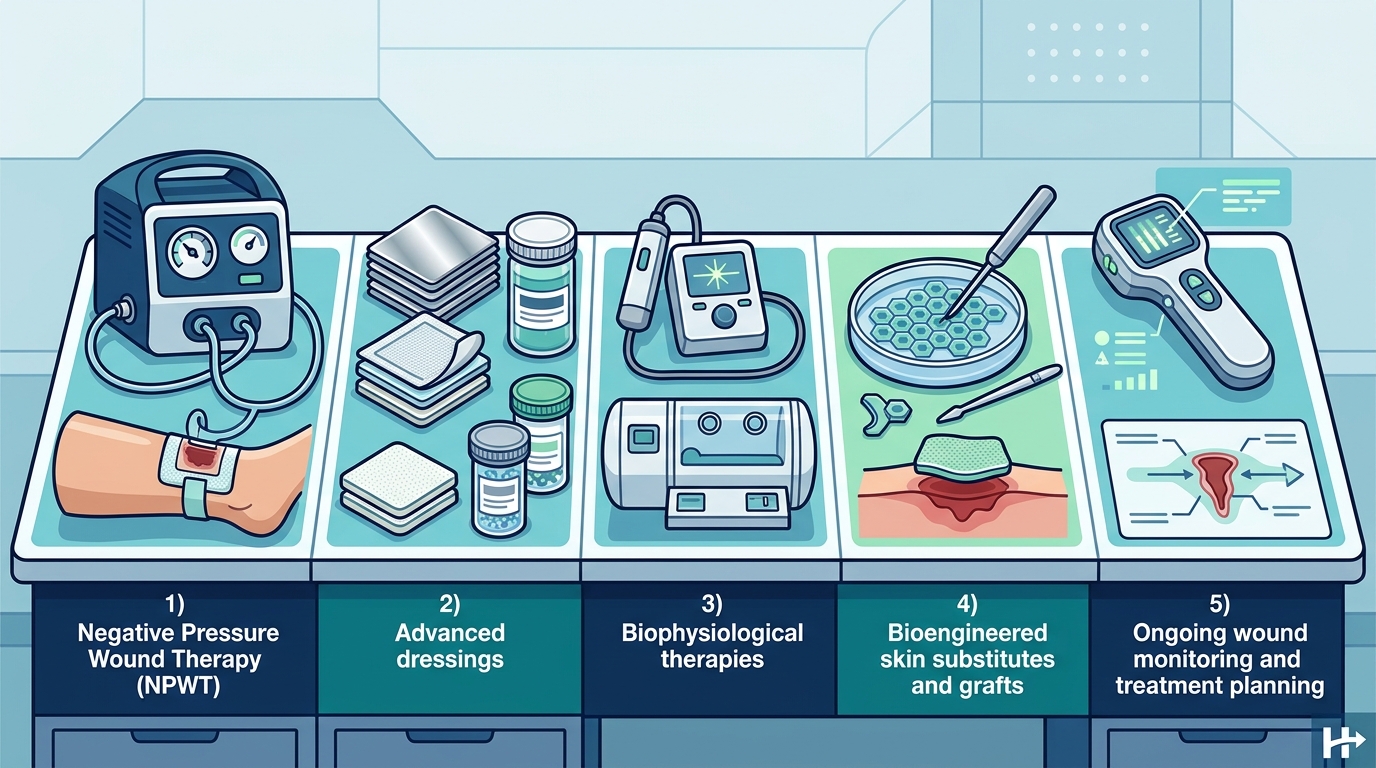
Biologic therapies introduce living cells or growth factors to the wound bed to restart the healing cascade. Cellular and Tissue-Based Products (CTPs) are laboratory-grown or donor-derived materials that act as scaffolding for new tissue growth. These products are particularly effective for diabetic foot ulcers and venous leg ulcers where the body's natural repair mechanisms are compromised.
Amniotic membrane grafts, derived from donated placental tissue, provide a protective barrier while delivering anti-inflammatory properties. They help reduce pain and swelling while signaling the body to produce new skin cells. For patients with deep wounds or poor circulation, these biologics can significantly reduce the time to closure compared to traditional dressings alone.
Negative Pressure Wound Therapy (NPWT)
Negative Pressure Wound Therapy (NPWT) is a mechanical treatment that applies controlled vacuum pressure to the wound. This technology, commonly known as a wound VAC, promotes healing by drawing fluid from the wound bed and maintaining a moist environment. It is a standard of care for large, deep, or heavily draining wounds.
NPWT helps manage heavy exudate and reduces the risk of infection by keeping the wound sealed. In the home setting, clinicians can set up and monitor these devices, ensuring the pressure settings are optimized for the patient's specific wound characteristics. This approach is frequently used for post-surgical wounds and amputation sites to prepare the tissue for closure or prosthetic fitting.
Sharp Debridement and Wound Bed Preparation
Before advanced therapies can work, the wound bed must be prepared. Sharp debridement is the surgical removal of dead, damaged, or infected tissue using sterile instruments. This procedure is critical because necrotic tissue acts as a barrier to healing and a breeding ground for bacteria.
Physicians and nurse practitioners perform this procedure in the home to ensure the wound bed is clean and ready for biologics or dressings. The TIME framework (Tissue, Infection, Moisture, Edge) guides this process. By systematically addressing each component, clinicians can transform a stalled wound into one that is actively healing. This level of intervention is often not available in standard home health settings, making mobile physician-led care essential for complex cases.
Advanced Dressing Technologies
Modern wound dressings go beyond simple gauze. They are engineered to manage the specific environment of the wound. Antimicrobial silver dressings are infused with silver ions to eradicate bacteria and manage biofilm, which is a common cause of chronic wound stagnation. Hydrocolloid and hydrogel dressings, on the other hand, are designed to donate or retain moisture, optimizing the healing environment for different wound types.
The choice of dressing depends on the wound's exudate level, depth, and location. For arterial ulcers, which are often dry and pale, moisture-donating dressings are preferred. For venous ulcers, which are often wet, moisture-retentive dressings are used. Clinicians select these products based on a detailed assessment, ensuring the wound environment is ideal for cellular repair.
Regenerative Medicine and Stem Cell Applications
Regenerative medicine focuses on repairing or replacing damaged tissue at the cellular level. Stem cell therapy involves the application of the body's natural repair cells to the wound site. These cells promote new cell growth, reduce inflammation, and improve blood flow. This approach is being increasingly explored for deep wounds and those with poor vascular supply.
While still evolving, these therapies represent the frontier of wound care. They offer hope for patients who have failed multiple standard treatments. Clinicians trained in regenerative wound care can evaluate whether a patient is a candidate for these advanced options. The goal is to provide the body with the tools it needs to repair damaged tissue naturally, reducing the need for amputation or long-term wound management.
Key Takeaways
- Biologics and CTPs are essential for restarting healing in chronic wounds like diabetic ulcers.
- NPWT (Wound VAC) is a mechanical therapy that manages drainage and promotes granulation in deep wounds.
- Sharp debridement is a critical first step to remove necrotic tissue and prepare the wound bed.
- Advanced dressings are selected based on the specific needs of the wound, such as moisture balance or infection control.
- Regenerative therapies like stem cells offer new options for complex, non-healing wounds.
- Mobile wound care brings these advanced treatments to the patient's home, improving access and convenience.
Frequently Asked Questions
What is a chronic wound?
A chronic wound is a wound that has failed to proceed through an orderly and timely healing process, typically defined as a wound that has not shown meaningful progress after about 4 weeks of standard care.
Does Medicare cover advanced wound care treatments?
Medicare Part B covers medically necessary wound care, including evaluation, debridement, skin substitutes, and negative pressure wound therapy, when delivered by a licensed physician or nurse practitioner in the patient's home.
How often do I need to see a wound care specialist?
Visit frequency depends on the wound's severity and healing progress. Most chronic wounds benefit from weekly visits until healthy granulation tissue covers the wound bed, but this is determined by the clinician's evaluation.
Can advanced treatments be done at home?
Yes, many advanced treatments, including sharp debridement, NPWT setup, and biologic application, can be performed in the patient's home, assisted living community, or skilled nursing facility.
What is the difference between a wound VAC and a regular dressing?
A wound VAC (NPWT) applies controlled vacuum pressure to promote healing and manage heavy drainage, while a regular dressing primarily protects the wound and manages moisture without active suction.
Are stem cell therapies widely available for wound care?
Stem cell therapies are an emerging area of regenerative medicine. Availability depends on the specific clinical protocol and patient eligibility, which must be determined by a qualified specialist.
Start Your Healing Journey
If you or a loved one is struggling with a wound that is not healing, Healix360 can connect you with a licensed physician or nurse practitioner for a comprehensive evaluation. Our team verifies insurance coverage and coordinates care directly to your home or facility, ensuring you have access to the advanced treatments you need.