
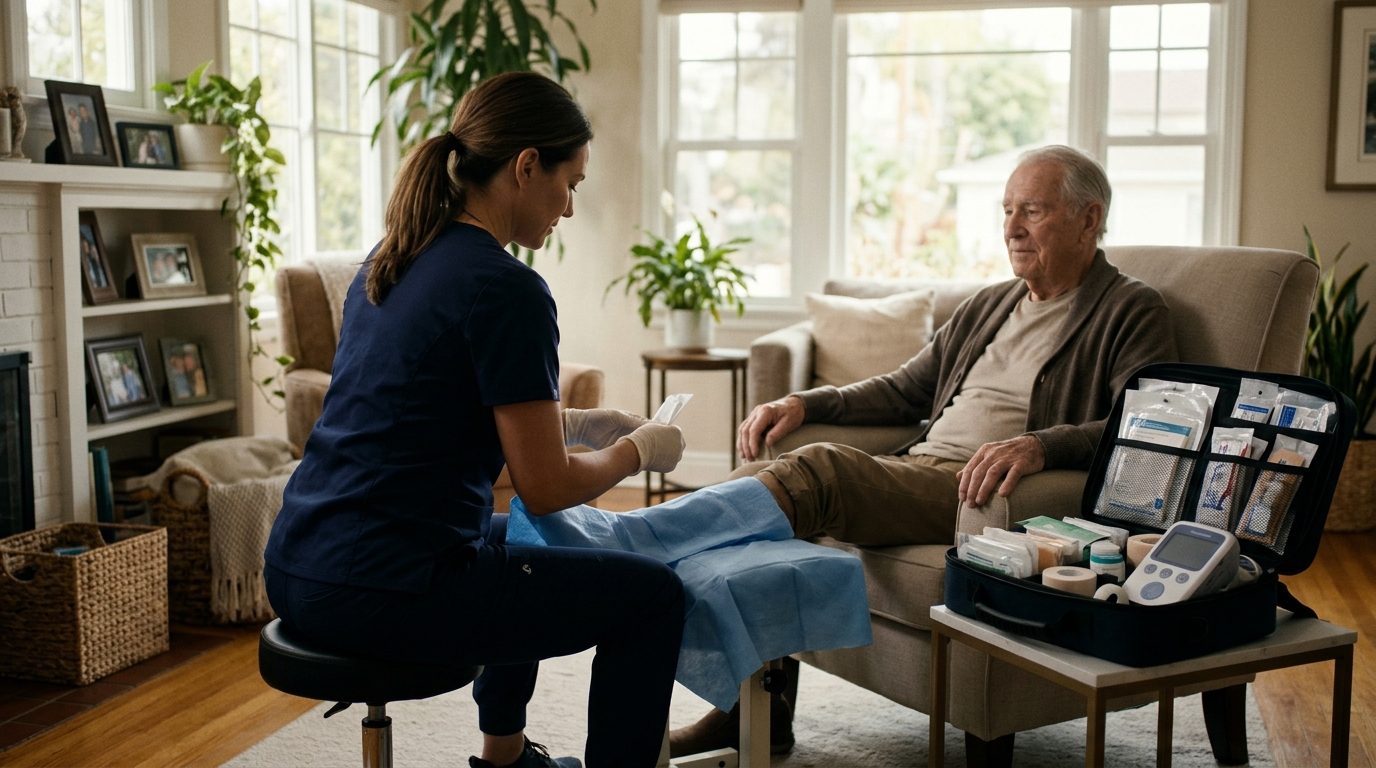
When a wound fails to progress through normal healing stages, standard bandages are rarely enough. Advanced wound care utilizes specialized therapies to restart the healing cascade in complex, chronic, or stalled wounds. Healix360 Advanced Mobile Wound Care Specialists brings these physician-led interventions directly to your home or facility, removing the barrier of travel for patients in Southern California.
1. Sharp Debridement
Removing dead tissue is the critical first step to restarting the healing process. Sharp debridement is the surgical removal of necrotic, sloughy, or infected tissue using sterile instruments like scalpels or curettes. This procedure is essential because dead tissue acts as a barrier to new cell growth and serves as a breeding ground for bacteria. Licensed physicians and nurse practitioners perform this procedure at the bedside to prepare the wound bed for advanced therapies.
2. Negative Pressure Wound Therapy (NPWT)
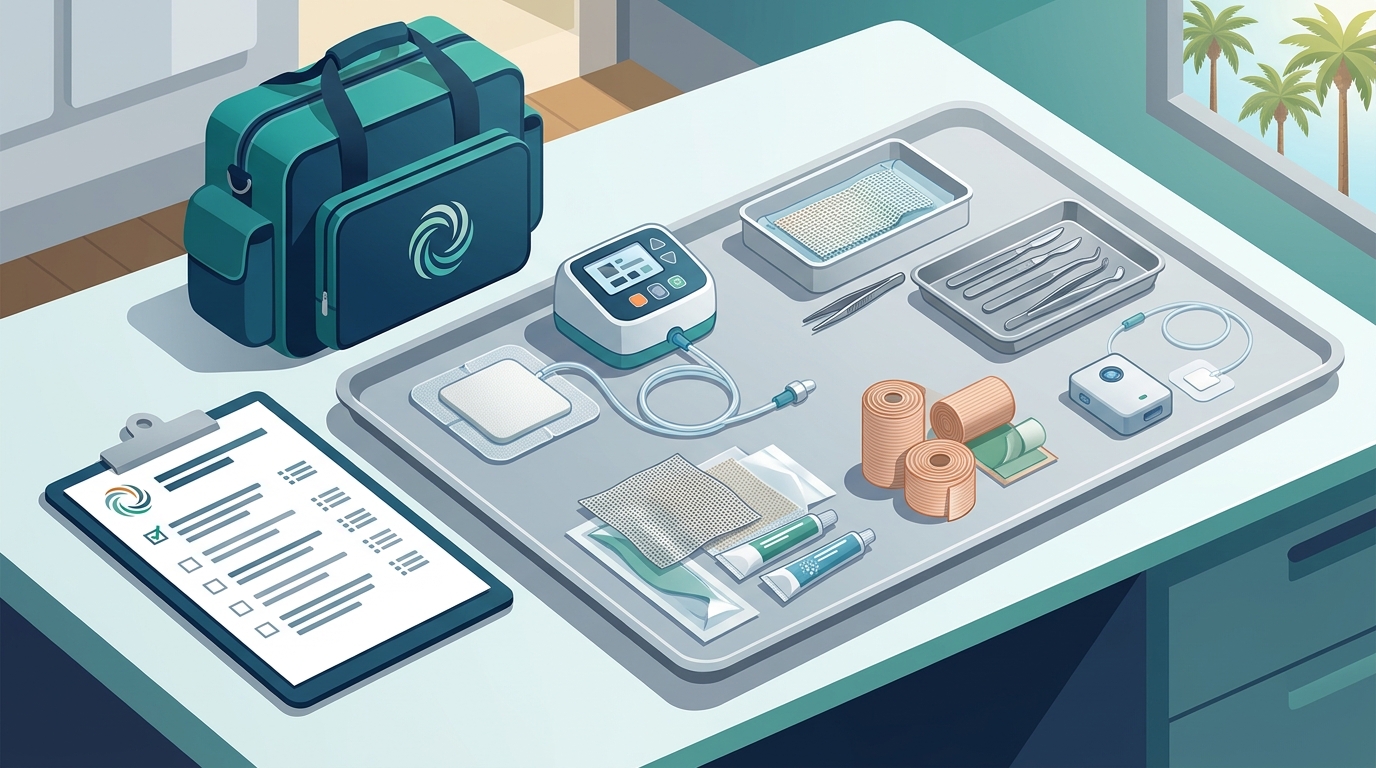
Wound VACs apply controlled suction to manage drainage and promote tissue growth. Negative pressure wound therapy is a treatment that uses a sealed dressing and a pump to apply consistent negative pressure to the wound bed. This therapy helps remove excess fluid, reduces edema, and stimulates the formation of granulation tissue. It is particularly effective for large, deep wounds with heavy exudate that are difficult to manage with standard dressings.
3. Bioengineered Skin Substitutes
Laboratory-grown cellular matrices can replace lost tissue in severe wounds. Bioengineered skin substitutes are advanced biological products designed to act as a scaffold for new tissue growth. These products provide a structural matrix that supports the migration of the patient's own cells across the wound surface. They are often utilized for large defects where the body cannot close the wound on its own.
4. Amniotic Membrane Grafts
Donated placental tissue provides a natural barrier and growth factors. Amniotic membrane grafts are derived from donated human birth tissues and serve as a biological dressing. They contain growth factors that signal the body to heal, while also providing a protective barrier against infection and moisture loss. These grafts are frequently used for venous ulcers, pressure sores, and burns to reduce inflammation and accelerate re-epithelialization.
5. Advanced Antimicrobial Dressings
Targeted infection control is necessary to prevent systemic complications. Advanced antimicrobial dressings are infused with agents such as silver ions to eradicate bacteria and manage biofilm. Infection is a primary reason wounds become chronic, as bacterial burden consumes the energy required for healing. Clinicians select specific antimicrobial dressings based on wound culture results and the severity of local infection.
6. Compression Therapy
Managing venous hypertension is key for lower extremity wounds. Compression therapy is the application of graduated pressure to the limb to improve venous return and reduce swelling. For venous leg ulcers, this treatment addresses the underlying cause of the wound by counteracting the high pressure in the veins. It is often combined with other advanced therapies to maintain a dry, healthy wound environment.
7. Offloading and Pressure Relief
Eliminating mechanical stress allows pressure injuries to heal. Offloading is the systematic removal of pressure from a wound site, typically through specialized footwear, cushions, or repositioning protocols. For diabetic foot ulcers and pressure injuries, this intervention is non-negotiable because continued mechanical stress prevents tissue repair. Caregivers and clinicians work together to ensure the patient maintains proper offloading between visits.
Choosing the Right Treatment
There is no single universal treatment for every non-healing wound. The optimal approach depends on the wound's etiology, depth, infection status, and the patient's overall health. A licensed clinician must evaluate the wound to determine which combination of therapies is medically necessary and appropriate for your specific situation.
Frequently Asked Questions
How often are advanced wound treatments applied?
Visit frequency depends on the specific treatment and wound condition. Most chronic wounds require clinical evaluation and dressing changes once per week, though some therapies like NPWT may require more frequent supply changes. Your clinician will establish a schedule based on your healing progress.
Do advanced treatments work for all chronic wounds?
No, treatment recommendations are individualized. A wound that is ischemic due to poor blood flow may require vascular intervention before advanced dressings can be effective. Eligibility for specific therapies is determined by clinical evaluation and medical necessity.
Can these treatments be done at home?
Yes, many advanced wound care procedures can be performed in the home setting. Healix360 provides mobile wound care services where licensed physicians and nurse practitioners bring these treatments to your residence, assisted living community, or skilled nursing facility.
Is Medicare Part B coverage guaranteed for these therapies?
Medicare Part B may cover medically necessary wound care, including advanced therapies, when specific criteria are met. Coverage is case-specific and must be verified before treatment begins. Healix360 verifies benefits and provides cost estimates prior to the first visit.
What should I do if my wound is not healing after 30 days?
A wound that has not shown meaningful progress after 30 days is considered chronic and requires specialized intervention. You should seek an evaluation from a wound care specialist to identify barriers to healing and initiate an advanced treatment plan.
Start Your Healing Journey
Healix360 Advanced Mobile Wound Care Specialists connects patients with licensed clinicians who provide physician-led wound care in the comfort of your home. To begin your assessment, find a provider in your area or call 877-545-1300 to verify your coverage.