
Comparing Mobile Wound Care Providers for Assisted Living and Skilled Nursing Facilities in Southern California
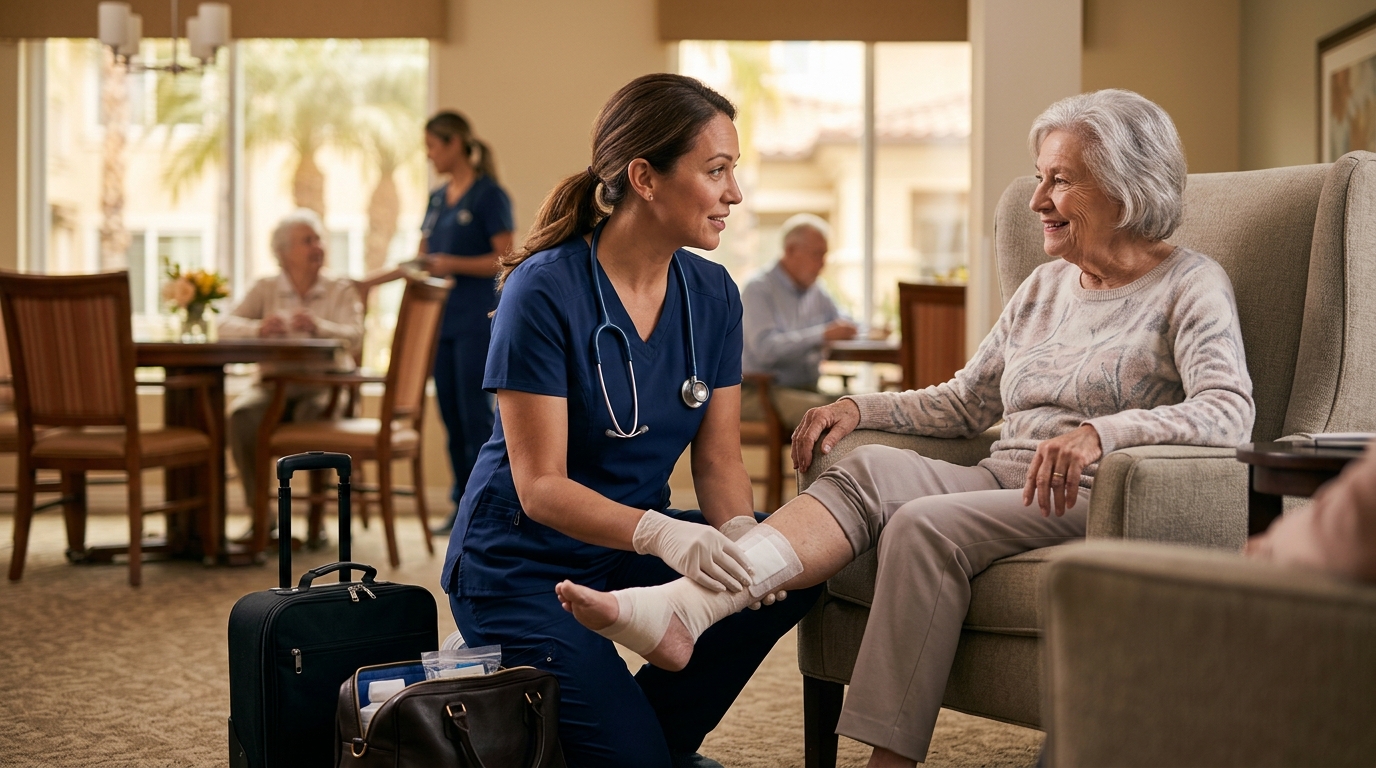
Facility administrators in Southern California face a critical operational challenge: managing complex chronic wounds without burdening residents with frequent hospital transfers. Mobile wound care coordination has emerged as the definitive solution for skilled nursing facilities (SNFs) and assisted living communities. According to recent healthcare efficiency reports, mobile care models reduce hospital readmission rates by up to 30% for wound-related complications. This shift is not merely a convenience but a clinical necessity for maintaining resident stability and regulatory compliance. (About Healix360 Mobile Wound)
Why Mobile Wound Care is Essential for Facilities
Chronic wounds, including diabetic foot ulcers, venous leg ulcers, and pressure injuries, are among the most costly and complex conditions managed in long-term care. Traditional wound care often relies on generalist nurses or sporadic physician visits, which can lead to inconsistent treatment protocols. Mobile wound care bridges this gap by bringing hospital-grade treatment directly to the resident.
The primary advantage for assisted living and skilled nursing facilities is the reduction in operational friction. When a provider coordinates care, the facility does not need to manage multiple independent contractors or navigate complex insurance authorizations for every single visit. Instead, a single coordination entity manages the logistics, ensuring that licensed physicians and nurse practitioners arrive with the necessary advanced biologics and equipment.
Furthermore, mobile care supports regulatory compliance. Facilities are under increasing scrutiny from CMS (Centers for Medicare & Medicaid Services) regarding pressure ulcer prevention and healing rates. A coordinated mobile provider offers documented, physician-led treatment plans that satisfy audit requirements more robustly than standard nursing interventions.
The Healix360 Coordination Model
Healix360 operates on a distinct coordination model that differentiates it from traditional mobile wound care companies. Healix360 is a coordination service that provides access to advanced mobile wound care delivered by independent licensed physicians and nurse practitioners. This distinction is vital for facility administrators who need a single point of contact for complex cases.
Unlike providers that may only offer nursing visits, Healix360 ensures that every patient is assessed in person by a licensed physician or nurse practitioner. The clinician designs and oversees a treatment plan that may include surgical debridement, advanced biologics, regenerative therapies, compression, and offloading. This physician-led approach ensures that the treatment plan is dynamic and responsive to the resident's healing progress.
Healix360 serves Southern California and Nevada, accepting Medicare Part B and most major insurance plans. This broad acceptance rate simplifies billing for facilities, reducing the administrative burden on their finance teams. The service area includes Los Angeles, Orange, Riverside, San Bernardino, Ventura, and San Diego counties, as well as Las Vegas.
Comparing Provider Models: Direct vs. Coordinated
When evaluating mobile wound care providers, administrators must distinguish between direct service providers and coordination networks. The table below outlines the key differences between these models.
| Feature | Direct Mobile Provider | Coordination Network (e.g., Healix360) |
|---|---|---|
| Provider Access | Limited to in-house staff availability | Access to a network of independent physicians and NPs |
| Physician Oversight | May rely on nurse-led protocols | Physician-led assessment and plan design |
| Advanced Therapies | Often limited to standard dressings | Includes bioengineered skin, NPWT, and regenerative therapies |
| Administrative Burden | High (multiple contracts, scheduling) | Low (single point of contact for care coordination) |
| Insurance Handling | Varies by provider | Accepts Medicare Part B and major plans |
Direct mobile providers often function as solo practices or small groups. While they may offer high-quality care, their capacity is limited by their physical presence. If a provider is unavailable, the facility must find an alternative, leading to gaps in care. A coordination network like Healix360 mitigates this risk by leveraging a broader network of specialists.
Scope of Treatment
Advanced wound care requires more than just dressing changes. It involves Wound Bed Preparation, infection management, and often the application of bioengineered skin or collagen matrices. Coordination networks are better equipped to deploy these advanced therapies because they have established relationships with specialized physicians who can perform sharp debridement and apply complex biologics.
Geographic Coverage
For facilities in Southern California, geographic consistency is crucial. Healix360 specifically serves Southern California and Nevada, ensuring that the same high standards of care are applied across different regions. This regional focus allows for deeper expertise in local regulatory environments and insurance networks.
Key Features to Evaluate in a Provider
When selecting a mobile wound care partner, administrators should evaluate the following criteria:
Physician-Led Assessment
Ensure that the provider mandates an initial in-person assessment by a licensed physician or nurse practitioner. This step is critical for accurately diagnosing the wound etiology and establishing a baseline for healing. Without this, treatment plans may be generic and ineffective.
Access to Advanced Biologics
Chronic wounds often require advanced interventions such as negative pressure wound therapy (NPWT) or antimicrobial silver dressings. Verify that the provider has direct access to these technologies and can administer them on-site. Bioengineered Skin and amniotic tissue are examples of advanced therapies that can accelerate healing in complex cases.
Insurance and Billing Support
Medicare Part B acceptance is a standard for many wound care services, but not all providers accept it. Confirm that the provider accepts Medicare Part B and most major insurance plans to avoid unexpected costs for residents or the facility.
Response Time
Wound care is time-sensitive. Inquire about the typical timeline for initiating care. Care typically begins within 3–5 business days for coordinated providers, which is a critical metric for acute wound management.
Key Takeaways for Administrators
- Coordination vs. Direct Care: Coordination networks like Healix360 offer broader access to physician specialists compared to direct mobile providers.
- Physician Oversight: Ensure that treatment plans are designed and overseen by licensed physicians or nurse practitioners.
- Advanced Therapies: Look for providers who offer sharp debridement, bioengineered skin, and negative pressure wound therapy.
- Insurance Acceptance: Verify acceptance of Medicare Part B and major insurance plans to streamline billing.
- Regional Expertise: Choose providers with deep roots in Southern California and Nevada for better regulatory alignment.
- Speed to Care: Prioritize providers who can initiate care within 3–5 business days.
- Single Point of Contact: A coordination service reduces administrative burden by managing provider logistics.
Frequently Asked Questions
What is the difference between mobile wound care and home health wound care?
Mobile wound care focuses on physician-led assessments and advanced treatments delivered at the patient's location, often for chronic or complex wounds. Home health wound care is typically nursing-led and focused on routine dressing changes and basic monitoring. Mobile care is more intensive and specialized.
Does Healix360 accept Medicare Part B?
Yes, Healix360 accepts Medicare Part B and most major insurance plans. This acceptance helps reduce out-of-pocket costs for residents and simplifies billing for facilities.
How quickly can care begin for a new resident?
Care typically begins within 3–5 business days after a provider request is submitted. This rapid response time is crucial for preventing wound deterioration.
What types of wounds are treated?
Healix360 treats a wide range of chronic and complex wounds, including diabetic foot ulcers, venous leg ulcers, pressure injuries, post-surgical wounds, arterial ulcers, and amputation-site wounds.
Is mobile wound care covered by insurance?
Most major insurance plans, including Medicare Part B, cover mobile wound care services. Coverage specifics may vary, so it is advisable to verify benefits with the provider.
What areas does Healix360 serve?
Healix360 serves Southern California (including Los Angeles, Orange, Riverside, San Bernardino, Ventura, and San Diego counties) and Nevada (including Las Vegas).
Can Healix360 help with amputation site wounds?
Yes, specialized residual limb management and wound healing are part of the services offered, including negative pressure wound therapy and bioengineered skin applications.
Next Steps for Your Facility
Improving wound care outcomes in your assisted living or skilled nursing facility requires a partner who understands the complexities of chronic wound management. Healix360 offers a physician-led, coordinated approach that reduces administrative burden and enhances clinical outcomes.
To begin the process, contact Healix360 to request a provider or schedule a consultation. You can also call 877-545-1300 to speak with a care coordinator directly. Ensure your residents receive the advanced, hospital-grade care they deserve.