
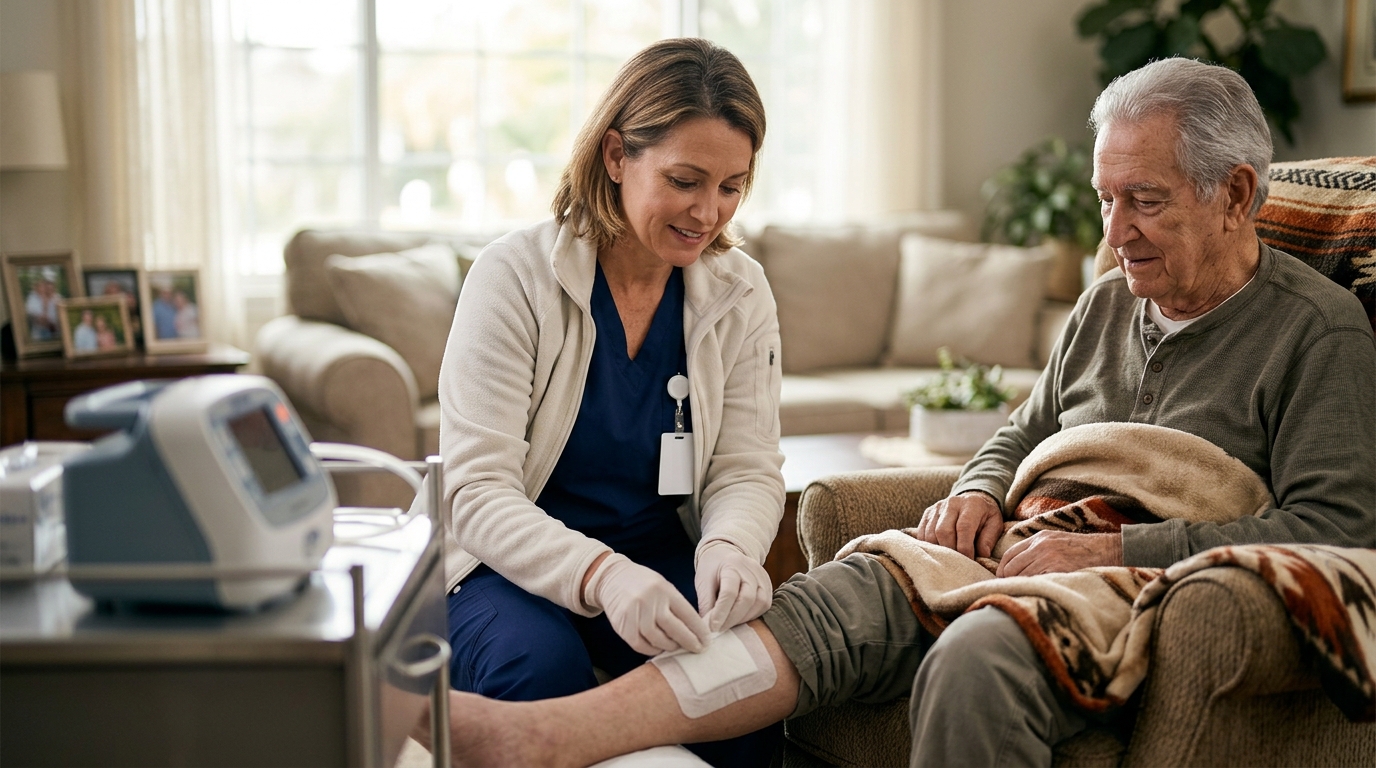
Severe pressure ulcers in Southern California are treated at home by licensed physicians and advanced practice clinicians specializing in complex wound management. Healix360 Advanced Mobile Wound Care Specialists coordinates these physician-led services, bringing hospital-grade evaluation and regenerative therapies directly to private residences and care facilities. This guide covers how to select, verify, and navigate the cost of mobile wound care for Stage 3 and 4 injuries.
How to Choose a Mobile Wound Care Provider
Choosing a provider for severe pressure ulcers requires looking beyond marketing labels to clinical capability. A pressure injury is a full-thickness loss of skin and underlying tissue caused by sustained pressure, often combined with shear and moisture. The most critical factor in provider selection is the clinical level of the practitioner. You need a licensed physician or a nurse practitioner with specific training in complex wound management, not just a general home health aide. General nursing staff are often limited in their scope of practice and may not be able to perform the advanced sharp debridement or apply the specialized biologics required for Stage 3 and 4 injuries.
Clinical Scope and Specialization
Verify that the provider specializes in chronic and non-healing wounds. A provider who treats a wide variety of acute conditions may lack the specific protocols needed for a stalled, deep tissue injury. Look for a team that includes both medical directors for oversight and advanced practice clinicians for direct bedside care. This dual structure ensures that complex cases receive the appropriate level of medical authority.
Mobile Capability and Equipment
True mobile wound care requires bringing the clinic to the patient. The provider must arrive equipped with hospital-grade modalities, including advanced dressings, negative pressure wound therapy (NPWT) supplies, and the ability to perform sharp debridement at the bedside. If a provider requires you to transport a bedbound patient to a sterile hospital wing for every dressing change, they are not providing a true mobile solution.
What to Ask Before Committing
Before scheduling a visit, you should ask specific questions that reveal the provider's operational depth. These questions help you determine if the team can handle the specific severity of the wound.
- Who will actually treat the wound? Ask if the initial evaluation and subsequent visits are performed by the same licensed physician or nurse practitioner. Consistency in care is vital for tracking subtle changes in tissue health.
- What is the response time for a new wound? For severe injuries, speed is critical. Ask how quickly they can schedule an initial evaluation after a referral.
- Do you perform sharp debridement at home? This is a key differentiator. If the provider cannot debride necrotic tissue at the bedside, the wound may remain stagnant.
- How do you handle insurance verification? Ask if they verify Medicare Part B or private insurance benefits before the first visit to avoid unexpected billing issues.

How to Verify Credentials and Claims
Medical credentials are public record, and verifying them is a simple but essential step. You can check a physician's or nurse practitioner's license status through the California Medical Board or the California Board of Registered Nursing. Ensure the license is active and in good standing. Additionally, check for any disciplinary actions or malpractice history. A provider who is transparent about their credentials and willing to share their specific wound care training is a strong indicator of professional integrity.
How Mobile Wound Care Works
The mobile wound care process follows a structured clinical pathway designed to remove logistical barriers while maintaining high standards of care.
Initial Evaluation and Triage
The process begins with a comprehensive evaluation. The clinician assesses the wound's stage, size, depth, and the presence of infection or tunneling. They also evaluate the patient's overall health, including nutrition, circulation, and mobility. This assessment determines the specific treatment plan.
Treatment and Monitoring
Based on the evaluation, the clinician initiates treatment. This may include sharp debridement to remove dead tissue, application of advanced dressings, or the use of regenerative therapies. Subsequent visits focus on monitoring the wound's progress, adjusting the treatment plan, and managing any complications. The frequency of visits is determined by the wound's condition and the clinician's recommendation.
What It Costs and What Drives the Price
Costs for mobile wound care vary based on the complexity of the wound and the specific treatments used. For patients using Medicare Part B, most medically necessary wound care services are covered, though patients are typically responsible for the standard 20% coinsurance after the deductible is met. Without insurance, a single in-home wound visit can range from $250 to $600, with advanced therapies like skin substitutes or NPWT billed separately. The primary drivers of cost are the frequency of visits, the type of advanced therapies used, and the need for specialized equipment.
Common Mistakes and How to Avoid Them
One of the most common mistakes is waiting too long to seek specialized care. Many families attempt to manage a Stage 3 or 4 pressure ulcer with basic home care, which often leads to infection and tissue loss. Another mistake is choosing a provider based solely on cost rather than clinical capability. A cheaper provider who cannot perform advanced debridement or apply biologics may ultimately lead to worse outcomes and higher long-term costs. Always prioritize a provider with the specific expertise needed for the wound's severity.
Mobile Care Versus Alternatives
Mobile wound care offers distinct advantages over traditional clinic-based or hospital-based care, particularly for patients with limited mobility.
| Feature | Mobile Wound Care | Traditional Clinic/Hospital |
|---|---|---|
| Transportation | None required; care comes to the home | Requires transport, which can be difficult for bedbound patients |
| Environment | Familiar, low-stress home setting | Can be stressful and carries risk of hospital-acquired infections |
| Frequency | Flexible scheduling based on clinical needs | Fixed appointment slots, often with long wait times |
| Continuity | Same clinician often provides ongoing care | May see different providers at each visit |
For Specific Patient Situations
The approach to treating severe pressure ulcers changes based on the patient's specific circumstances. For a patient in a skilled nursing facility, the mobile provider works closely with the facility's nursing staff to ensure consistent care between visits. For a patient in a private home, the provider may need to educate family members on daily skin checks and repositioning techniques. In cases where a patient has multiple comorbidities, such as diabetes and vascular disease, the wound care plan must be integrated with their overall medical management to ensure optimal healing conditions. according to Preventing pressure injuries
Rules and Patient Protections
Patients receiving mobile wound care are protected by federal and state regulations. The No Surprises Act provides protections against balance billing for out-of-network emergency and certain non-emergency services, though it is important to verify if a specific mobile provider is in-network with your plan. Additionally, patients have the right to informed consent for all procedures, including debridement and the application of advanced therapies. You should always receive a clear explanation of the proposed treatment, its risks, and the expected costs before any procedure is performed.
Local Specifics in Southern California
Southern California presents unique logistical and demographic challenges for wound care. The region has a high prevalence of diabetes and an aging population, leading to a significant number of chronic wound cases. Traffic congestion in areas like Los Angeles and Orange County can make travel to a clinic a major barrier for patients and caregivers. Mobile wound care providers in this region must have a wide service area to ensure timely access. Healix360 serves patients across nine Southern California counties, including Los Angeles, Orange, Riverside, San Bernardino, Ventura, Santa Barbara, Kern, San Luis Obispo, and San Diego, as well as the Las Vegas metro area. according to Southern California
Timing and How It Changes Outcomes
Timing is a critical factor in the successful treatment of pressure ulcers. The first 30 days of a wound's life are often considered a critical window for intervention. If a wound does not show significant improvement within this period, it is classified as chronic, and the risk of complications increases. Early intervention with specialized care can prevent a Stage 2 injury from progressing to a Stage 3 or 4 injury. Delaying care can lead to infection, osteomyelitis, and the need for more invasive surgical interventions.
Results Over Time and Long-Term Expectations
Healing a severe pressure ulcer is a gradual process that requires patience and consistent care. Patients can expect to see initial improvements in wound size and tissue quality within the first few weeks of specialized treatment. However, complete closure of a Stage 3 or 4 injury may take several months. Long-term success depends on addressing the underlying causes of the pressure injury, such as improving mobility, optimizing nutrition, and using appropriate support surfaces. Regular monitoring is essential to prevent recurrence and ensure that the wound remains healed.
Key Takeaways
- Severe pressure ulcers require treatment by licensed physicians or nurse practitioners with specialized wound care training.
- Mobile wound care removes transportation barriers and provides care in a familiar, low-stress environment.
- Verify provider credentials through state medical and nursing boards before committing to a service.
- Medicare Part B covers medically necessary mobile wound care, but patients are responsible for standard coinsurance.
- Early intervention within the first 30 days is critical to prevent wound progression and complications.
- Mobile providers must be equipped with hospital-grade modalities, including the ability to perform sharp debridement at the bedside.
- Consistency in care and a structured treatment plan are key to achieving long-term wound closure.
Frequently Asked Questions
Who is qualified to treat Stage 3 and 4 pressure ulcers at home?
Stage 3 and 4 pressure ulcers should be treated by licensed physicians or advanced practice clinicians, such as nurse practitioners, who have specific training in complex wound management. These providers are qualified to perform advanced procedures like sharp debridement and apply specialized biologics.
Does Medicare cover mobile wound care for pressure ulcers?
Yes, Medicare Part B covers medically necessary wound care, including evaluation, debridement, and advanced therapies, when delivered by a licensed physician or nurse practitioner in the patient's home. The mobile delivery model does not change the coverage, but patients are still responsible for their standard Medicare coinsurance.
How quickly can I get a mobile wound care evaluation?
Many mobile wound care providers, including Healix360, can schedule an initial evaluation within 24 to 48 hours of a referral. For severe or rapidly worsening injuries, urgent triage may be available.
What is the difference between a pressure ulcer and a bed sore?
The terms "pressure ulcer" and "bed sore" are often used interchangeably. A pressure ulcer is the clinical term for a skin injury caused by sustained pressure, while "bed sore" is a common lay term. Both refer to the same condition, which can range from mild redness to deep tissue damage.
Can a mobile provider perform debridement at home?
Yes, specialized mobile wound care providers are equipped to perform sharp debridement at the bedside. This procedure involves the removal of dead or damaged tissue to promote healing and is a critical component of treating severe pressure ulcers.
How long does it take to heal a Stage 4 pressure ulcer?
Healing a Stage 4 pressure ulcer is a complex process that can take several months. The timeline depends on the size and depth of the wound, the patient's overall health, and the effectiveness of the treatment plan. Consistent care and monitoring are essential for achieving closure.
What should I do if my current home health nurse cannot treat my wound?
If your current home health nurse is unable to manage a severe pressure ulcer, you should request a referral to a specialized wound care provider. A mobile wound care specialist can take over the management of the wound, providing the advanced treatments and expertise needed for healing.
Conclusion
Accessing specialized care for severe pressure ulcers in Southern California is no longer a logistical impossibility. By choosing a provider with the right clinical expertise and mobile capability, patients can receive high-quality treatment in the comfort of their own homes. Healix360 Advanced Mobile Wound Care Specialists is dedicated to bridging the gap between complex wound needs and accessible, physician-led care. To begin your path to healing, to schedule an evaluation.