
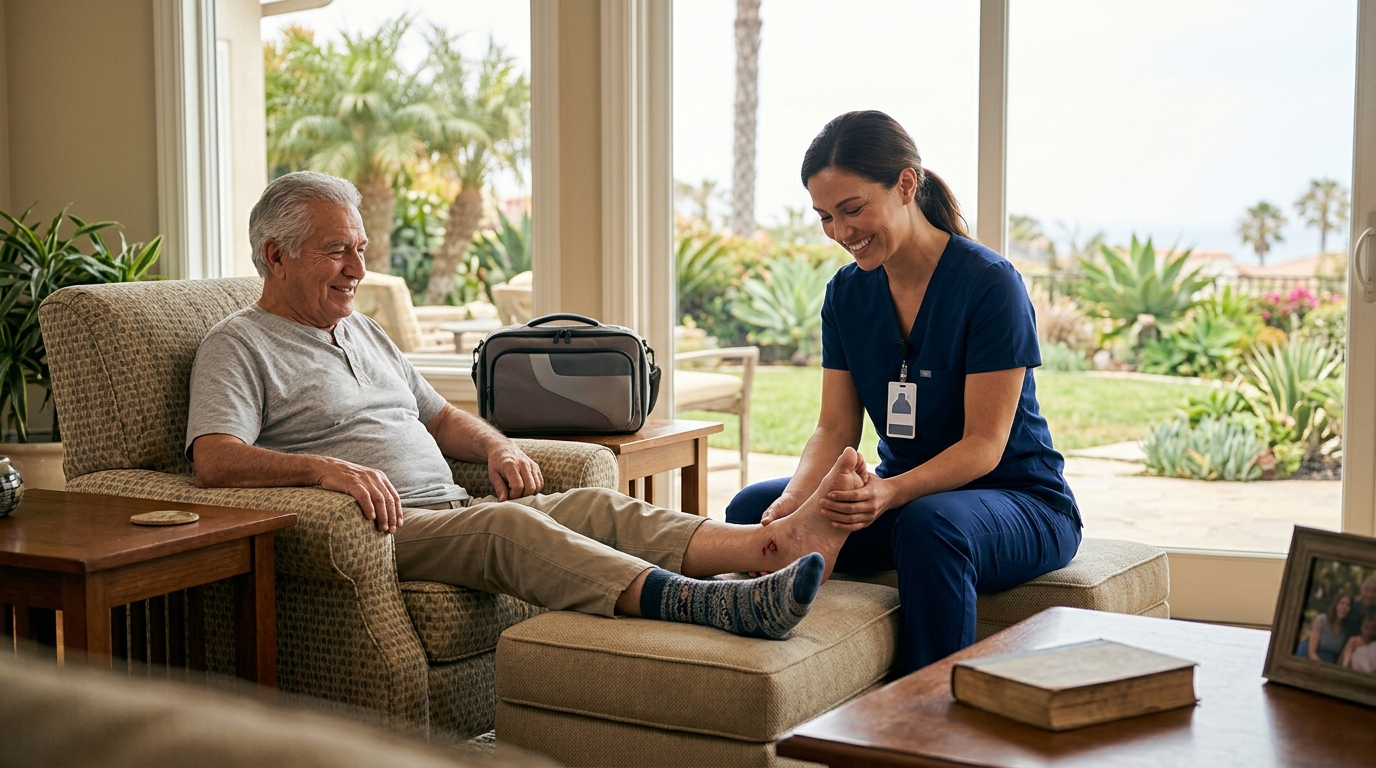
Mobile Wound Care for Diabetic Foot Ulcers in Southern California
Healix360 Advanced Mobile Wound Care Specialists provides physician-led mobile wound care for diabetic foot ulcers across Southern California. This guide covers the clinical realities of diabetic foot ulcers, the benefits of in-home treatment, and how to access specialized care without the burden of travel.
Understanding Diabetic Foot Ulcers
Diabetic foot ulcers are open sores on the feet of individuals with diabetes, primarily caused by nerve damage and poor circulation. These ulcers can significantly impact a patient's mobility and quality of life, leading to increased healthcare costs and emotional distress. In Los Angeles and the broader Southern California region, the prevalence of diabetes-related foot complications is a growing concern, with many patients facing challenges in managing their conditions effectively.
Development and Progression
Diabetic foot ulcers typically develop due to a combination of factors, including prolonged pressure on the feet, loss of sensation, and inadequate blood supply. The progression of these ulcers can be categorized into several stages:
- Initial Skin Changes: Redness or swelling may appear on the foot, indicating potential issues.
- Ulcer Formation: If not addressed, these changes can lead to the formation of an open sore.
- Infection Risk: As the ulcer deepens, the risk of infection increases, which can complicate healing.
- Severe Complications: In advanced cases, untreated ulcers can lead to gangrene or the need for amputation.
Recognizing the signs and symptoms early can significantly improve treatment outcomes and prevent severe complications. Cleveland Clinic notes that 75% of foot ulcers are preventable with proper care and monitoring.
The Mobile Wound Care Model
Mobile wound care is a coordinated care model that brings skilled assessment, debridement, advanced dressings, and regenerative biologics into the home. This approach focuses on targeted, local therapy where clinicians remove nonviable tissue, manage infection and moisture, and apply dressings or biologic scaffolds that deliver growth factors and structural support to encourage tissue regrowth. Providing these services at home removes transportation barriers, preserves continuity with weekly monitoring, and lets clinicians adjust treatment quickly based on objective progress. according to LCD Wound Care
Benefits of In-Home Treatment
Mobile wound care brings treatment to the patient, cutting the need for travel and reducing exposure to facility-acquired infections. Regular in-home visits let clinicians closely track wound size, drainage, and infection signs so they can debride, change dressings, or escalate care faster. Patients also tend to be more comfortable and adherent when pain management, offloading, and education happen in familiar surroundings, which often lowers readmission risk.
- Convenience: Eliminates or reduces transportation burdens for patients with limited mobility.
- Consistency: Consistent in-home measurements and photo tracking speed clinical decision-making.
- Comfort: The home environment can help alleviate anxiety associated with medical visits.
Healix360 supports access to advanced mobile wound care services for patients throughout California and Nevada. Care is coordinated and provided directly by licensed physicians and nurse practitioners experienced in the evaluation and management of chronic and complex wounds.
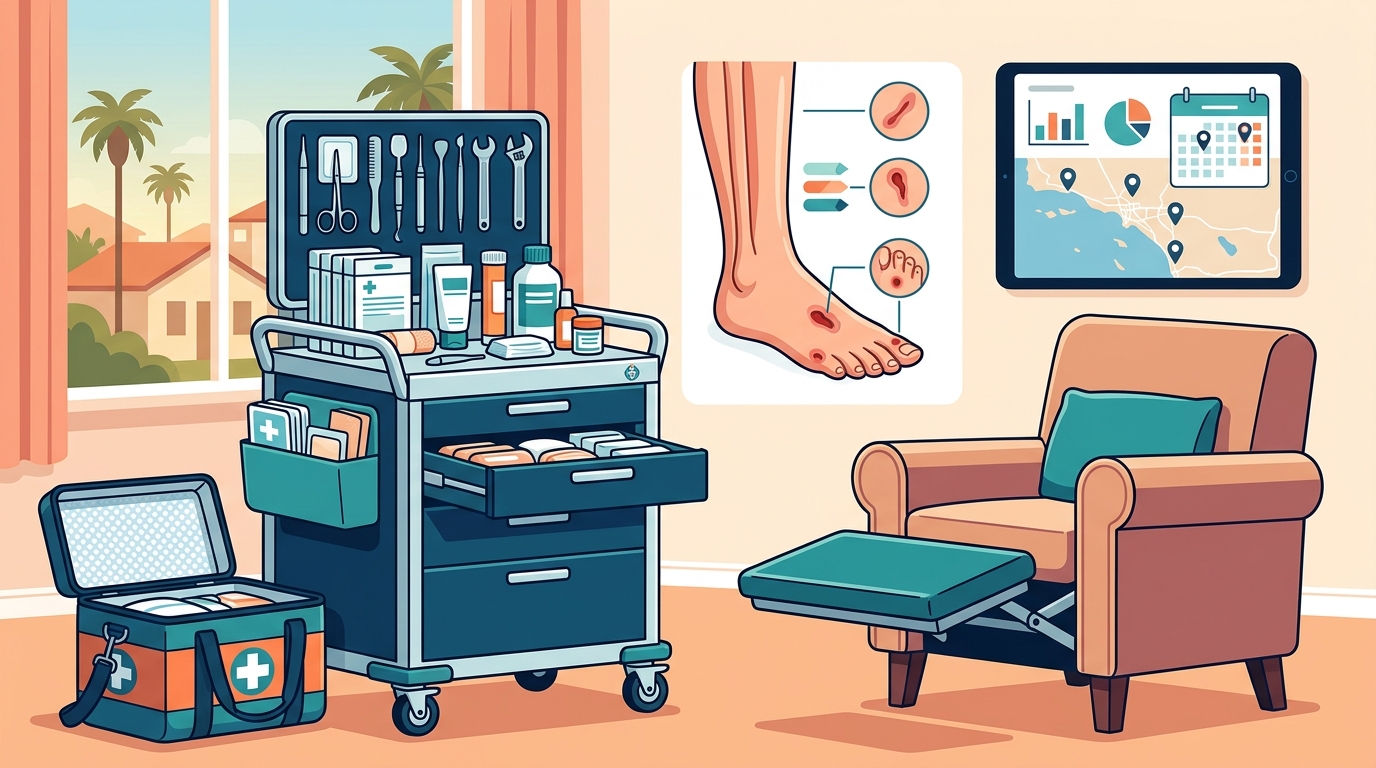
Advanced Treatment Approaches
Traditional wound care is often not enough for chronic wounds. Advanced regenerative medicine helps support healing at the cellular level and provides the body with the tools it needs to repair damaged tissue naturally. Patients may be connected with clinicians trained in regenerative wound care who use advanced biologics and modern treatment techniques designed to support faster healing and improved outcomes.
Regenerative Therapies
Specialists trained in regenerative wound care may use advanced treatment options designed to accelerate healing and support tissue regeneration.
- Stem Cell Therapy: Stem cells are your body's natural "repair cells." When applied to a wound, they help regenerate damaged tissue by promoting new cell growth, reducing inflammation, and improving blood flow. according to INTRODUCTION Advanced Wound
- Amniotic Membrane Grafts: Derived from donated placental tissue, amniotic membranes provide growth factors that signal your body to heal, a protective barrier against infection, and anti-inflammatory properties.
- Advanced Biologics: Cutting-edge cellular therapies and growth factor treatments designed for the most complex wounds. according to Impact of Hyperbaric
These therapies are best suited for deep wounds, diabetic ulcers, and wounds with poor circulation. NCBI Bookshelf highlights that chronic ulcers are estimated to affect over 6 million people in the United States, underscoring the need for advanced interventions.
Insurance and Medicare Coverage
Medicare Part B covers medically necessary wound care, including evaluation, debridement, skin substitutes, and negative pressure wound therapy, when delivered by a licensed physician or nurse practitioner in the patient's home, assisted living community, or skilled nursing facility. The mobile delivery does not change coverage. However, coverage is case-specific, and approval, delivery, or a clinician's order does not guarantee payment.
Verification Process
Healix360 verifies coverage and provides a written cost estimate before the first visit. Most patients pay $0 to $300 out of pocket per visit when using Medicare Part B with a supplement. Without insurance, a single in-home wound visit typically runs $250 to $600, and advanced therapies are billed separately. A Medicare Advantage plan must provide at least the Medicare-covered Part A and Part B benefits, but it may apply network, referral, prior authorization, site-of-service, and cost-sharing rules.
Key Takeaways
- Diabetic foot ulcers are a serious complication of diabetes that can lead to pain, infection, and amputation if not treated promptly.
- Mobile wound care brings specialized treatment to the patient's home, reducing travel stress and exposure to hospital-acquired infections.
- Advanced regenerative therapies, such as stem cell therapy and amniotic membrane grafts, can accelerate healing and support tissue regeneration.
- Medicare Part B covers medically necessary wound care delivered by licensed physicians or nurse practitioners in the home setting.
- Healix360 coordinates care across Southern California, ensuring that specialized care reaches patients wherever they call home.
- Early recognition and intervention are critical to preventing severe complications and improving long-term outcomes.
- Personalized treatment plans are central to mobile wound care, addressing the specific needs of each patient.
- Regular monitoring and consistent follow-up are essential for tracking progress and adjusting treatment as needed.
Frequently Asked Questions
What are the early signs of a diabetic foot ulcer?
Early warning signs include redness, swelling, blisters, calluses, drainage, or any sore that does not heal. Regular daily foot checks and early reporting of changes are essential to prevent escalation.
How does mobile wound care differ from traditional clinic visits?
Mobile wound care brings treatment to the patient's home, eliminating the need for travel and reducing exposure to facility-acquired infections. It allows for more frequent monitoring and adjustments to treatment plans.
Does Medicare cover in-home wound care?
Yes, Medicare Part B covers medically necessary wound care when delivered by a licensed physician or nurse practitioner in the patient's home, assisted living community, or skilled nursing facility.
What are the benefits of regenerative therapies?
Regenerative therapies, such as stem cell therapy and amniotic membrane grafts, promote new cell growth, reduce inflammation, and improve blood flow, supporting faster healing and tissue regeneration. according to Effectiveness of offloading
How often should a wound be debrided?
Most chronic wounds benefit from debridement at every clinical visit, but the frequency depends on the wound's condition and healing progress.
Can I receive care in an assisted living facility?
Yes, Healix360 provides care in private residences, assisted living communities, and skilled nursing facilities across Southern California.
Conclusion
Accessing specialized wound care for diabetic foot ulcers in Southern California is easier than ever with mobile services. Healix360 Advanced Mobile Wound Care Specialists brings physician-led care directly to your home, ensuring that you receive the attention and treatment you need without the stress of travel. To begin your healing journey, to schedule an assessment.