

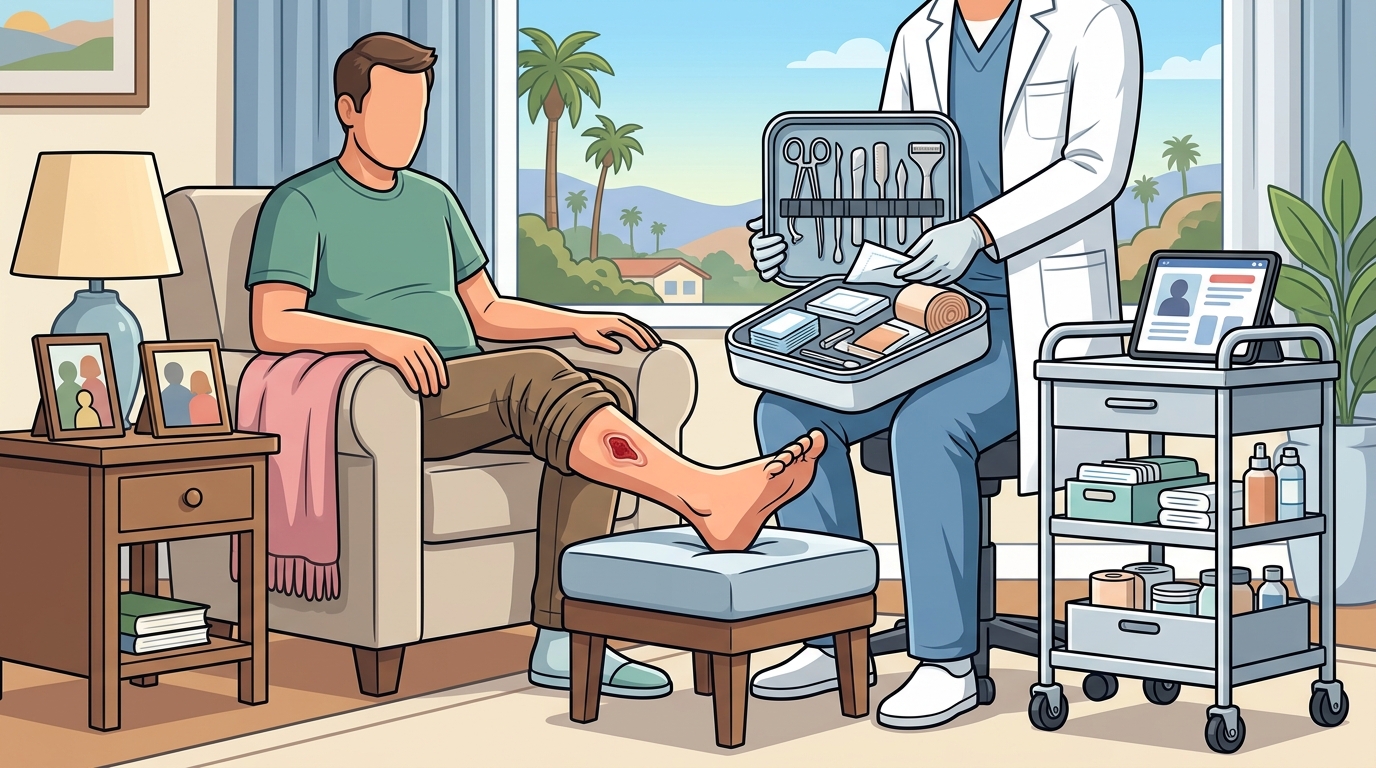
Physician-led mobile wound care specialists, including licensed physicians and nurse practitioners, can treat chronic or non-healing wounds at home in Southern California. Healix360 Advanced Mobile Wound Care Specialists coordinates these in-home visits to bring advanced clinical evaluation and treatment directly to patients in private residences and care facilities. This guide covers how to choose a provider, verify credentials, understand costs, and navigate the specific rules governing home-based wound care in the region.
How to Choose a Provider
Choosing a provider for a chronic wound requires looking beyond marketing claims to verify clinical capability. A chronic wound is a wound that has failed to progress through the normal stages of healing within an expected timeframe. The most critical factor in choosing a provider is the level of clinical authority. You need a provider who can perform sharp debridement, manage complex infections, and apply advanced biologics, not just change a bandage. according to Chronic Wound Healing
Clinical Authority and Scope of Practice
Ensure the provider is a licensed physician or an Advanced Practice Provider (APP) such as a Nurse Practitioner (NP) or Physician Assistant (PA) with specific wound care training. General home health nurses are valuable for basic care but often lack the authority to perform surgical debridement or prescribe advanced therapies. Healix360's care team consists of licensed clinicians who specialize in complex wound management, ensuring that the provider has the legal and clinical scope to address the root causes of non-healing tissue.
Specialization in Chronic Conditions
Look for a provider with specific experience in the type of wound you have. Diabetic foot ulcers, venous leg ulcers, and pressure injuries require different treatment protocols. A provider who treats all wound types generically may miss specific vascular or metabolic issues. Specialized providers understand the nuances of offloading for diabetic feet or compression therapy for venous insufficiency, which are critical for long-term closure.
What to Ask Before Committing
Before scheduling a visit, you should ask specific questions to gauge the provider's readiness and your eligibility. These questions help you understand the scope of care and the logistical requirements for in-home treatment.
- What is your clinical approach to my specific wound type? This reveals if they have a protocol for your condition or if they will improvise.
- Do you perform sharp debridement at home? If the wound has necrotic tissue, this is a critical capability to have.
- How do you coordinate with my primary care physician? Effective wound care requires a unified plan between the mobile specialist and your regular doctor.
- What advanced therapies do you offer? Ask about negative pressure wound therapy (NPWT), bioengineered skin substitutes, or hyperbaric oxygen referrals.
- What is the typical frequency of visits? Chronic wounds often require frequent monitoring to adjust the treatment plan.
How to Verify Credentials
Verifying a provider's credentials is essential for patient safety. In the medical field, a credential is a verified record of a professional's education, training, and licensure. You can verify these details through state medical boards and national registries.
State Licensure Checks
For physicians, check the California Medical Board's online license verification system. For NPs and PAs, check the California Board of Registered Nursing or the California Physician Assistant Program. Ensure the license is active and in good standing, with no disciplinary actions or restrictions on their practice.
Board Certification
Board certification is a voluntary process where a physician demonstrates expertise in a specific specialty. While not all wound care specialists are board-certified in a specific wound subspecialty, certification in Vascular Surgery, Podiatry, or Plastic Surgery is a strong indicator of advanced training. You can verify board certification through the American Board of Medical Specialties (ABMS) directory.
How Mobile Wound Care Works
Mobile wound care follows a structured clinical process designed to replicate the rigor of a hospital wound center in a home setting. The process typically begins with an intake and insurance verification, followed by a comprehensive clinical assessment.
The Initial Assessment
The first visit involves a detailed history and physical examination. The clinician measures the wound, assesses the wound bed (granulation tissue, slough, eschar), and evaluates surrounding skin. They also assess vascular status, often using a Doppler ultrasound to check blood flow, which is crucial for determining if the wound can heal.
Treatment and Monitoring
Based on the assessment, the clinician initiates treatment. This may include debridement, application of advanced dressings, or initiation of negative pressure therapy. Subsequent visits focus on monitoring progress, adjusting the treatment plan, and managing any complications like infection. The goal is to move the wound from a stalled state to active healing. according to Analysis of therapeutic
What It Costs
Costs for mobile wound care vary based on the complexity of the wound and the therapies used. The primary drivers of cost are the clinician's professional fee, the cost of advanced supplies, and the frequency of visits. according to Wound care centers
Insurance and Medicare
Medicare Part B covers medically necessary wound care services, including evaluation, debridement, and certain advanced therapies, when provided by a qualified provider. Healix360 accepts Medicare Part B and most major commercial insurance plans. It is important to note that coverage is determined by medical necessity and specific plan rules. Patients should verify their benefits and understand their cost-sharing responsibilities (copays and deductibles) before starting care.
Out-of-Pocket Expenses
For patients without insurance or with limited coverage, out-of-pocket costs can be significant. Advanced therapies like bioengineered skin substitutes can be expensive. Providers should offer transparent pricing and written estimates. Some patients may qualify for financial assistance programs or charity care, depending on the provider's policies. according to Classification and treatment
Common Mistakes to Avoid
Patients and caregivers often make mistakes that delay healing or lead to complications. Avoiding these errors is crucial for successful recovery.
- Delaying professional care: Waiting too long to seek help for a non-healing wound allows the condition to worsen, increasing the risk of infection and amputation.
- Ignoring systemic health issues: Poor blood sugar control, malnutrition, or smoking can prevent wound healing regardless of local wound care. Addressing these systemic factors is essential.
- Improper home care: Using the wrong dressings or failing to keep the wound clean can introduce bacteria and delay healing. Follow the provider's instructions precisely.
- Discontinuing care too early: A wound may look better but not be fully healed. Stopping treatment prematurely can lead to recurrence.
Mobile Care vs. Alternatives
Patients often weigh mobile wound care against hospital outpatient clinics and standard home health nursing. Each option has distinct advantages and limitations.
| Feature | Mobile Wound Care | Hospital Outpatient Clinic | Standard Home Health Nursing |
|---|---|---|---|
| Location | Patient's Home | Hospital/Clinic | Patient's Home |
| Clinical Authority | Physician/NP/PA | Physician/NP/PA | RN/LPN |
| Advanced Procedures | Yes (Debridement, Biologics) | Yes | Limited (Basic Dressing Changes) |
| Travel Burden | None | High | None |
| Infection Risk | Lower (Home Environment) | Higher (Hospital Environment) | Lower |
| Cost | Varies (Insurance/Medicare) | Varies (Insurance/Medicare) | Varies (Insurance/Medicare) |
Mobile care offers the clinical depth of a hospital with the convenience and safety of home. Standard home health nursing is often insufficient for complex wounds requiring surgical intervention or advanced biologics.
For Specific Situations
The approach to wound care changes based on the specific type of wound and the patient's overall health. Tailoring the care plan to the individual is key to success. according to From Chronic Wounds
Diabetic Foot Ulcers
For diabetic patients, the focus is on offloading pressure from the foot and managing blood sugar. The provider will coordinate with a podiatrist or vascular specialist to ensure adequate blood flow. Healix360 provides specialized care for diabetic foot ulcers, focusing on limb preservation and preventing amputation.
Pressure Injuries (Bed Sores)
For bedbound or chairbound patients, pressure relief is the primary goal. The provider will recommend specialized mattresses, positioning aids, and frequent repositioning schedules. The wound care plan must address the underlying cause of the pressure injury to prevent recurrence.
Rules and Protections
Patients have specific rights and protections when receiving medical care at home. Understanding these rules helps ensure you receive safe and ethical treatment.
Informed Consent
You have the right to be fully informed about your diagnosis, treatment options, risks, and benefits before consenting to any procedure. The provider must explain the plan in plain language and answer all your questions.
Privacy and HIPAA
Your medical information is protected under the Health Insurance Portability and Accountability Act (HIPAA). Providers must safeguard your data and only share it with authorized parties involved in your care. Healix360 adheres to strict HIPAA guidelines to protect patient privacy.
Local Specifics in Southern California
Southern California presents unique challenges and opportunities for wound care. The region has a high prevalence of diabetes and an aging population, leading to a significant burden of chronic wounds. Traffic congestion and long distances to specialized wound centers can make regular clinic visits difficult for patients with limited mobility.
Mobile wound care addresses these logistical barriers by bringing the specialist to the patient. Providers in Southern California must be familiar with the local healthcare infrastructure, including major hospitals and referral networks. Healix360 serves patients across Southern California, ensuring that geographic location does not limit access to advanced care.
Timing and Outcomes
Timing is critical in wound care. The sooner a non-healing wound is addressed by a specialist, the better the chances of successful closure. Delays can lead to deeper tissue damage, infection, and the need for more invasive treatments like amputation.
Patients should seek care if a wound has not shown significant improvement within 30 days. This is often the threshold at which a wound is considered chronic. Early intervention allows for less aggressive treatment and faster recovery.
Results Over Time
Healing a chronic wound is a gradual process that requires patience and consistent care. Patients can expect to see initial improvements in wound bed health (e.g., increased granulation tissue) within a few weeks. Complete closure may take several months, depending on the wound's size and depth.
Long-term outcomes depend on maintaining the factors that contributed to the wound's formation. For example, diabetic patients must continue to manage their blood sugar, and patients with pressure injuries must maintain proper positioning. Regular follow-up care is essential to prevent recurrence.
Key Takeaways
- Choose a provider with specific clinical authority, such as a physician or NP, who can perform advanced procedures like debridement.
- Verify credentials through state medical boards and national certification registries.
- Ask specific questions about the provider's approach to your wound type and their coordination with your primary care physician.
- Understand the cost structure and verify insurance coverage, including Medicare Part B, before starting care.
- Avoid common mistakes like delaying care, ignoring systemic health issues, and improper home care.
- Mobile wound care offers the clinical depth of a hospital with the convenience and safety of home.
- Timing is critical; seek care if a wound has not improved within 30 days.
- Long-term success depends on addressing the underlying causes of the wound and maintaining consistent care.
Frequently Asked Questions
Who is qualified to treat a chronic wound at home?
Licensed physicians, Nurse Practitioners (NPs), and Physician Assistants (PAs) with specific wound care training are qualified to treat chronic wounds at home. They have the authority to perform advanced procedures like debridement and prescribe specialized therapies.
Does Medicare cover mobile wound care?
Yes, Medicare Part B covers medically necessary wound care services, including evaluation, debridement, and certain advanced therapies, when provided by a qualified provider. Coverage is subject to specific plan rules and medical necessity criteria.
How often will I need to see a wound care specialist?
The frequency of visits depends on the severity of the wound and the treatment plan. Initially, visits may be weekly or more frequent. As the wound heals, the frequency may decrease. The provider will determine the optimal schedule based on your progress. according to Chronic Wound Healing
Can a home health nurse treat a chronic wound?
Home health nurses can provide basic wound care, such as dressing changes and monitoring. However, they may not have the authority to perform surgical debridement or apply advanced biologics. For complex wounds, a physician or NP is typically required.
What is the difference between a chronic wound and an acute wound?
An acute wound heals in the expected timeframe (usually within 30 days). A chronic wound has failed to progress through the normal stages of healing within an expected timeframe, often due to underlying health issues like diabetes or vascular disease.
How do I find a mobile wound care provider in Southern California?
You can search for providers through your insurance plan's directory or by contacting specialized mobile wound care companies. Healix360 offers a provider finder to help you connect with licensed clinicians in your area.
What are the signs that a wound is not healing properly?
Signs include lack of progress in size reduction, persistent redness, swelling, pain, or drainage. If a wound has not shown significant improvement within 30 days, it is considered chronic and requires specialist evaluation.
Next Steps
If you or a loved one is struggling with a chronic or non-healing wound in Southern California, it is time to seek specialized care. Contact Healix360 Advanced Mobile Wound Care Specialists to schedule an evaluation with a licensed physician or nurse practitioner. We will verify your insurance and coordinate a visit to bring advanced wound care directly to your home.