
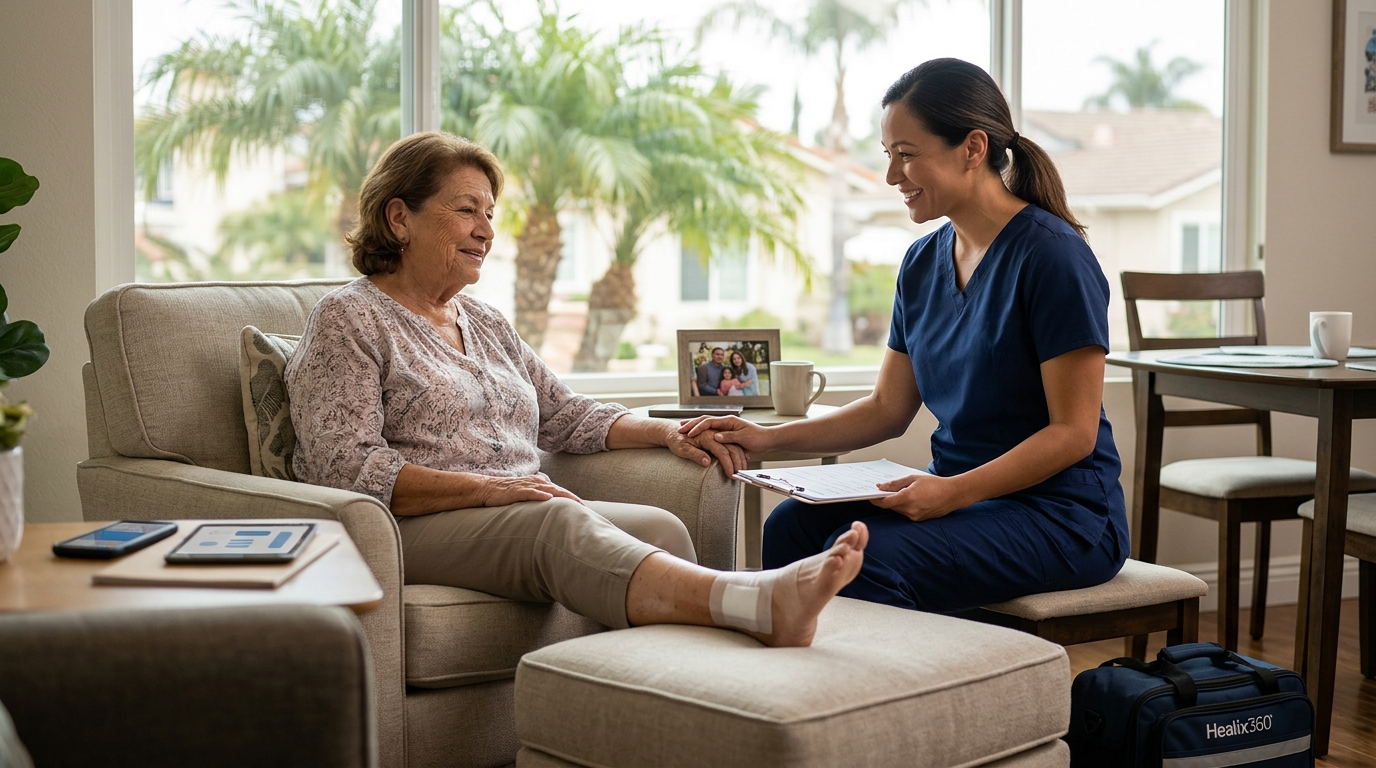
Step-by-Step Guide to Referring Patients for In-Home Advanced Wound Care in Southern California
Advanced mobile wound care has fundamentally shifted the standard of treatment for complex chronic wounds. According to recent healthcare data, approximately 6.2 million people in the United States suffer from chronic wounds, with a significant portion residing in long-term care facilities or private homes. This statistic highlights the critical need for accessible, high-quality medical intervention that does not require patient transport. For healthcare providers, facility administrators, and home health agencies in Southern California, understanding the referral workflow is essential to ensuring timely healing and preventing costly complications like amputation or hospital readmission.
Understanding Mobile Wound Care Coordination
Mobile wound care is not merely a convenience; it is a clinical necessity for patients with limited mobility. Healix360 operates as a specialized coordination service that bridges the gap between patients and independent licensed physicians and nurse practitioners. This model ensures that hospital-grade treatment reaches the patient, whether they are in a private residence, an assisted living community, or a skilled nursing facility.
The core value proposition lies in the physician-led approach. Every patient is assessed in person by a licensed clinician who designs and oversees a comprehensive treatment plan. This plan may include surgical debridement, advanced biologics, regenerative therapies, compression, and offloading. By bringing the clinic to the patient, providers can reduce the logistical burden on families and facility staff while ensuring that complex wounds receive immediate, expert attention.
For more details on the clinical methodology, review our approach to wound healing. This framework ensures that every intervention is tailored to the specific pathology of the wound, rather than applying a one-size-fits-all protocol.
Identifying Patient Candidacy for In-Home Care
Not all wounds require advanced mobile intervention, but many chronic conditions benefit significantly from it. Providers should evaluate patients based on wound complexity, mobility status, and healing trajectory. The following conditions are primary candidates for in-home advanced wound care services:
Chronic Ulcers
Diabetic foot ulcers, venous leg ulcers, and arterial ulcers often fail to heal with standard primary care. These wounds require specialized wound bed preparation and advanced dressings. For specific protocols on arterial ulcer treatment, clinicians must assess vascular health alongside local wound care.
Post-Surgical Complications
Wounds that have become infected or are exhibiting poor granulation tissue after surgery are high-risk. Early intervention can prevent the progression to osteomyelitis or systemic infection. Providers should refer patients who show signs of dehiscence or excessive exudate.

Amputation Site Management
Residual limb management requires specialized care to ensure proper healing and prosthetic fitting. Amputation-site wounds often present unique challenges regarding pressure distribution and tissue viability. Mobile clinicians can provide negative pressure wound therapy and bioengineered skin applications directly at the patient's location.
Burn and Trauma Injuries
Moderate-to-severe thermal injuries or traumatic wounds benefit from the sterile environment of a mobile clinic setup. Burn wound care often involves the use of amniotic tissue and antimicrobial silver dressings, which require precise application techniques best performed by a specialist.
Preparing the Referral Package
To ensure a seamless transition of care, providers must compile a complete clinical picture before initiating the referral. Incomplete information can delay the start of treatment, which is critical in wound care where time directly impacts healing outcomes. The following documentation should be included:
- Clinical History: Detailed history of the wound, including onset, previous treatments, and response to prior interventions.
- Imaging and Labs: Recent X-rays, MRI results, or laboratory values such as HbA1c, white blood cell count, and inflammatory markers.
- Medication List: Current medications, particularly anticoagulants, immunosuppressants, or antibiotics.
- Comorbidities: Relevant conditions such as diabetes, peripheral artery disease, or renal failure.
- Access Information: Specific instructions for entering the facility, parking, or contacting the primary caregiver.
Having this information ready allows the coordinating team to match the patient with the most appropriate specialist quickly. For general inquiries about what to expect during the process, refer to the Wound Care Answers Hub.
Initiating Contact with Healix360
The referral process is designed to be straightforward and efficient. Providers can initiate the referral through two primary channels:
Direct Phone Contact
For urgent cases or immediate clarification, calling the dedicated provider line is the most effective method. The team is trained to triage referrals and schedule physician visits typically within 3 to 5 business days. This rapid response time is crucial for preventing wound deterioration.
Online Provider Request
For non-urgent referrals or bulk facility onboarding, the online request form allows for detailed submission of patient data. This method ensures that all clinical documentation is securely transmitted and reviewed by the care coordination team. To begin the process, request a provider through the official portal.
Healix360 serves Southern California and Nevada, covering major counties including Los Angeles, Orange, Riverside, San Bernardino, Ventura, and San Diego. This extensive geographic coverage ensures that patients in both urban and rural settings within these regions have access to specialized care.
Care Coordination and Physician Assessment
Once the referral is received, the coordination team takes over the logistical heavy lifting. They verify insurance eligibility, schedule the physician visit, and prepare the necessary medical supplies. The licensed physician or nurse practitioner then conducts an in-person assessment. This assessment is the cornerstone of the treatment plan.
The clinician will evaluate the wound bed, surrounding tissue, and vascular status. They may perform sharp debridement to remove necrotic tissue, which is essential for promoting granulation. The treatment plan is then customized, potentially incorporating advanced therapies such as:
- Negative Pressure Wound Therapy (NPWT)
- Bioengineered skin substitutes
- Collagen matrix applications
- Antimicrobial silver dressings
This personalized approach ensures that the patient receives the most effective intervention for their specific condition. For a deeper dive into the specific treatments offered, explore the About Healix360 page to understand the network of independent specialists.
Navigating Insurance and Medicare Coverage
Financial barriers should not prevent patients from receiving advanced wound care. Healix360 accepts Medicare Part B and most major insurance plans. This acceptance is critical for elderly patients and those with chronic conditions who often require long-term wound management.
Providers should verify coverage details during the referral process. Medicare Part B typically covers medically necessary wound care services, including physician visits and advanced dressings. Understanding these coverage parameters helps avoid unexpected costs for patients and facilities.
For questions regarding billing and coverage specifics, the Wound Care Answers Hub provides direct, evidence-based information. Clear communication about insurance helps build trust with patients and their families, ensuring a smoother care experience.
Key Takeaways
- Rapid Access: Care typically begins within 3 to 5 business days of referral, ensuring timely intervention for complex wounds.
- Physician-Led Care: Every patient is assessed in person by a licensed physician or nurse practitioner who designs the treatment plan.
- Comprehensive Coverage: Services include surgical debridement, advanced biologics, regenerative therapies, and compression management.
- Geographic Reach: Healix360 serves Southern California counties and Nevada, including Los Angeles, Orange, and San Diego.
- Insurance Acceptance: The service accepts Medicare Part B and most major insurance plans, reducing financial barriers.
- Specialized Treatments: Specific protocols are available for amputation sites, arterial ulcers, and burn wounds.
- Coordination Support: The team handles logistics, allowing providers to focus on clinical decision-making.
Frequently Asked Questions
What types of wounds does Healix360 treat?
Healix360 treats a wide range of chronic and complex wounds, including diabetic foot ulcers, venous leg ulcers, pressure injuries, post-surgical wounds, arterial ulcers, and burn wounds. The team also specializes in amputation-site wound management.
How quickly can a physician visit a patient?
Care typically begins within 3 to 5 business days after the referral is processed. Urgent cases may be prioritized for earlier assessment to prevent further complications.
Does Healix360 accept Medicare?
Yes, Healix360 accepts Medicare Part B and most major insurance plans. This ensures that eligible patients can access advanced wound care without significant out-of-pocket costs.
What is the difference between mobile wound care and home health?
Mobile wound care focuses specifically on advanced, physician-led interventions for complex wounds, often utilizing specialized biologics and surgical techniques. Home health may provide broader nursing care but might not always include immediate access to specialized wound physicians.
Which areas in Southern California are served?
Healix360 serves Los Angeles, Orange, Riverside, San Bernardino, Ventura, and San Diego counties. The service also extends to Las Vegas, Nevada.
Can Healix360 treat patients in skilled nursing facilities?
Yes, Healix360 coordinates access to physician-led advanced wound care for patients in their homes, assisted living communities, and skilled nursing facilities across the service area.
What information is needed to make a referral?
Providers should prepare clinical history, imaging, lab results, medication lists, and comorbidity details. Access instructions for the patient's location are also necessary to facilitate the physician visit.
Request a Provider Today
Ensuring your patients receive timely, advanced wound care is critical to their recovery and quality of life. By leveraging Healix360's coordination services, you can provide hospital-grade treatment in the comfort of the patient's environment. Do not let logistical barriers delay healing. Request a provider now to begin the referral process and improve outcomes for your patients in Southern California and Nevada.