

How to Find and Book Medicare-Accepted Mobile Wound Care in Southern California
Chronic wounds affect millions of Americans annually, with diabetic foot ulcers alone costing the U.S. healthcare system billions each year. For seniors and patients with limited mobility, traveling to a clinic for frequent dressing changes and debridement is often impossible. Mobile wound care bridges this gap by bringing hospital-grade treatment directly to the patient's home. This guide explains how to identify legitimate, Medicare-accepting providers in Southern California and Nevada, ensuring you receive covered, high-quality care without the stress of transportation. (About Healix360 Mobile Wound)
Step 1: Verify Medicare Part B Acceptance
The first critical step in finding mobile wound care is confirming insurance compatibility. Most mobile wound care services fall under Medicare Part B, which covers outpatient medical services, including skilled nursing and physician services. However, not all mobile providers accept Medicare. You must ensure the provider is enrolled in Medicare and accepts assignment, meaning they agree to the Medicare-approved amount as full payment.
When contacting potential providers, ask directly if they accept Medicare Part B for mobile visits. According to Medicare.gov, wound care supplies and physician services are covered when medically necessary. Avoid providers who demand full upfront payment without offering detailed insurance verification, as this may indicate they are out-of-network or operating outside standard Medicare guidelines.
Step 2: Identify Specialized Wound Treatments
Not all mobile wound care is created equal. Chronic wounds, such as venous leg ulcers and diabetic foot ulcers, require specialized, physician-led interventions. General home health aides may change dressings, but they cannot perform advanced treatments like sharp debridement or apply bioengineered skin. You need a service that coordinates access to licensed physicians and nurse practitioners who can deliver these complex therapies in your home.
Look for providers who offer a comprehensive range of advanced therapies. These include Negative Pressure Wound Therapy (NPWT), which uses vacuum-assisted closure to promote healing, and the application of bioengineered skin substitutes. According to the Wound Care Advisor, advanced biologics and regenerative therapies are essential for non-healing wounds that have failed traditional treatments. Ensure the provider you choose has the capability to deliver these specific interventions at your location.
Step 3: Evaluate the Provider Network
In Southern California and Nevada, the most effective way to access high-quality mobile wound care is through a coordination service. These services act as a bridge between patients, hospitals, and independent licensed physicians. They manage the logistics of scheduling, insurance verification, and clinician deployment, ensuring that the right specialist arrives at your door with the necessary equipment.
Healix360 operates as such a coordination service, connecting patients in Los Angeles, Orange, Riverside, San Bernardino, Ventura, and San Diego counties, as well as Las Vegas, with physician-led care. By using a coordination platform, you avoid the hassle of vetting individual practitioners. Instead, you gain access to a network of verified professionals who specialize in complex wound types, including amputation-site wounds, burn injuries, and arterial ulcers. This network approach ensures continuity of care and rapid response times, often beginning treatment within three to five business days.
Step 4: Schedule the Initial Assessment
Once you have identified a Medicare-accepting provider with a robust network, the next step is scheduling the initial assessment. This visit is crucial because every patient must be assessed in person by a licensed physician or nurse practitioner. During this assessment, the clinician will evaluate the wound bed, check for signs of infection, and review the patient's medical history.
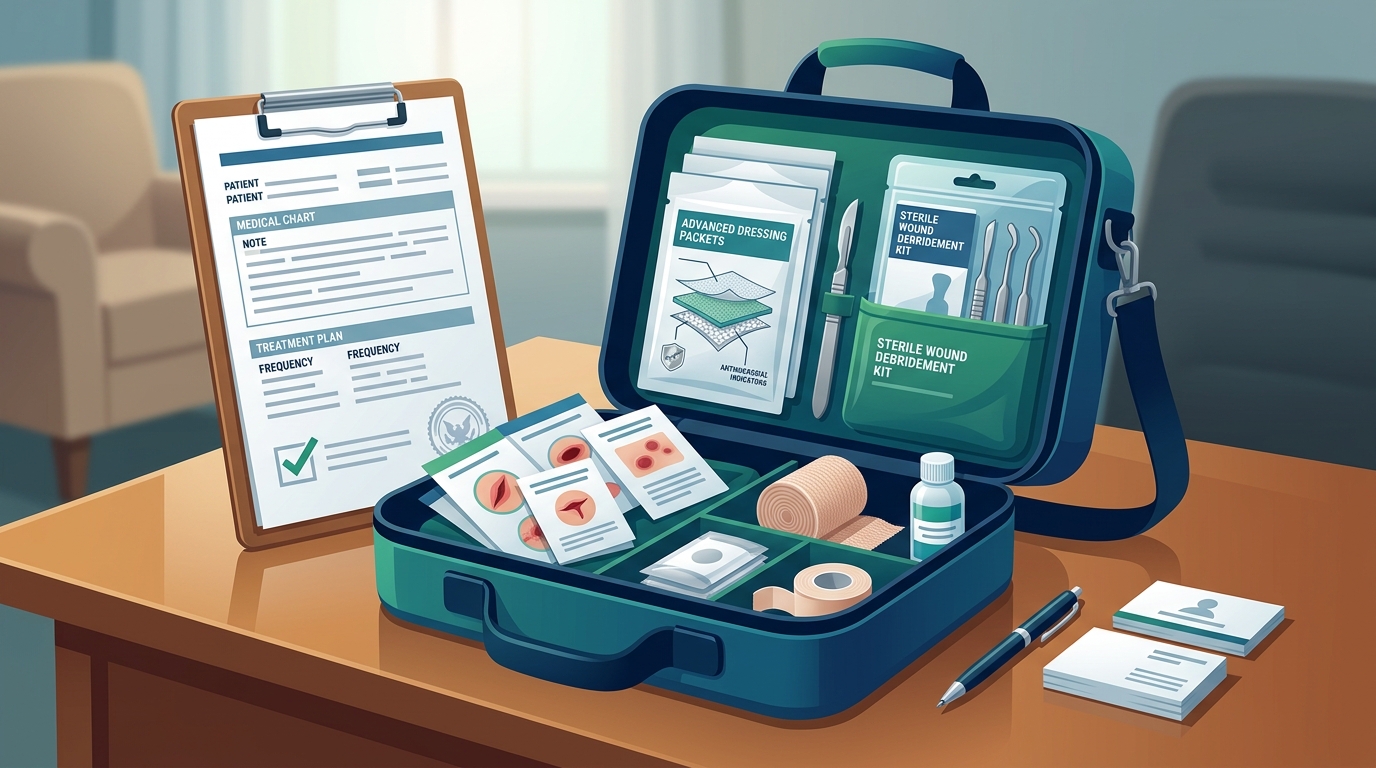
The clinician will then design a personalized treatment plan. This plan may include surgical debridement, the removal of dead tissue to promote healing, compression therapy for venous issues, or offloading devices for diabetic foot ulcers. The assessment also serves as an opportunity to discuss the healing timeline and what to expect during the recovery process. According to the National Center for Biotechnology Information, early and accurate assessment significantly reduces the risk of complications and amputation.
Step 5: Understand Costs and Insurance
Understanding the financial aspect of mobile wound care is essential. While Medicare Part B covers many services, patients are typically responsible for the Part B deductible and 20% coinsurance for physician services. Wound care supplies, such as specialized dressings and compression garments, may also be covered if prescribed by the physician. It is important to get a clear breakdown of costs before treatment begins.
Healix360 accepts Medicare Part B and most major insurance plans, simplifying the billing process. They handle the coordination of benefits and ensure that claims are submitted correctly to minimize out-of-pocket expenses for patients and their families. For those with private insurance, the coordination service will verify coverage details and explain any potential co-pays or deductibles. This transparency allows families to plan financially without unexpected surprises.
Key Takeaways
- Medicare Compatibility: Ensure the provider explicitly accepts Medicare Part B for mobile physician visits to avoid high out-of-pocket costs.
- Physician-Led Care: Seek services that coordinate access to licensed physicians and nurse practitioners for advanced treatments like debridement and bioengineered skin.
- Geographic Coverage: Verify that the provider serves your specific county in Southern California or Nevada, as mobile services often have defined service areas.
- Rapid Response: Choose a coordination service that can typically begin care within 3–5 business days to prevent wound deterioration.
- Comprehensive Treatments: Look for providers offering a full spectrum of therapies, including Negative Pressure Wound Therapy, antimicrobial silver dressings, and infection management.
- Insurance Coordination: Utilize services that handle insurance verification and billing to streamline the financial aspect of care.
- Specialized Wound Types: Confirm the provider has experience with your specific wound type, whether it is a diabetic ulcer, pressure injury, or post-surgical wound.
Frequently Asked Questions
Does Medicare cover mobile wound care visits?
Yes, Medicare Part B typically covers mobile wound care visits when performed by a licensed physician or nurse practitioner. This includes the evaluation, treatment plan, and any necessary skilled nursing services. Patients are responsible for the Part B deductible and 20% coinsurance.
How quickly can mobile wound care begin?
Most coordination services, including Healix360, can typically begin care within 3 to 5 business days after the initial request. This rapid response is critical for preventing infection and promoting faster healing in chronic wounds.
What types of wounds do mobile providers treat?
Mobile wound care providers treat a wide range of chronic and complex wounds, including diabetic foot ulcers, venous leg ulcers, pressure injuries, post-surgical wounds, arterial ulcers, and amputation-site wounds. Some providers also offer specialized care for burn wounds.
Is mobile wound care more expensive than clinic visits?
Mobile wound care is often comparable in cost to clinic visits when considering the value of convenience and reduced transportation needs. With Medicare acceptance, the out-of-pocket costs are similar to those for an outpatient clinic visit, minus the travel expenses and time off work for caregivers.
Who performs the mobile wound care visits?
Visits are performed by licensed physicians and nurse practitioners who specialize in wound care. These clinicians are trained to deliver hospital-grade treatments, including sharp debridement, advanced biologics, and compression therapy, directly in the patient's home.
What areas in Southern California are served?
Services are available across multiple counties, including Los Angeles, Orange, Riverside, San Bernardino, Ventura, and San Diego. Coverage in Nevada extends to the Las Vegas metropolitan area.
Do I need a referral from my doctor?
While a referral from a primary care physician or specialist can help streamline the process, it is not always required. Patients can often request a provider directly through the coordination service, which will then communicate with existing healthcare providers to ensure coordinated care.
Contact Healix360
If you or a loved one is struggling with a chronic wound and need Medicare-accepted mobile care in Southern California or Nevada, Healix360 is here to help. Our coordination service connects you with physician-led experts who deliver advanced wound care in the comfort of your home. We accept Medicare Part B and most major insurance plans, ensuring accessible and high-quality treatment.
Call 877-545-1300 or request a provider online to begin your care journey today. Do not let mobility issues delay your healing. Expert wound care is just a phone call away.