
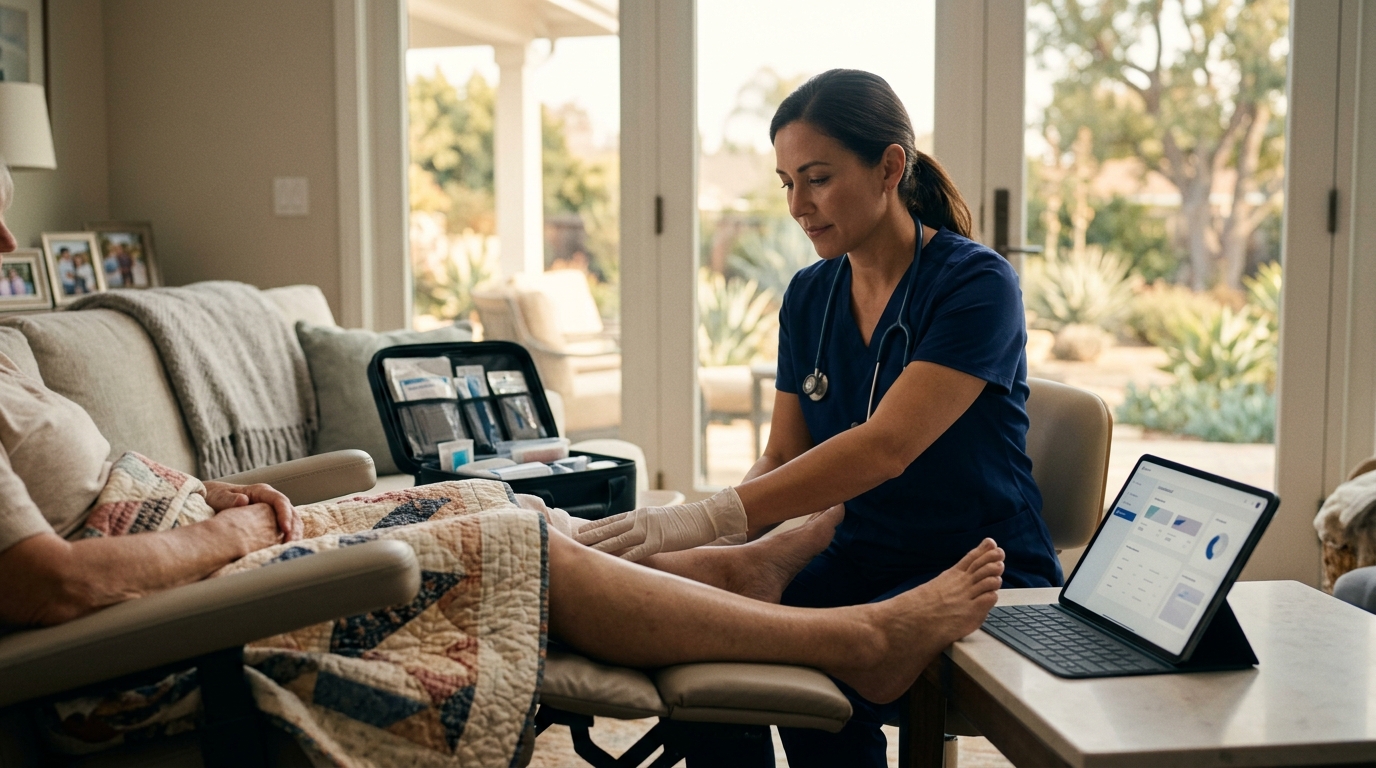
Home Treatment Guide for Severe Pressure Ulcers in Southern California
Severe pressure ulcers, also known as bedsores or pressure injuries, represent a critical health challenge for immobile patients in Southern California. According to recent clinical data, approximately 2.5 million adults in the United States are affected by pressure ulcers each year, with severe cases requiring intensive, specialized intervention to prevent life-threatening complications. The complexity of Stage 3 and Stage 4 ulcers demands more than basic home care; it requires physician-led advanced wound management protocols. This guide outlines the essential steps for managing severe pressure injuries at home, emphasizing the necessity of professional medical oversight and the specific services available across Los Angeles, Orange County, San Diego, and Nevada. (Pressure Ulcers Agency) (About Healix360 Mobile Wound)
Defining Severe Pressure Ulcers
To effectively treat severe pressure ulcers, one must first understand the clinical classification of the injury. Pressure ulcer is a localized injury to the skin and/or underlying tissue usually over a bony prominence, resulting from prolonged pressure, and often combined with shear and friction. This definition distinguishes simple skin irritation from deep tissue damage that requires medical intervention.
Severe cases are typically categorized as Stage 3 or Stage 4. A Stage 3 pressure ulcer involves full-thickness skin loss with damage to subcutaneous tissue that may extend down to, but not through, underlying fascia. In contrast, Stage 4 pressure ulcer is characterized by full-thickness skin and tissue loss with exposed or directly palpable fascia, muscle, tendon, ligament, cartilage, or bone in the ulcer. These stages indicate a critical need for advanced wound care services that go beyond standard nursing protocols. (Pressure Ulcer Statistics)
Patients in Southern California, particularly in regions with high elderly populations like Los Angeles and Orange County, face unique challenges. The climate can exacerbate moisture-related skin breakdown, while the logistical complexity of coordinating care between hospitals, skilled nursing facilities, and home environments requires a dedicated coordination service. Healix360 provides this critical link, ensuring that licensed physicians and nurse practitioners deliver hospital-grade treatment directly to the patient's location.
The Risks of Delayed Professional Care
Attempting to manage severe pressure ulcers without professional guidance carries significant risks. The primary danger is infection. When the skin barrier is completely compromised, bacteria can enter the bloodstream, leading to sepsis, a life-threatening response to infection. Data shows that patients with untreated Stage 4 ulcers have a significantly higher mortality rate compared to those receiving timely, advanced wound care. (Preventing Pressure Ulcers)
Another critical risk is osteomyelitis, an infection of the bone. Because Stage 4 ulcers expose underlying bone, the risk of bacterial colonization of the skeletal structure is high. Treating osteomyelitis often requires prolonged antibiotic therapy and sometimes surgical intervention, which could have been mitigated with early, aggressive wound management. Furthermore, the financial burden of delayed care is substantial. Hospital readmissions due to wound complications are costly and disrupt the continuity of care for patients and their families.
Healix360 addresses these risks by coordinating access to physician-led care within 3 to 5 business days. This rapid response time is crucial in preventing the progression of the wound and managing pain effectively. By accepting Medicare Part B and most major insurance plans, the service ensures that financial barriers do not prevent patients from receiving necessary medical attention.
Advanced Treatment Modalities at Home
Home treatment for severe pressure ulcers is not limited to simple dressing changes. It involves a comprehensive, physician-designed treatment plan that may include several advanced modalities. These treatments are delivered by licensed professionals who assess the wound bed and tailor the approach to the patient's specific physiological needs.
Negative Pressure Wound Therapy (NPWT)
Negative Pressure Wound Therapy, often referred to as wound VAC, is a cornerstone of advanced wound care. This technique uses a vacuum dressing to remove excess fluid and infectious material from the wound. The negative pressure promotes blood flow, increases granulation tissue growth, and shrinks the wound size. For patients with deep cavities or exudative wounds, NPWT can significantly accelerate the healing process compared to traditional moist wound healing methods.
Sharp Debridement
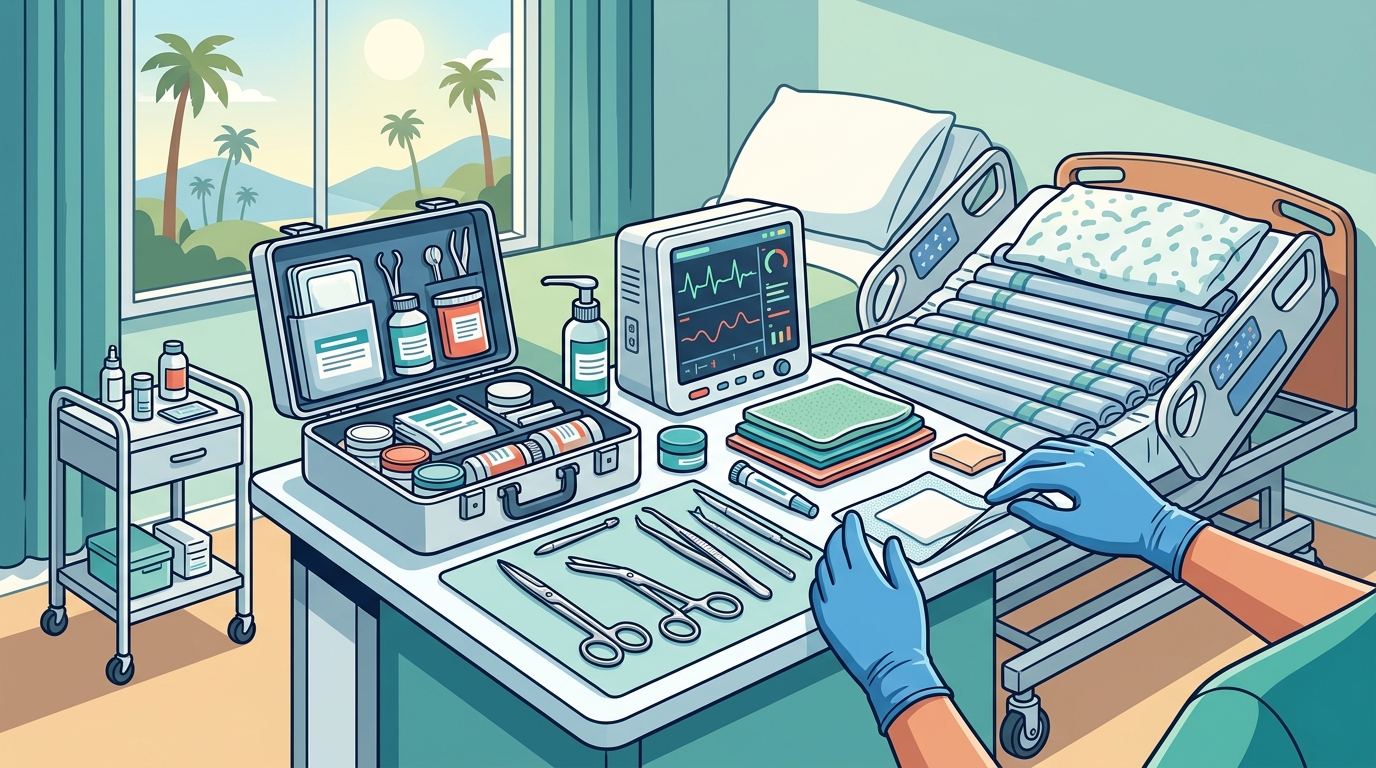
Debridement is the removal of dead, damaged, or infected tissue to improve the healing potential of the remaining healthy tissue. Sharp debridement is a precise surgical technique used by licensed physicians to remove necrotic tissue and biofilm from the wound bed. This procedure is essential for severe ulcers because necrotic tissue serves as a breeding ground for bacteria and prevents new tissue growth. By removing this barrier, the clinician creates a clean wound bed that can respond to other therapies.
Advanced Biologics and Regenerative Therapies
In cases where standard treatments fail to promote healing, advanced biologics may be employed. These include bioengineered skin substitutes, collagen matrices, and other regenerative therapies. These products provide a scaffold for new tissue growth and deliver growth factors that stimulate the body's natural healing mechanisms. The use of such advanced materials is typically reserved for complex, non-healing wounds and requires expert application to ensure efficacy.
Coordinating Mobile Wound Care
Managing severe pressure ulcers at home requires a coordinated approach that bridges the gap between hospital care and residential living. Healix360 serves as this coordination service, connecting patients with independent licensed physicians and nurse practitioners across Southern California and Nevada.
The coordination process begins with an assessment of the patient's needs. This includes evaluating the wound stage, the patient's mobility status, and the home environment. The clinician then designs a treatment plan that may include surgical debridement, advanced biologics, compression therapy, and offloading strategies. All of these services are delivered at the patient's location, whether it is a private home, an assisted living community, or a skilled nursing facility.
This model of care is particularly beneficial for patients in Los Angeles, Orange, Riverside, San Bernardino, Ventura, and San Diego counties, as well as Las Vegas. It eliminates the need for frequent transportation to wound care clinics, which can be painful and logistically challenging for immobile patients. By bringing the hospital-grade treatment to the patient, Healix360 ensures continuity of care and improves patient outcomes.
Treatment Options Comparison
Understanding the differences between various wound care approaches helps patients and families make informed decisions. The table below compares standard home care with advanced mobile wound care services.
| Feature | Standard Home Nursing | Advanced Mobile Wound Care (Healix360) |
|---|---|---|
| Provider Type | Registered Nurse (RN) | Licensed Physician or Nurse Practitioner |
| Assessment Depth | Surface-level evaluation | Comprehensive clinical assessment |
| Treatment Modalities | Basic dressings, cleaning | NPWT, Debridement, Biologics, Regenerative Therapies |
| Coordination | None or limited | Full care coordination with hospitals and facilities |
| Insurance | Varies by plan | Medicare Part B and major insurance plans accepted |
As shown in the comparison, advanced mobile wound care offers a higher level of clinical expertise and a broader range of treatment options. This is critical for severe pressure ulcers that do not respond to standard nursing care. For more detailed information on specific wound types, patients can explore resources on amputation-site wounds or arterial ulcers, which share similar management principles.
Key Takeaways
- Severity Matters: Stage 3 and Stage 4 pressure ulcers require physician-led care, not just nursing support.
- Rapid Response: Care typically begins within 3 to 5 business days when coordinated through a service like Healix360.
- Advanced Therapies: Treatments may include Negative Pressure Wound Therapy, sharp debridement, and bioengineered skin substitutes.
- Geographic Coverage: Services are available across Southern California counties and Las Vegas, ensuring local access.
- Insurance Accessibility: Medicare Part B is accepted, reducing financial barriers for eligible patients.
- Coordination is Key: A dedicated service bridges the gap between hospitals, skilled nursing facilities, and home care.
- Prevention of Complications: Timely advanced care reduces the risk of sepsis, osteomyelitis, and hospital readmissions.
Frequently Asked Questions
What is the difference between a Stage 3 and Stage 4 pressure ulcer?
A Stage 3 pressure ulcer involves full-thickness skin loss with damage to subcutaneous tissue. A Stage 4 pressure ulcer involves full-thickness skin and tissue loss with exposed bone, muscle, or tendon. Stage 4 ulcers are more severe and require more intensive medical intervention.
Can severe pressure ulcers be treated at home?
Yes, severe pressure ulcers can be treated at home through advanced mobile wound care services. Licensed physicians and nurse practitioners deliver hospital-grade treatments, including debridement and advanced dressings, directly to the patient's location.
Does Healix360 accept Medicare?
Yes, Healix360 accepts Medicare Part B and most major insurance plans. This ensures that patients have access to necessary wound care services without prohibitive out-of-pocket costs.
How quickly can care begin after requesting a provider?
Care typically begins within 3 to 5 business days after a provider is requested. This rapid response is crucial for preventing infection and promoting healing in severe cases.
What areas do you serve in Southern California?
Healix360 serves Los Angeles, Orange, Riverside, San Bernardino, Ventura, and San Diego counties. Additionally, services are available in Las Vegas, Nevada.
What is sharp debridement?
Sharp debridement is a precise surgical technique used by licensed physicians to remove necrotic tissue and biofilm from the wound bed. This process is essential for creating a clean wound bed that can heal effectively.
How does mobile wound care differ from visiting a clinic?
Mobile wound care eliminates the need for transportation, which can be painful and difficult for immobile patients. It also provides continuity of care in the patient's familiar environment, which can improve comfort and outcomes.
Begin Your Care Journey
If you or a loved one is struggling with a severe pressure ulcer, do not wait for the condition to worsen. Access to physician-led advanced wound care is available right where you need it. Healix360 coordinates this critical care, ensuring that you receive the highest standard of treatment in the comfort of your home or facility.
Contact Healix360 today to request a provider and begin your path to healing. Visit our About page to learn more about our mission, or call 877-545-1300 to speak with a care coordinator. For immediate assistance, you can also access our wound care answers hub for evidence-based information.