
Choosing the Right Mobile Wound Care Provider in Southern California
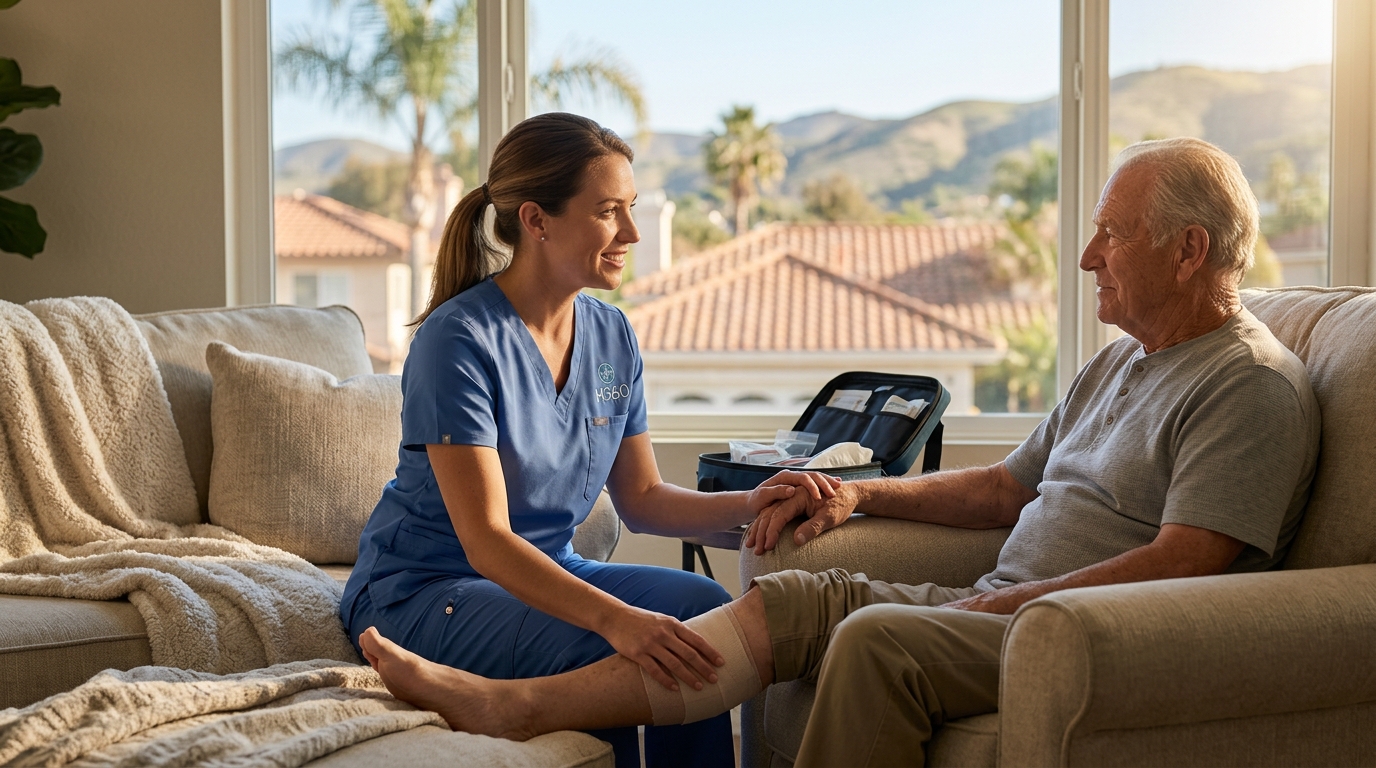
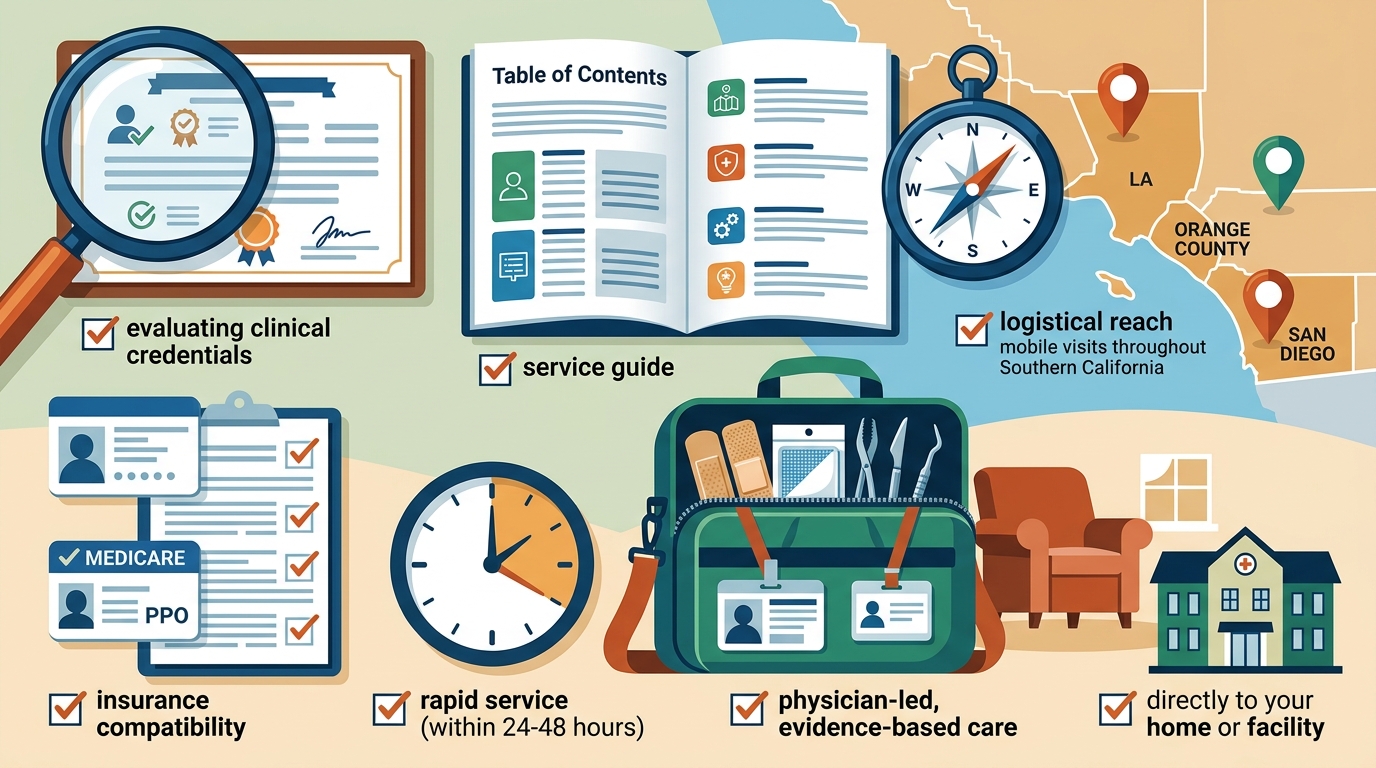
Choosing the right mobile wound care provider in Southern California requires evaluating clinical credentials, insurance compatibility, and logistical reach. The best provider is one that delivers physician-led, evidence-based care directly to your home or facility while navigating complex insurance requirements. This guide covers how to evaluate, verify, and select a mobile wound care partner, detailing costs, timelines, and local specifics for the region.
How to Choose a Provider
Mobile wound care is a specialized medical service where licensed clinicians travel to the patient's location to treat chronic or complex wounds. When selecting a provider, the primary differentiator is the level of clinical oversight. You should look for a service where care is directed by licensed physicians or nurse practitioners, rather than solely by general home health aides. This ensures that complex interventions, such as sharp debridement or the application of advanced biologics, are performed by qualified medical professionals.
Another critical factor is the provider's approach to coordination. A high-quality mobile wound care service acts as a bridge between the patient, their primary care physician, and insurance companies. They should handle the administrative burden of prior authorizations and benefit verification. For example, Healix360 operates as a coordination service that connects patients with independent licensed clinicians, ensuring that the administrative side of care does not delay the clinical side.
Clinical Scope and Specialization
Not all mobile providers treat the same conditions. Some focus exclusively on diabetic foot ulcers, while others manage a broader range of issues including pressure injuries, venous stasis ulcers, and post-surgical dehiscence. You must verify that the provider has specific experience with your wound type. A provider that specializes in vascular wounds, for instance, will have a different toolkit and referral network than one focused on traumatic injuries.
Geographic Reach and Logistics
Southern California is vast, and traffic patterns significantly impact care delivery. A provider must have a robust network of clinicians to ensure timely visits across different counties. If a provider only operates in Los Angeles County, they may not be able to serve a patient in Riverside or San Diego. Check the specific service areas to ensure they cover your exact address, including rural or remote communities.
Questions to Ask Before Committing
Before scheduling an initial assessment, you should ask specific questions to gauge the provider's operational readiness. These questions help you understand the depth of their clinical capabilities and the transparency of their billing practices.
- Who will be performing the care? Ask if the visits are conducted by a physician, a nurse practitioner, or a registered nurse. Clarify the specific credentials of the clinician who will be at your bedside.
- What is the referral process? Determine if you need a referral from your primary care physician or if the mobile provider can initiate the care plan directly.
- How is insurance handled? Ask if they verify benefits before the first visit and if they provide a written cost estimate. This prevents unexpected out-of-pocket expenses. according to List of Approved
- What advanced therapies do you offer? Inquire about their access to technologies such as negative pressure wound therapy (Wound VAC) or cellular and tissue-based products (CTPs).
Verifying Credentials and Claims
Verifying the legitimacy of a medical provider is essential for patient safety. You can check the credentials of the clinicians associated with the service through state licensing boards. In California, you can verify physician and nurse practitioner licenses through the Medical Board of California or the Board of Registered Nursing. This ensures that the individuals providing your care are currently licensed and in good standing.
Additionally, you can verify Medicare enrollment status. Since many mobile wound care services bill Medicare Part B, you can use the CMS Medicare Revalidation List or the Medicare Provider Utilization and Payment Data (PUP) to confirm that the provider or the specific clinicians are enrolled in the Medicare program. This step is crucial for ensuring that your claims will be processed correctly.
The Care Process and Timeline
The mobile wound care process typically begins with an intake and eligibility check. The provider's team will review your medical history, current wound status, and insurance benefits. Once eligibility is confirmed, a licensed clinician will schedule an initial in-home or in-facility assessment. This assessment usually occurs within 24 to 48 hours of the request, depending on the provider's scheduling capacity.
The Initial Assessment
During the first visit, the clinician performs a comprehensive evaluation of the wound. This includes measuring the wound dimensions, assessing the wound bed tissue, and checking for signs of infection. They will also evaluate underlying factors such as circulation, nutrition, and mobility. Based on this evaluation, they develop a personalized treatment plan. according to Wound care centers
Ongoing Treatment and Monitoring
Subsequent visits are scheduled based on the severity of the wound and the treatment plan. For complex wounds, visits may occur weekly or more frequently. The clinician monitors progress by tracking wound closure rates and adjusting therapies as needed. If the wound is not healing as expected, the clinician may coordinate with specialists, such as vascular surgeons or podiatrists, to address underlying issues. according to West Coast Wound
Understanding Costs and Insurance
The cost of mobile wound care varies based on the complexity of the wound, the frequency of visits, and the types of therapies used. For patients with Medicare Part B, many medically necessary wound care services are covered. However, coverage depends on medical necessity and specific plan rules. Patients typically pay the standard Medicare deductible and coinsurance, which may range from $0 to a few hundred dollars per visit, depending on their supplemental insurance.
For patients without insurance or with private plans, costs can be higher. A single in-home wound visit might range from $250 to $600, with advanced therapies like skin substitutes or Wound VAC pumps billed separately. It is important to request a written cost estimate before the first visit. Providers like Healix360 often verify coverage and provide cost estimates to help patients understand their financial responsibility.
Common Mistakes to Avoid
One common mistake is delaying care until the wound becomes severely infected. Chronic wounds that are not treated promptly can lead to complications such as osteomyelitis (bone infection) or the need for amputation. Another mistake is assuming that all mobile providers are the same. Some may lack the clinical expertise to manage complex wounds, leading to stalled healing.
Patients should also avoid ignoring the underlying causes of the wound. For example, a venous leg ulcer will not heal if the underlying venous insufficiency is not addressed with compression therapy. Similarly, a diabetic foot ulcer requires strict glucose control and offloading. A good provider will address these systemic factors, not just the surface of the wound.
Mobile Care vs. Traditional Clinics
Traditional wound care clinics require patients to travel to a medical facility for each visit. This can be physically exhausting and logistically difficult for patients with limited mobility. Mobile wound care eliminates the need for travel, allowing patients to receive care in the comfort of their home or facility. This not only improves patient comfort but also reduces the risk of exposure to hospital-acquired infections.
| Feature | Mobile Wound Care | Traditional Clinic |
|---|---|---|
| Location | Patient's home or facility | Medical office or hospital |
| Travel Burden | None | High, especially for mobility-limited patients |
| Infection Risk | Lower (home environment) | Higher (clinical environment) |
| Convenience | High | Low |
| Cost | Varies by insurance | Varies by insurance |
Care for Specific Patient Scenarios
Different patient scenarios require different approaches to mobile wound care. For example, patients in skilled nursing facilities (SNFs) may have limited access to specialized wound care due to staffing constraints. A mobile provider can bring specialized expertise directly to the facility, ensuring that residents receive the advanced care they need.
For patients with diabetic foot ulcers, the focus is on limb preservation. This involves offloading the foot, managing infection, and potentially using regenerative therapies. For patients with pressure injuries, the focus is on repositioning, nutrition, and advanced dressings. A provider that offers a comprehensive range of services can address these specific needs effectively.
Patient Rights and Protections
Patients have the right to receive care that is safe, effective, and respectful. This includes the right to be informed about the risks and benefits of treatment, as well as the right to refuse care. Patients should also be aware of the No Surprises Act, which protects patients from unexpected out-of-network bills for certain emergency and non-emergency services. While mobile wound care is typically in-network, it is important to verify that the provider is in-network with your insurance plan to avoid balance billing.
Additionally, patients have the right to privacy and confidentiality. All medical information shared with the provider is protected under HIPAA. You can review the provider's HIPAA Notice of Privacy Practices to understand how your data is handled.
Southern California Service Areas
Southern California includes a diverse range of geographic areas, from dense urban centers to rural communities. Mobile wound care providers must have a wide service area to meet the needs of patients across the region. For instance, Healix360 serves patients in Los Angeles, Orange, Riverside, San Bernardino, Ventura, Santa Barbara, Kern, San Luis Obispo, and San Diego counties, as well as parts of Nevada. This extensive coverage ensures that patients in both urban and rural areas can access specialized care.
The Importance of Timing
Timing is critical in wound care. The sooner a chronic wound is treated, the better the chances of successful healing. If a wound has not healed within 30 days, it is considered chronic and may require specialized intervention. Delaying care can lead to complications and increased costs. Patients should seek care as soon as they notice a wound that is not healing as expected.
Additionally, the timing of the initial assessment matters. Providers that can schedule visits within 24 to 48 hours are more likely to prevent complications. This rapid response is a key advantage of mobile wound care, as it allows for early intervention and close monitoring.
Long-Term Outcomes and Monitoring
Long-term outcomes in wound care depend on consistent monitoring and adherence to the treatment plan. Patients should expect regular follow-up visits to track progress and adjust therapies as needed. Successful healing is measured by wound closure, reduction in pain, and improvement in quality of life. Providers that use data-driven approaches, such as digital documentation and biomarker analysis, can better predict outcomes and optimize care.
For patients with chronic conditions, such as diabetes or peripheral arterial disease, long-term management is essential to prevent recurrence. A good provider will educate patients on self-care and prevention strategies, empowering them to take an active role in their recovery.
Key Takeaways
- Choose a provider with physician-led care and strong insurance coordination.
- Verify clinician credentials through state licensing boards and Medicare enrollment lists.
- Ask specific questions about the care team, referral process, and cost estimates. according to Southern District of
- Mobile care offers the convenience of home treatment and lower infection risk.
- Costs vary by insurance, but Medicare Part B often covers medically necessary services.
- Delaying care can lead to complications; seek help if a wound does not heal in 30 days.
- Providers with wide geographic reach can serve patients across Southern California.
- Long-term success depends on consistent monitoring and addressing underlying health issues.
Frequently Asked Questions
What is mobile wound care?
Mobile wound care is a medical service where licensed clinicians travel to the patient's home or facility to treat chronic or complex wounds. It provides the same level of care as a clinic but in a more convenient setting.
Does Medicare cover mobile wound care?
Yes, Medicare Part B covers medically necessary wound care services, including those delivered in the home, when provided by a licensed physician or nurse practitioner. Coverage depends on specific plan rules and medical necessity.
How quickly can I get a mobile wound care visit?
Many providers can schedule an initial assessment within 24 to 48 hours of the request, depending on their scheduling capacity and the urgency of the case.
What types of wounds do mobile providers treat?
Mobile providers treat a wide range of wounds, including diabetic foot ulcers, pressure injuries, venous leg ulcers, arterial ulcers, and post-surgical wounds.
How do I verify a provider's credentials?
You can verify clinician credentials through state licensing boards and check Medicare enrollment status using the CMS Medicare Revalidation List.
What is the cost of mobile wound care?
Costs vary by insurance and the complexity of the wound. With Medicare Part B, patients typically pay the standard deductible and coinsurance. Without insurance, a single visit may range from $250 to $600.
Can mobile providers treat patients in nursing facilities?
Yes, many mobile wound care providers treat patients in skilled nursing facilities, assisted living communities, and private residences.
What should I do if my wound is not healing?
If a wound has not healed within 30 days, it is considered chronic. You should seek specialized care from a wound care provider to prevent complications and promote healing.
Conclusion
Selecting the right mobile wound care provider in Southern California is a critical decision that impacts your health and quality of life. By evaluating clinical credentials, verifying insurance coverage, and understanding the care process, you can make an informed choice. Healix360 offers a comprehensive approach to mobile wound care, connecting patients with licensed clinicians across the region. To begin your journey toward healing, contact us today for a free eligibility check and consultation.