

Choosing the Right Mobile Wound Care Provider in Southern California
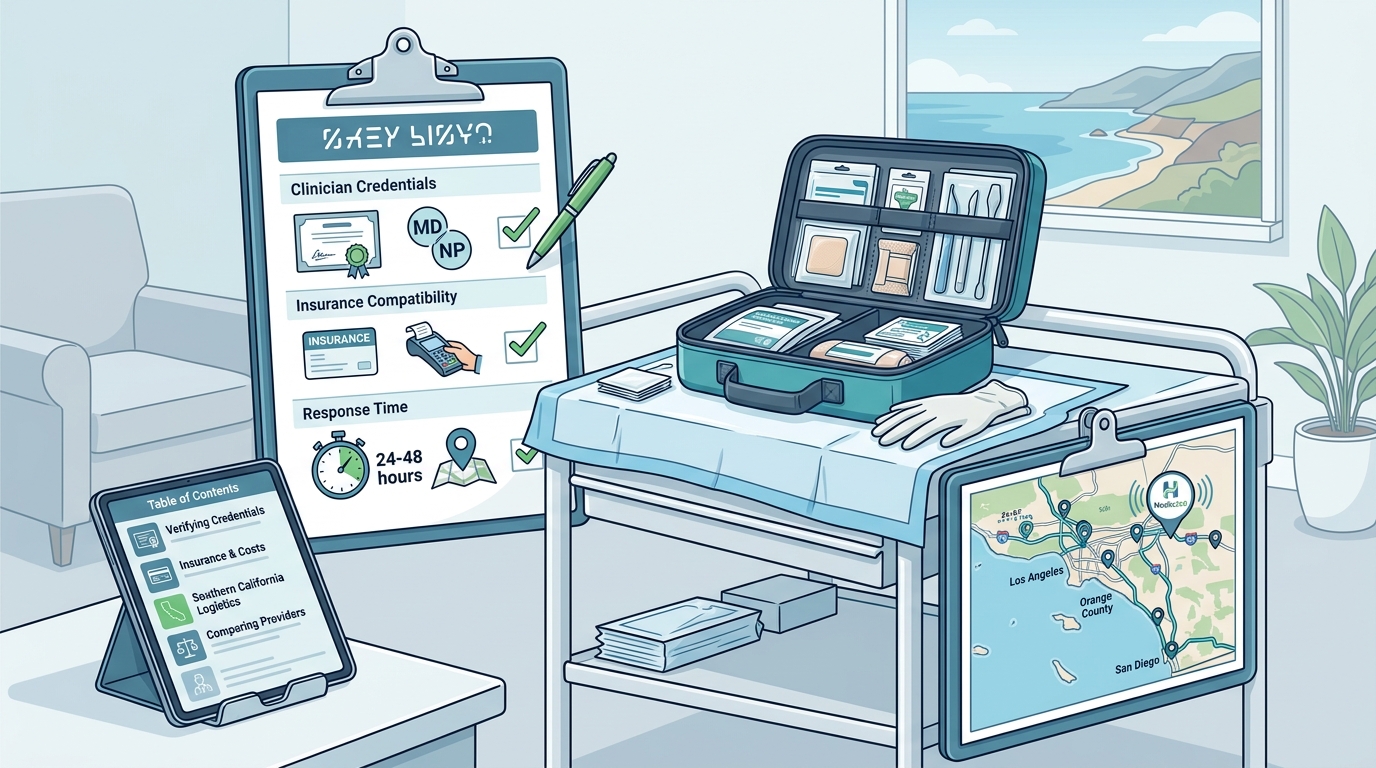
Selecting the right mobile wound care provider in Southern California requires verifying clinician credentials, insurance compatibility, and response times. Healix360 Advanced Mobile Wound Care Specialists connects patients with licensed physicians and nurse practitioners who deliver specialized care directly to homes and facilities. This guide covers how to evaluate providers, verify credentials, understand costs, and navigate the specific logistics of in-home wound treatment across the region.
How to Choose a Provider
Choosing a mobile wound care provider is a critical decision that impacts both healing outcomes and quality of life. A high-quality provider is defined by the clinical expertise of its practitioners and the efficiency of its coordination team. You should look for a service that employs licensed physicians and nurse practitioners rather than relying solely on generalist home health aides. The provider must have a clear protocol for handling complex wounds, including diabetic foot ulcers, pressure injuries, and post-surgical sites.
Clinical Expertise and Scope of Practice
Not all mobile providers offer the same level of clinical intervention. A robust provider should be capable of performing sharp debridement, applying advanced dressings, and managing negative pressure wound therapy (NPWT). Healix360 focuses on connecting patients with clinicians who are specifically trained in regenerative wound care and advanced biologics. This ensures that the care received at home meets the same standards as a specialized hospital outpatient wound center.
Coordination and Responsiveness
The administrative side of care is just as important as the clinical side. A good provider handles insurance verification, scheduling, and facility communication seamlessly. Patients should expect a response time of 24 to 48 hours for initial intake and assessment. This rapid response is crucial for preventing minor issues from escalating into serious complications that require hospitalization.
Questions to Ask Before Committing
Before scheduling a visit, you should ask specific questions to ensure the provider can meet your unique needs. These questions help clarify the scope of services, the qualifications of the staff, and the logistical details of the care plan.
- Who will be providing the care? Ask if the visits are led by a physician or a nurse practitioner. Clarify if the same clinician will see you at every visit to ensure continuity of care.
- What advanced therapies are available? Inquire about the provider's ability to perform sharp debridement, apply bioengineered skin substitutes, or manage wound VACs at home.
- How is insurance handled? Ask if the provider accepts your specific Medicare Part B, Medicare Advantage, or commercial plan. Confirm if they provide a written cost estimate before the first visit.
- What is the response time for emergencies? Understand the protocol if your wound shows signs of infection or deterioration between scheduled visits.
Verifying Credentials and Claims
Verifying the credentials of a mobile wound care provider is essential for ensuring safety and quality. You can check the licensure status of the physicians and nurse practitioners through the California Medical Board or the California Board of Registered Nursing. These public databases allow you to confirm that the clinicians are active, in good standing, and free of disciplinary actions.
Additionally, you should verify the provider's business accreditation. While not all medical practices are accredited by the Better Business Bureau, checking for a clean record and positive patient reviews can provide insight into their operational reliability. For example, BBB profiles for wound care companies often list accreditation dates and complaint histories, which can be a useful benchmark for evaluating any provider in the industry. according to Vitality Mobile Wound
The Mobile Care Process
Understanding the workflow of mobile wound care helps set realistic expectations for the treatment journey. The process typically begins with an intake call where a coordinator verifies your insurance and gathers basic medical history. This is followed by a scheduled in-home or in-facility assessment by a licensed clinician.
Initial Assessment and Treatment Planning
During the first visit, the clinician performs a comprehensive evaluation of the wound. This includes measuring the wound dimensions, assessing tissue type, and checking for signs of infection. The clinician then develops a personalized treatment plan that may include debridement, advanced dressing application, or referral to a vascular specialist if blood flow issues are suspected.
Ongoing Monitoring and Adjustments
Subsequent visits focus on monitoring progress and adjusting the treatment plan as needed. The frequency of visits depends on the severity of the wound and the healing rate. For complex wounds, visits may occur weekly or more frequently. The provider should use digital documentation to track changes in wound size and tissue quality over time, ensuring that the treatment is effective.
Understanding Costs and Insurance
Cost is a significant factor when choosing a wound care provider. The price of mobile wound care is driven by the complexity of the treatment, the frequency of visits, and the specific therapies used. Most patients with Medicare Part B pay a standard 20% coinsurance after the annual deductible is met. Without insurance, a single in-home wound visit can range from $250 to $600, with advanced therapies billed separately.
Insurance Coverage Details
Medicare Part B covers medically necessary wound care, including evaluation, debridement, and advanced therapies, when delivered by a licensed physician or nurse practitioner. It is important to note that the mobile delivery of care does not change the coverage rules. However, specific items like wound VAC pumps may fall under the durable medical equipment benefit, which has its own authorization requirements. Always verify coverage with your plan before starting treatment.
Common Mistakes to Avoid
Patients and caregivers often make mistakes that can delay healing or increase costs. One common error is waiting too long to seek specialized care. If a wound has not healed within 30 days, it is considered chronic and requires a different approach than standard first aid. Another mistake is assuming that any home health agency can provide advanced wound care. Generalist nurses may not have the training to perform sharp debridement or manage complex biologics.
Additionally, failing to manage underlying health conditions like diabetes or vascular disease can undermine even the best wound care plan. It is crucial to coordinate with your primary care physician and any specialists to ensure that your overall health supports the healing process.
Mobile Care vs. Clinic Visits
Choosing between mobile wound care and traditional clinic visits depends on your mobility, location, and the severity of your condition. Traditional wound centers offer a controlled environment with access to a full range of diagnostic tools. However, they require travel, which can be physically exhausting for patients with limited mobility. Mobile care brings the specialist to you, eliminating the stress of commuting and reducing the risk of exposure to hospital-acquired infections.
| Feature | Mobile Wound Care | Traditional Wound Clinic |
|---|---|---|
| Location | Patient's home or facility | Hospital or outpatient center |
| Travel Requirement | None | Required for every visit |
| Infection Risk | Lower (familiar environment) | Higher (clinical setting) |
| Convenience | High | Variable (traffic, parking) |
| Advanced Diagnostics | Limited to portable tools | Full range (MRI, CT, etc.) |
Care for Specific Patient Scenarios
Different patient scenarios require different approaches to mobile wound care. For patients with diabetic foot ulcers, the focus is on offloading pressure and managing blood glucose levels. For those with pressure injuries, the emphasis is on repositioning and using specialized mattresses or cushions. Post-surgical patients may need wound VAC management and monitoring for dehiscence.
Healix360 serves a wide range of conditions, including arterial ulcers, venous leg ulcers, and traumatic wounds. The provider's ability to tailor the treatment plan to the specific etiology of the wound is a key differentiator. For example, arterial ulcers require careful coordination with vascular specialists to ensure adequate blood flow before aggressive debridement is performed.
Patient Rights and Protections
Patients have specific rights and protections when receiving medical care, whether in a hospital or at home. The No Surprises Act provides protections against balance billing for out-of-network emergency services, but it is important to verify the network status of your mobile provider. Patients also have the right to informed consent, meaning you should understand the risks and benefits of any procedure before it is performed.
Additionally, patients have the right to privacy and confidentiality under HIPAA. Your medical information should be protected, and you have the right to access your records and request corrections if necessary. Understanding these rights empowers you to advocate for yourself and ensure that you receive the highest standard of care.
Southern California Service Areas
Mobile wound care availability varies by region. In Southern California, traffic congestion and geographic spread can make travel to specialized clinics particularly challenging. Providers like Healix360 serve a wide area, including Los Angeles, Orange, Riverside, San Bernardino, Ventura, and Santa Barbara counties. This broad coverage ensures that patients in both urban and rural areas can access specialized care without excessive travel.
The Importance of Timing
Timing is a critical factor in wound healing. The first 72 hours after hospital discharge are particularly important, as this is when patients are most vulnerable to complications. Delaying the first specialist visit can allow infections to spread or tissue to deteriorate. Similarly, waiting too long to seek care for a non-healing wound can lead to chronicity, which is much harder to treat.
Patients should act promptly if they notice signs of infection, such as increased redness, warmth, or drainage. Early intervention can prevent the need for hospitalization and preserve limb function. A responsive mobile provider can often schedule an assessment within 24 to 48 hours, bridging the gap between discharge and full recovery.
Long-Term Outcomes and Monitoring
Long-term outcomes in wound care depend on consistent monitoring and adherence to the treatment plan. Chronic wounds can take weeks or months to heal, and progress is not always linear. Regular assessments allow the clinician to detect plateaus in healing and adjust the strategy accordingly. For example, if a wound is not responding to standard dressings, the clinician may introduce advanced biologics or refer the patient for vascular intervention.
Patients should track their progress using the documentation provided by their care team. This includes photos, measurements, and notes on pain levels and mobility. By understanding the trajectory of their healing, patients can stay motivated and engaged in their recovery. Healix360 emphasizes a data-driven approach to monitoring, ensuring that every visit contributes to a clear roadmap for closure.
Key Takeaways
- Verify that the provider employs licensed physicians or nurse practitioners with specific wound care training.
- Confirm insurance compatibility and request a written cost estimate before the first visit.
- Check clinician credentials through state medical and nursing boards to ensure they are in good standing.
- Understand the difference between generalist home health and specialized mobile wound care.
- Act promptly if a wound has not healed within 30 days to prevent chronicity.
- Consider the logistical benefits of mobile care, such as reduced travel and lower infection risk.
- Coordinate with your primary care physician and specialists to manage underlying health conditions.
- Use digital documentation to track progress and ensure the treatment plan is effective.
Frequently Asked Questions
Does Medicare cover mobile wound care?
Yes, Medicare Part B covers medically necessary wound care, including evaluation, debridement, and advanced therapies, when delivered by a licensed physician or nurse practitioner in the patient's home. The mobile delivery does not change the coverage rules, but specific items like wound VACs may require separate authorization under the durable medical equipment benefit.
How quickly can I get a mobile wound care visit?
Most mobile wound care providers, including Healix360, can schedule an initial assessment within 24 to 48 hours of intake. This rapid response is crucial for preventing complications and ensuring that the healing process starts on the right track.
What is the difference between a wound care specialist and a general nurse?
A wound care specialist is a physician or nurse practitioner with advanced training in managing complex, non-healing wounds. They are qualified to perform procedures like sharp debridement and apply advanced biologics. General nurses may provide basic dressing changes but may not have the training for these specialized interventions.
How much does mobile wound care cost without insurance?
Without insurance, a single in-home wound visit typically ranges from $250 to $600. Advanced therapies, such as skin substitutes or negative pressure wound therapy, are billed separately. Costs can vary based on the complexity of the wound and the frequency of visits.
Can mobile wound care treat all types of wounds?
Mobile wound care can treat a wide range of conditions, including diabetic foot ulcers, pressure injuries, venous leg ulcers, and post-surgical wounds. However, some complex cases may require referral to a hospital for advanced diagnostics or surgical intervention. The mobile provider will coordinate with specialists as needed.
How do I verify if a provider is accredited?
You can verify a provider's accreditation by checking their profile on the Better Business Bureau or other recognized accreditation bodies. Additionally, you can check the licensure status of the individual clinicians through the California Medical Board or the California Board of Registered Nursing.
What should I do if my wound shows signs of infection between visits?
If you notice signs of infection, such as increased redness, warmth, swelling, or foul-smelling drainage, contact your wound care provider immediately. Most providers have a protocol for urgent assessments and can often schedule a same-day or next-day visit to address the issue before it worsens.
Start Your Healing Journey with Healix360
Choosing the right mobile wound care provider is a significant step toward recovery and improved quality of life. By verifying credentials, understanding costs, and selecting a provider with the right expertise, you can ensure that you receive the highest standard of care in the comfort of your home. Healix360 Advanced Mobile Wound Care Specialists is dedicated to connecting patients with licensed physicians and nurse practitioners who provide comprehensive, physician-led wound care throughout Southern California. To begin your assessment, to schedule an intake call and discuss your specific needs.